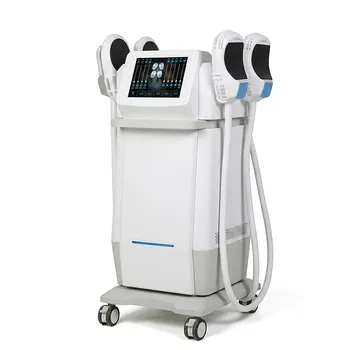
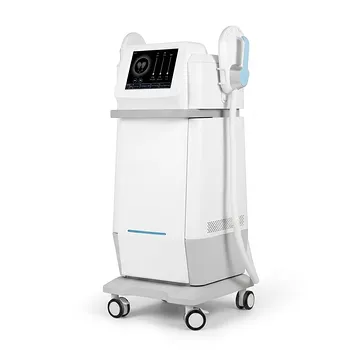
Lower face and submental contour loss is caused by several interacting changes, not one isolated problem. Fat accumulation beneath the chin and in the lower cheeks adds volume, while platysma weakening or separation, skin elastosis, and mandibular bone resorption reduce structural support. Body-sculpting technologies can reduce localized fat, while RF and focused ultrasound technologies heat deeper tissues to encourage collagen contraction and remodeling, improving—but not completely replacing—the definition of the jawline and neck.
The central issue is a mismatch between tissue volume and structural support: excess submental fat enlarges the contour, while lax skin, platysma changes, and skeletal resorption weaken it. Effective non-surgical treatment therefore depends on matching fat-reduction technologies with tissue-tightening technologies.
Why the Lower Face and Neck Lose Definition
Submental and Lower-Cheek Fat Accumulation
Localized fat beneath the chin can enlarge the lower face and obscure the transition between the jaw and neck. Fat in the lower cheeks may also contribute to heavier jowls by increasing downward tissue load.
This is primarily a volume problem. Energy-based tightening alone may improve skin firmness, but it cannot reliably remove a significant excess of fat.
Platysma Hypotony and Diastasis
The platysma is a broad, superficial muscle that extends across the lower face and neck. With aging, it may become weaker, sag, or separate along the midline, a change known as diastasis.
Platysma laxity reduces support along the jawline and can contribute to vertical neck bands. Muscle activity may also make banding more visible in some patients.
Changes in the SMAS and Supportive Tissue Planes
The lower face and neck are supported by interconnected superficial tissue planes, including the superficial musculoaponeurotic system, or SMAS, and the platysma.
As these tissues lose elasticity, they provide less resistance to gravitational descent. The result can be softening along the mandibular border, jowling, and reduced definition beneath the chin.
Mandibular and Alveolar Bone Resorption
Aging also involves gradual remodeling and resorption of the mandible, including the alveolar region that supports the lower teeth. This can reduce the underlying framework available to support overlying soft tissue.
Because energy-based devices act on fat, skin, and connective tissue, they do not restore lost bone volume. Skeletal changes can therefore limit the amount of contour improvement achievable with non-surgical treatment.
Solar Elastosis and Collagen Loss
Cumulative ultraviolet exposure damages dermal collagen and elastin, producing solar elastosis. The skin becomes less elastic and less able to recoil after movement or stretching.
This surface and dermal laxity contributes to crepey neck skin and makes underlying jowls or bands more apparent.
How Body Sculpting Addresses Excess Fat
Cryolipolysis for Localized Submental Fat
Cryolipolysis uses controlled cooling to target localized fat deposits. In appropriate treatment areas, reducing submental fat can decrease fullness beneath the chin and make the cervicomental angle more visible.
Its role is mainly fat-volume reduction, not direct skin lifting. Results depend on the amount and distribution of pinchable fat, skin elasticity, and the patient’s baseline anatomy.
RF Cavitation and Related Body-Sculpting Systems
Systems marketed as RF cavitation or combined body-sculpting platforms may use radiofrequency heating and other energy mechanisms to address localized fatty tissue and improve apparent firmness.
These systems should be evaluated by their specific energy delivery, treatment depth, and regulatory indications rather than by the name “cavitation” alone. Their most relevant contribution to the lower face is reducing or modifying a localized fat component when the device and treatment area are appropriate.
Why Fat Reduction Can Improve Jowls
Reducing excess lower-cheek or submental volume can lessen the visual heaviness of the lower face. It may sharpen the mandibular border and make residual skin tightening more apparent.
However, removing volume from a lax area does not automatically lift the skin. A patient with substantial laxity may require a tightening strategy, and excessive volume reduction can sometimes make looseness more visible.
How RF Tightens Loose Tissue
Dermal Heating and Collagen Contraction
Radiofrequency delivers heat into the dermis and adjacent tissue. Controlled heating can cause existing collagen fibers to contract and can initiate a longer-term remodeling response.
The immediate effect is generally subtle contraction, while later improvement depends on the body’s rebuilding of the dermal matrix. RF therefore addresses tissue quality and firmness, rather than acting as a direct replacement for surgical repositioning.
Microneedle RF for Deeper Dermal Remodeling
Microneedle RF places electrodes at controlled depths within the skin before delivering radiofrequency energy. This creates localized thermal zones in the dermis while limiting energy exposure at the surface.
The resulting healing response can stimulate collagen remodeling and improve laxity, texture, and skin recoil in selected lower-face and neck areas.
The Role of RF in Jowl Treatment
RF may improve the skin component of jowling by making lax tissue firmer and more compact. This can produce a cleaner visual transition along the jawline when excess fat is modest and skin has some capacity to contract.
RF does not reposition a descended SMAS or platysma layer in the same way as surgery. Its effect is best understood as controlled tightening and remodeling, not mechanical lifting.
How HIFU Addresses Deeper Laxity
Focused Energy at Deeper Tissue Planes
High-intensity focused ultrasound, or HIFU, delivers focused thermal energy at selected tissue depths. Treatment can create controlled thermal coagulation zones in deeper dermal or supportive tissue planes, including areas associated with the SMAS and platysma.
The intended response is tissue contraction followed by collagen remodeling. This can improve the appearance of sagging along the lower face, jawline, and neck.
Improving the Cervicomental Angle
The cervicomental angle is the contour formed where the underside of the chin meets the front of the neck. It becomes less distinct when submental fat increases or when skin and platysma tissue become lax.
HIFU may improve the soft-tissue component of this problem by tightening selected deeper layers. If excess fat is significant, a fat-reduction modality may be needed alongside tightening.
HIFU Versus RF
HIFU is generally used to deliver focused energy to deeper target planes, whereas RF is commonly used to heat the dermis and nearby tissue for collagen contraction and remodeling.
The distinction is practical rather than absolute: device settings, applicators, anatomy, and treatment technique determine the actual depth and effect. Both approaches depend on controlled thermal injury, patient selection, and sufficient residual tissue elasticity.
Matching the Mechanism to the Contour Problem
When Fat Is the Dominant Issue
A fuller submental area with relatively firm skin is more likely to benefit from a fat-reduction approach. Cryolipolysis or an appropriate RF-based body-sculpting system may reduce the excess volume that is obscuring the jawline.
The treatment should not be selected solely because a device is described as a “tightening” system. The first question is whether the principal problem is fat, laxity, or both.
When Skin Laxity Is the Dominant Issue
If the main findings are crepey skin, reduced recoil, and mild-to-moderate sagging, RF or HIFU may be more relevant. These technologies aim to stimulate contraction and collagen remodeling rather than remove tissue.
Their results are gradual and variable because they depend on the patient’s collagen response and the extent of structural change.
When Fat and Laxity Occur Together
Combined contour loss is common. A clinician may therefore consider reducing localized submental fat and then addressing residual dermal or deeper tissue laxity with RF or HIFU.
The sequence and combination must be individualized. The goal is a balanced contour, not simply the maximum possible reduction in tissue volume.
Understanding the Trade-offs
Non-Surgical Tightening Has a Defined Ceiling
HIFU and RF can contract and remodel tissue, but they do not remove large amounts of redundant skin or reconstruct severely separated muscle. Marked jowls, extensive neck laxity, or advanced platysma banding may exceed the capabilities of non-surgical treatment.
Surgical approaches can physically reposition tissue through deeper dissection and suturing. Non-surgical devices offer a different balance: less invasiveness and typically less downtime, with more limited lifting power.
Reducing Fat Can Reveal Laxity
Submental fat reduction can make the neck look more defined, but it may also expose pre-existing loose skin. This is especially relevant when skin elasticity is already compromised by age or solar damage.
A proper assessment must estimate how well the skin can contract after volume reduction. Treating fat without considering recoil can produce an underwhelming contour result.
Bone Resorption Is Not Corrected by Energy Devices
Neither RF nor HIFU restores mandibular bone or alveolar support. They can improve overlying soft-tissue firmness, but they cannot fully compensate for loss of the underlying framework.
This explains why two patients receiving similar treatment may experience different degrees of jawline improvement.
Results Depend on Anatomy and Technique
Energy must be delivered at an appropriate depth and level for the intended tissue. Excessive energy or inaccurate placement can cause pain, burns, or unwanted tissue injury, while insufficient delivery may produce little visible change.
Treatment should therefore be performed with a device appropriate for the anatomical region and by a qualified professional who can distinguish fat, skin, muscle, and skeletal contributors.
Making the Right Choice for Your Goal
The most defensible approach begins by identifying which anatomical mechanism contributes most to the contour loss.
- If your primary focus is reducing submental fullness: Consider a clinically appropriate localized fat-reduction technology, such as cryolipolysis or an RF-based body-sculpting system, after confirming that excess fat is the dominant issue.
- If your primary focus is improving mild-to-moderate skin laxity: Consider RF or HIFU to promote controlled contraction and longer-term collagen remodeling.
- If your primary focus is treating jowls with both fat and laxity: A combined, staged strategy may be more logical than relying on fat reduction or tightening alone.
- If your primary focus is correcting severe neck laxity or prominent platysma bands: Discuss surgical evaluation, because non-surgical technologies have limited ability to remove redundant skin or reposition deeply lax structures.
The best contour plan treats the specific combination of fat, skin, platysma, connective tissue, and skeletal support rather than treating the visible jowl or neck fold in isolation.
Summary Table:
| Mechanism | Role in Contour Loss | Addressable by? |
|---|---|---|
| Submental/cheek fat | Adds volume, obscures jawline | Cryolipolysis, RF cavitation |
| Platysma laxity/diastasis | Reduces support, creates bands | HIFU, RF (limited) |
| SMAS/connective tissue laxity | Softens jawline, jowls | HIFU, RF |
| Bone resorption | Loss of framework | Not by energy devices |
| Skin laxity/elastosis | Crepey skin, poor recoil | RF, HIFU, microneedle RF |
Struggling with jowls or neck laxity? At BELIS, we offer advanced medical aesthetic equipment for clinics and premium salons, including RF, HIFU, and body sculpting systems. Our devices can help your patients achieve a more defined jawline and neck contour. Contact us today to learn how our technology can elevate your practice and patient satisfaction. Contact us now.
Related Products
- EMSlim Neo Nova Body Sculpting EMS Sculpting Machine
- EMS Body Sculpting Slimming Machine EMSlim Body Slimming Machine
- EMSlim RG Laser Body Sculpting and Slimming Machine
- Ultrasonic Cavitation Machine Lipo Laser Device
- Ultrasonic Cavitation Radiofrecuency Machine for Body Slimming
People Also Ask
- How do the mid-infrared transmission spectra of fatty tissue and lipids assist in understanding selective targeting for body sculpting devices like cryolipolysis and RF cavitation? Mid-infrared spectra reveal lipid-specific markers, aiding tissue characterization.
- How should aesthetic clinics evaluate post-massive weight loss patients using tissue assessment techniques like the pinch test to determine suitability for non-invasive body sculpting devices versus surgical tissue excision? A Comprehensive Guide
- What are the VTE safety advantages of non-invasive body sculpting over surgery? Lower thromboembolic risk without general anesthesia
- What common soft tissue complications follow surgical fat extraction, and how do non-invasive body sculpting modalities eliminate these risks? Discover safer alternatives for your patients
- What physiological factors cause high volume loss in autologous fat transfers, and how do non-invasive body sculpting technologies circumvent these limitations?