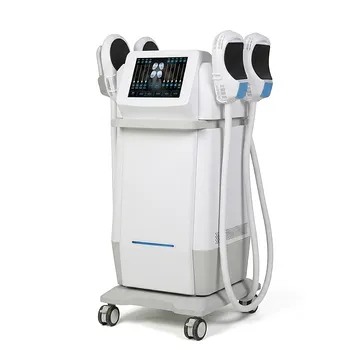
RF body sculpting devices target subcutaneous tissue by converting alternating electrical current into controlled heat. The current creates ionic movement and molecular friction within the tissue, while electrode design, energy settings, and temperature monitoring shape where that heat accumulates. Subcutaneous fat can retain heat because of its electrical and thermal properties, but RF is not perfectly selective: the dermis, connective tissue, and nearby structures may also be warmed. The same controlled heating that affects the subcutaneous layer can stimulate collagen remodeling in the deeper skin, producing a tightening effect.
RF body sculpting works through controlled thermal delivery, not fat targeting alone. Heat can influence the subcutaneous fat and fibrous tissue network while warming the deep dermis enough to encourage collagen contraction and remodeling.
How RF Energy Creates Heat in Tissue
Alternating Current Produces Molecular Friction
RF devices deliver sinusoidal alternating current through tissue between or around electrodes. Charged particles repeatedly change direction, creating ionic movement and molecular friction that is converted into heat.
This is different from a heat source placed on the skin. The tissue itself generates much of the thermal energy as the RF current passes through it.
Tissue Properties Influence Heat Distribution
Different tissues conduct and resist electrical energy differently. The relative resistance, conductivity, blood flow, and thermal behavior of fat, dermis, connective tissue, and muscle influence where heat develops and how quickly it spreads.
Subcutaneous adipose tissue can retain thermal energy more effectively than highly perfused tissues because it generally transfers heat less efficiently. However, this does not create a perfect boundary around the fat layer.
Device Design Determines the Treatment Zone
Electrode arrangement, RF frequency, power, pulse duration, treatment depth, and applicator movement all affect the current path and resulting temperature pattern. Some systems use monopolar, bipolar, multipolar, or other configurations to influence how deeply and broadly energy is delivered.
Cooling systems and real-time temperature controls may help protect the epidermis while allowing deeper tissues to warm. The actual depth and selectivity therefore depend on the specific device and treatment protocol.
How RF Influences Subcutaneous Fat and Tissue Structure
Heat Can Affect the Adipose Compartment
When the subcutaneous layer reaches a sufficiently elevated and controlled temperature, adipocytes and their surrounding tissue may undergo thermal stress and remodeling. The degree of fat reduction or contour change depends on the device, dose, tissue thickness, treatment plan, and individual response.
A temperature threshold should not be treated as universal. Heating above a particular value does not guarantee the same biological outcome across all devices or patients, and excessive heat increases the risk of injury.
The Fibroseptal Network Also Responds
Subcutaneous fat is organized by fibrous connective bands that connect the deeper tissue to the overlying skin. RF heating can cause contraction and remodeling within this stromal or fibroseptal network.
Over time, thicker or more organized fibrous tissue may provide additional structural support. This can contribute to soft-tissue retraction and a smoother contour, including in mature tissue where the connective network may have become less robust.
Contouring Is Not the Same as Weight Loss
RF body sculpting is intended to modify localized contour and tissue firmness, not to produce substantial overall weight reduction. The visible result may reflect a combination of adipose-tissue change, connective-tissue contraction, fluid shifts, and skin remodeling.
This distinction matters when setting expectations. A treatment area may look more defined without meaningfully changing body weight.
How RF Produces Skin Tightening
The Deep Dermis Receives Controlled Heat
RF energy delivered into the subcutaneous region commonly warms the dermis as well. The goal is to reach a controlled therapeutic temperature while avoiding excessive epidermal heating.
This thermal stimulus can cause existing collagen fibers to contract and become more tense. That early contraction may create an initial tightening effect, although it is only part of the longer remodeling process.
Fibroblasts Begin Remodeling the Matrix
Heat activates a wound-healing and remodeling response in the dermis and surrounding connective tissue. Fibroblasts can increase production of collagen and other extracellular-matrix components, while existing tissue is reorganized.
The result is gradual strengthening and thickening of the skin-supporting matrix. Claims about elastin or hyaluronic-acid increases may apply to particular treatment systems or biological studies, but they should not be assumed to occur uniformly with every RF device.
Tightening Develops Gradually
Collagen remodeling takes time because it depends on cellular activity and tissue reorganization. Patients may see an early change from collagen contraction, followed by more gradual changes as the tissue remodels.
The outcome is usually improved firmness or reduced laxity rather than the same degree of lifting produced by surgery. Maintenance treatments may be considered because normal aging and tissue laxity continue after treatment.
Understanding the Trade-offs
RF Is Selective, but Not Perfectly Selective
RF devices can preferentially influence a planned tissue compartment through current pathways, tissue properties, applicator design, and thermal control. They do not isolate adipocytes from every surrounding structure.
The dermis, connective tissue, nerves, muscle, and blood vessels may also be exposed to energy or heat. Appropriate treatment therefore depends on controlling both depth and temperature.
More Heat Does Not Automatically Mean Better Results
Increasing power or temperature can increase biological effect, but it also increases the possibility of burns, pain, unwanted fat loss, nerve irritation, or other adverse effects. Effective treatment requires a controlled thermal dose rather than maximum heat.
Device-specific protocols and operator technique are important because RF systems are not interchangeable.
Results Vary Between Patients
Skin thickness, fat distribution, collagen quality, age, circulation, treatment settings, and baseline laxity all affect the result. More advanced skin laxity or substantial excess tissue may respond incompletely.
RF should therefore be presented as a non-invasive contouring and tightening option with variable results, not as a universal replacement for surgical body contouring.
Safety Depends on Proper Patient Selection
A qualified clinician should evaluate implanted electronic devices, metal near the treatment area, altered sensation, active skin conditions, pregnancy-related considerations, and other contraindications identified for the specific system.
The intended treatment temperature must be reached in the target tissue without overheating the skin or deeper structures. Monitoring, correct applicator placement, and adherence to the manufacturer’s protocol are central to safety.
Making the Right Choice for Your Goal
RF is most useful when the treatment objective matches what controlled thermal remodeling can realistically achieve.
- If your primary focus is localized contouring: Choose an RF system and protocol designed for subcutaneous tissue, while treating the expected change as modest contour improvement rather than weight loss.
- If your primary focus is skin laxity: Prioritize controlled dermal heating and a treatment plan that supports collagen remodeling over time.
- If your primary focus is both fat and firmness: Confirm that the device and applicator are intended to address both the subcutaneous layer and deep dermis, because these effects depend on different tissue responses.
- If your primary focus is safety: Use a qualified provider who can verify contraindications, control treatment temperature, and explain device-specific risks and expected outcomes.
Understanding RF as controlled thermal remodeling allows you to judge its benefits, limits, and suitability more accurately.
Summary Table:
| Mechanism | Target Tissue | Effect |
|---|---|---|
| Ionic friction from alternating current | Subcutaneous fat | Thermal stress and remodeling |
| Controlled dermal heating | Deep dermis | Collagen contraction and remodeling |
| Fibroseptal network response | Connective tissue | Structural support and contour improvement |
| Gradual tissue remodeling | Dermis and stroma | Long-term skin tightening |
Ready to add advanced RF body sculpting to your clinic? BELIS offers state-of-the-art RF devices designed for effective fat reduction and skin tightening. Our equipment is trusted by clinics and premium salons worldwide. Contact us today for a consultation and discover how BELIS can elevate your aesthetic practice.
Related Products
- EMSlim Neo Nova Body Sculpting EMS Sculpting Machine
- EMS Body Sculpting Slimming Machine EMSlim Body Slimming Machine
- EMSlim RG Laser Body Sculpting and Slimming Machine
- Ultrasonic Cavitation Machine Lipo Laser Device
- Ultrasonic Cavitation Radiofrecuency Machine for Body Slimming
People Also Ask
- What is the biological mechanism of action by which radiofrequency (RF) energy achieves body sculpting and cellulite reduction? Discover how controlled heating remodels collagen, influences fat, and smooths skin.
- What anatomical mechanisms cause lower face and submental contour loss, and how do body sculpting and RF technologies address jowls and neck laxity? Discover the key causes and non-surgical solutions.
- How can aesthetic practitioners accurately differentiate between muscular hypertrophy and subcutaneous fat accumulation when evaluating patients for calf or lower face contouring using body sculpting equipment?
- How does the cellular differentiation process of subcutaneous fat inform the mechanism of action behind non-invasive body sculpting equipment such as cryolipolysis and RF cavitation devices? Key insights for clinical practice
- How do non-invasive body sculpting equipment categories compare in mechanism and safety to chemical mesolipolysis injections for localized fat reduction?