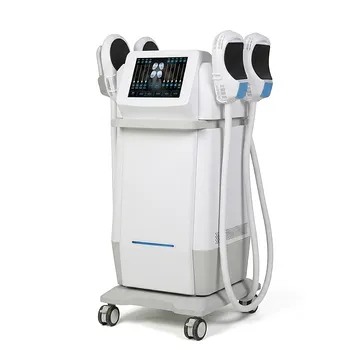
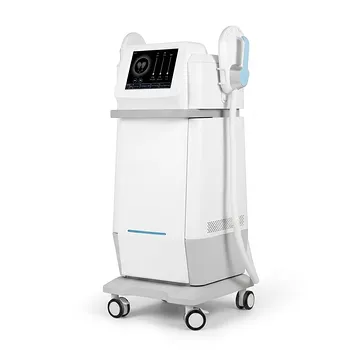
RF body sculpting achieves fat reduction and skin tightening through controlled tissue heating. A high-frequency alternating current creates an oscillating electric field in the skin and subcutaneous tissue. Tissue impedance converts this electrical energy into heat, which can thermally affect adipocytes while also contracting existing collagen and stimulating longer-term collagen remodeling in the dermis.
The dual effect comes from treating different tissue responses at once: sufficient thermal exposure can reduce the volume or viability of localized fat, while controlled dermal heating contracts collagen and activates fibroblasts that support skin tightening.
How RF Energy Becomes Tissue Heat
Ionic Movement Creates Friction
RF equipment delivers alternating electrical energy through tissue. Charged particles oscillate with the changing field, and their movement produces molecular friction that appears as heat.
The amount of heating depends on factors such as tissue impedance, energy density, treatment time, electrode configuration, and contact with the skin.
Tissue Layers Receive Different Thermal Effects
RF energy can heat the dermis, subdermal connective tissue, and superficial fat. The depth and distribution depend on the device design, including whether it uses monopolar, bipolar, or other electrode arrangements.
RF is therefore not automatically selective for fat. Treatment systems use energy settings, electrode geometry, temperature monitoring, and sometimes surface cooling to concentrate the desired thermal effect while limiting injury to the skin.
How RF Can Reduce Localized Fat
Thermal Stress Affects Adipocytes
Adipose tissue can retain heat differently from surrounding tissues because of its electrical and thermal properties. When adequately heated, adipocytes may undergo thermal injury and subsequent cell clearance, reducing the treated fat volume over time.
The exact biological response varies by device and protocol. RF should not be described as universally causing fat-cell apoptosis or as producing the same result as surgical fat removal.
Tissue Clearance Contributes to the Result
After thermal injury, the body gradually processes and clears affected cellular material. Changes in local circulation and lymphatic flow may support fluid movement, but these effects should not be confused with the primary loss of adipose tissue.
The visible contour change is typically gradual and depends on treatment parameters, baseline fat volume, individual biology, and whether RF is combined with another body-contouring method.
How RF Tightens Skin
Existing Collagen Contracts
Controlled dermal heating causes partial alteration and contraction of collagen fibers. This can create an early tightening effect by shortening and reorganizing collagen within the connective-tissue framework.
The temperature must be controlled carefully. Excessive heating can cause burns, pigment changes, pain, or unintended tissue damage rather than better tightening.
Fibroblasts Support Long-Term Remodeling
Thermal stimulation can activate fibroblasts, the cells responsible for producing structural proteins such as collagen and elastin. Over time, this may promote collagen remodeling, dermal thickening, and improved skin firmness.
This regenerative response develops more slowly than the initial collagen contraction. It is usually most relevant for mild to moderate laxity, not substantial excess skin that would normally require surgery.
Connective Tissue Retraction Improves Contour
Heating the dermal and subdermal connective tissues can encourage tissue contraction around a reduced fat volume. This is why RF may improve contour definition more effectively than a fat-reduction approach that does not address skin laxity.
The result is not simply “fat removed and skin pulled tight.” It is the combined effect of reduced tissue volume, collagen contraction, and gradual structural remodeling.
Why Fat Reduction and Tightening Can Occur Together
The Same Thermal Field Reaches Multiple Layers
A correctly designed RF treatment can deliver thermal energy across both the fat layer and the dermis. The fat responds through thermal stress and delayed cellular clearance, while collagen responds through contraction and remodeling.
These responses occur at different depths and on different timelines, but they can be produced during the same treatment session.
Device Configuration Controls the Treatment Depth
Monopolar systems generally distribute energy through deeper tissue volumes, while bipolar arrangements tend to concentrate energy between closer electrodes at more superficial depths. Actual penetration is determined by the complete device design and treatment conditions, not by electrode labels alone.
Temperature-controlled systems can help maintain a therapeutic range and reduce the risk of overheating. They do not eliminate the need for appropriate patient selection and operator technique.
Understanding the Trade-offs
RF Is Not Equivalent to Liposuction
RF body sculpting is intended for localized contour improvement, not major-volume fat removal. Its outcomes are generally more limited and gradual than those of surgical excision or liposuction.
A patient with substantial fat excess or significant loose skin may not achieve the desired result from RF alone.
Heating Must Be Precisely Controlled
The useful biological window is narrow: inadequate heating may produce little effect, while excessive or uneven heating can injure tissue. Treatment safety depends on energy delivery, temperature, duration, skin contact, and movement of the handpiece.
Claims that a single universal temperature guarantees fat destruction or collagen regeneration are unreliable. Different devices and tissue depths require different protocols.
Skin Tightening Cannot Fully Prevent Laxity
Reducing fat does not automatically guarantee firm overlying skin. Skin elasticity, age, previous weight changes, tissue quality, and the amount of fat reduced all influence whether retraction occurs.
RF may improve laxity, but it cannot reliably replace surgery when there is substantial excess skin.
Results Develop Over Time
Collagen remodeling and clearance of thermally affected fat cells are delayed processes. Early tightening can appear before the longer-term result, while swelling or temporary sensitivity may affect the initial appearance.
Evaluating the outcome too soon can lead to inaccurate conclusions about effectiveness.
How to Apply This to Your Goal
RF is most useful when the treatment plan matches the tissue problem being addressed.
- If your primary focus is localized fat reduction: Choose a device and protocol with documented thermal delivery to the intended subcutaneous layer, while keeping expectations below those associated with surgical fat removal.
- If your primary focus is skin tightening: Prioritize controlled dermal heating, temperature monitoring, and a treatment plan that allows time for collagen remodeling.
- If your primary focus is combined contour improvement: Use a protocol that addresses both the subcutaneous fat layer and the dermis rather than assuming one thermal setting treats every layer equally.
- If your primary focus is treatment safety: Verify device-specific indications, contraindications, thermal controls, and practitioner training before treatment.
The key to RF body sculpting is not heat alone, but controlled, depth-appropriate heating that produces distinct responses in fat and collagen.
Summary Table:
| Mechanism | Process | Effect |
|---|---|---|
| Thermal stress on adipocytes | Heat causes injury and clearance of fat cells | Gradual fat volume reduction |
| Collagen contraction | Controlled dermal heating shortens collagen fibers | Immediate skin tightening |
| Fibroblast activation | Heat stimulates collagen and elastin production | Long-term skin firmness |
| Connective tissue retraction | Heating tightens tissue framework | Improved contour definition |
Ready to offer advanced RF body sculpting in your clinic? BELIS provides professional-grade RF devices with precise temperature control and customizable protocols. Whether you need fat reduction, skin tightening, or combined contouring, our equipment helps you achieve safe, effective results. Contact us today for a consultation and to learn about our OEM/ODM options, certifications, and global shipping.
Related Products
- EMSlim Neo Nova Body Sculpting EMS Sculpting Machine
- EMS Body Sculpting Slimming Machine EMSlim Body Slimming Machine
- EMSlim RG Laser Body Sculpting and Slimming Machine
- Ultrasonic Cavitation Machine Lipo Laser Device
- Ultrasonic Cavitation Radiofrecuency Machine for Body Slimming
People Also Ask
- How do RF body sculpting devices target subcutaneous fat & tighten skin?
- What is the biological mechanism of action by which radiofrequency (RF) energy achieves body sculpting and cellulite reduction? Discover how controlled heating remodels collagen, influences fat, and smooths skin.
- What anatomical mechanisms cause lower face and submental contour loss, and how do body sculpting and RF technologies address jowls and neck laxity? Discover the key causes and non-surgical solutions.
- How can aesthetic practitioners accurately differentiate between muscular hypertrophy and subcutaneous fat accumulation when evaluating patients for calf or lower face contouring using body sculpting equipment?
- What are the primary fluid management and safety protocols required when performing large-volume fat removal in body sculpting treatments? Master the essential protocols for safe outcomes.