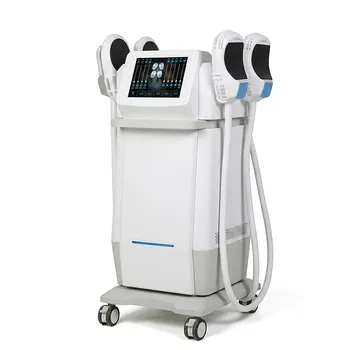
RF and laser skin-tightening devices work primarily through controlled heating. RF generates heat within the dermis and subcutaneous tissue using electromagnetic energy, while non-ablative lasers convert absorbed light into heat at selected tissue depths. This thermal stimulus can contract existing collagen immediately and activate a delayed healing response that produces new collagen and remodels the dermis.
The core principle is controlled thermal remodeling: immediate collagen contraction provides early firmness, while fibroblast activation and wound-healing processes produce gradual structural improvement. Combining RF with complementary laser or light-based energy can address different tissue depths and biological targets, but outcomes depend on precise energy control, patient selection, and treatment technique.
How RF Produces Skin Tightening
RF heats tissue through electrical energy
RF devices deliver high-frequency alternating electromagnetic energy into tissue. Depending on the device design, tissue resistance and electrical interactions convert that energy into heat within the dermis, subcutaneous tissue, or both.
Unlike many lasers, RF does not depend primarily on melanin or another optical chromophore to absorb light. This allows RF to heat collagen-rich tissue more independently of skin pigmentation, although treatment safety still depends on the device, settings, cooling, and clinical protocol.
Heating affects collagen immediately
Controlled thermal exposure alters the structure of existing collagen fibrils. As collagen contracts and reorganizes, the tissue may appear firmer or tighter shortly after treatment.
This early change is physical rather than the result of newly formed collagen. It should therefore be distinguished from the slower biological remodeling that develops over subsequent weeks and months.
Fibroblasts drive delayed remodeling
Thermal stress activates dermal fibroblasts and related wound-healing pathways. Fibroblasts can increase production of extracellular-matrix components, including new collagen and, to a variable extent, elastin.
The result is neocollagenesis and dermal remodeling: older or disorganized matrix is gradually reorganized while new structural proteins improve dermal support and skin texture.
The epidermis is protected through energy control
Non-ablative RF systems aim to heat deeper tissue while preserving the epidermal surface. They commonly use controlled energy delivery, temperature monitoring, multiple passes, and surface cooling to maintain a therapeutic separation between dermal heating and epidermal injury.
This distinction matters because excessive or poorly distributed heat can cause burns, prolonged inflammation, or unwanted changes in subcutaneous fat. Non-ablative does not mean risk-free.
How Laser-Based Tightening Works
Lasers convert absorbed light into heat
A laser delivers light at a specific wavelength. Tissue components absorb that light and convert it into thermal energy, with the depth and distribution of heating determined by wavelength, pulse duration, fluence, spot size, and tissue properties.
For non-ablative tightening, the objective is to heat the dermis without vaporizing or removing the epidermis. Some systems use fractional delivery, creating microscopic treatment zones surrounded by untreated tissue; others produce broader, more diffuse heating.
Laser energy is more chromophore-dependent
Unlike RF, laser effects depend on optical absorption. Water is an important absorber for many infrared wavelengths, while other systems may interact more strongly with melanin or blood-related chromophores.
Therefore, laser safety and effectiveness can vary with skin pigmentation, wavelength, and treatment parameters. A device described broadly as “laser-based” cannot be assumed to have the same mechanism or skin-type profile as every other laser.
Heat activates the same remodeling biology
When the dermis is heated to an appropriate therapeutic range, collagen contracts and fibroblasts respond to the controlled injury signal. The subsequent repair process can increase collagen formation and reorganize dermal architecture.
Laser tightening may also improve surface texture when its design produces limited fractional injury, but a primarily non-ablative tightening treatment should not be equated with an ablative resurfacing procedure.
Why Combining Energies Can Improve Results
Different energies reach different tissue compartments
Skin laxity is not produced by one structure alone. It can involve the dermis, the dermal–subcutaneous interface, connective-tissue septa, and changes in skin surface quality.
A properly designed combination may use RF to heat deeper collagen-rich tissue while using a laser or broad-spectrum light source to address more superficial or optically targeted tissue. This creates a more comprehensive treatment than relying on one energy source alone.
Combination treatment can create complementary thermal effects
Bipolar RF, for example, can concentrate energy between electrodes within a controlled tissue volume. A diode laser or other light-based system may add wavelength-specific heating at a different depth or with a different spatial pattern.
The clinical rationale is not simply “more heat.” It is better-distributed and better-targeted heat, with each energy contributing a distinct effect while avoiding excessive thermal accumulation.
Remodeling can occur across multiple time scales
The combination may produce early visible contraction from collagen alteration and later improvement from neocollagenesis and matrix remodeling. When surface texture or superficial photothermal effects are also addressed, patients may perceive improvements in both firmness and skin quality.
These effects are progressive rather than equivalent to surgical lifting. Non-invasive devices generally improve laxity modestly to moderately, with results influenced by the degree of tissue descent and baseline collagen quality.
Treatment planning becomes more important
Multi-energy treatment requires coordination of energy levels, pulse timing, treatment order, cooling, and passes. The clinician must account for cumulative thermal exposure rather than evaluating each device in isolation.
The goal is a controlled biological stimulus—not maximal temperature. More energy does not automatically produce better tightening and may increase adverse effects.
Understanding the Trade-offs
Non-invasive tightening has defined limits
RF and non-ablative lasers can improve firmness and texture, but they do not remove excess skin or reposition substantially descended tissue. Severe laxity may require surgical consultation because energy-based remodeling cannot reproduce the mechanical correction of a facelift or neck lift.
Results are gradual and variable
Immediate contraction can be visible, but the major remodeling response develops progressively. The magnitude and duration of improvement depend on age, sun damage, smoking, hormonal factors, skin thickness, laxity severity, and treatment adherence.
Patients should be evaluated using realistic endpoints such as improved firmness, contour, and texture rather than expecting dramatic repositioning.
Thermal injury remains the central risk
Excessive or uneven heating can injure the epidermis or deeper tissue. Potential complications include burns, prolonged redness, pigmentary changes, pain, swelling, and—if subcutaneous tissue is overheated—unwanted fat loss or contour irregularity.
Cooling, real-time temperature control, appropriate coupling, and conservative protocols are safety features, not optional details.
“Safe for all skin types” needs qualification
RF is less dependent on epidermal melanin than many optical systems, which can make it useful across a broad range of skin tones. However, no energy device is automatically risk-free for every patient or setting.
Laser and light treatments require especially careful wavelength and parameter selection in darker skin, while both RF and laser procedures require assessment of medications, active skin disease, scarring tendency, and implanted devices where relevant.
How to Apply This to Your Treatment Goal
The appropriate choice depends on whether the priority is deeper laxity, superficial texture, pigmentation, or the safest possible treatment margin.
- If your primary focus is deeper facial, submental, or neck laxity: Consider a protocol that delivers controlled dermal or subdermal heating, often with RF, while confirming that the expected improvement matches the severity of laxity.
- If your primary focus is surface texture and fine wrinkles: A non-ablative or fractional laser approach may be more relevant, particularly when controlled superficial remodeling is part of the treatment objective.
- If your primary focus is comprehensive tightening across multiple tissue layers: A carefully planned RF–laser or RF–light combination may provide complementary coverage, provided cumulative heat and cooling are actively managed.
- If your primary focus is treating darker skin safely: Favor a device and protocol with appropriate evidence for the relevant skin type, recognizing that RF’s reduced dependence on melanin does not eliminate the need for clinical safeguards.
- If your primary focus is dramatic correction of substantial excess skin: Obtain a surgical assessment, because non-invasive energy treatments have biological and mechanical limits.
Understanding the energy source, tissue depth, thermal control, and expected remodeling timeline lets you judge skin-tightening treatments by mechanism rather than marketing claims.
Summary Table:
| Energy | Mechanism | Depth | Key Benefit | Main Risk |
|---|---|---|---|---|
| RF | Electromagnetic heat | Dermis & subcutaneous | Independent of skin pigment; deep heating | Thermal injury if uncontrolled |
| Laser | Light absorption | Dermis (wavelength-dependent) | Precise optical targeting; fractional options | Pigment-dependent; burns if not tuned |
| RF + Laser | Complementary heating | Multi-layer | More comprehensive remodeling | Cumulative heat management needed |
Unlock the full potential of your aesthetic practice with BELIS's advanced RF and laser systems. Our devices combine multi-energy technology for superior skin tightening outcomes. Discover how our diode lasers, fractional CO2, and RF platforms can elevate your clinic's offerings. Contact us today to learn more about our OEM/ODM support and clinical training.
Related Products
- Ultrasonic Cavitation Machine Lipo Laser Device
- Clinic Use IPL SHR ND YAG Laser Hair Removal RF Skin Tightening Machine
- Ultrasonic Cavitation Radiofrecuency Machine for Body Slimming
- 4D 12D HIFU Machine Device for Skin Tightening
- 4D 12D HIFU Machine Device for Skin Tightening and Lifting
People Also Ask
- Why are non-invasive RF skin tightening devices preferred over ablative laser resurfacing? Safe Operator Techniques
- How does patient age affect clinical outcomes and candidate selection for non-invasive radiofrequency (RF) skin tightening procedures? Age matters, but it's not the only criterion for success.
- How does patient age influence the clinical efficacy of non-invasive radiofrequency (RF) skin tightening procedures? Key Insights for Optimal Outcomes
- How to choose between RF and IR skin tightening? Match depth and skin type
- How do RF skin tightening devices minimize PIH risk in skin of color? Safe Protocols & Device Selection