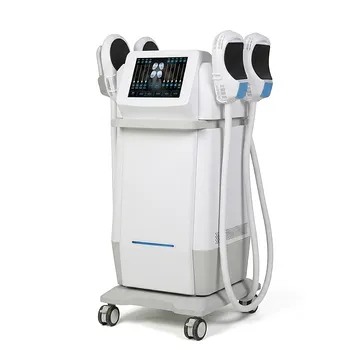
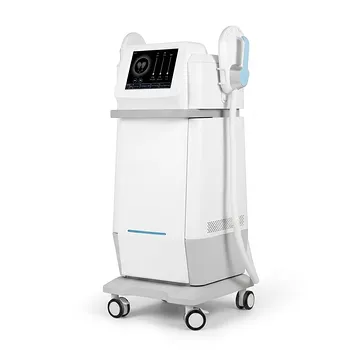
Acoustic cavitation mechanically stresses adipocytes, while thermal stress alters the local tissue environment and can promote collagen remodeling. In non-invasive ultrasonic RF cavitation equipment, ultrasound is delivered through the skin to create pressure fluctuations in subcutaneous tissue; under suitable conditions, these fluctuations may produce oscillating microbubbles and localized mechanical forces that injure adipocyte membranes. RF energy contributes controlled heating, which is primarily relevant to tissue warming, collagen contraction, and remodeling rather than serving as a direct substitute for surgical fat removal.
The functional mechanism is a controlled combination of mechanical and thermal exposure: ultrasound targets localized adipose tissue through pressure-driven cavitation and vibration, while RF heats tissue to support skin tightening and remodeling. The resulting contour change depends on the device’s energy parameters, tissue response, and the body’s subsequent clearance of damaged cellular material.
How Ultrasound Interacts With Adipose Tissue
Pressure Waves Reach the Subcutaneous Fat Layer
Ultrasound consists of alternating compressional and rarefactional waves. These pressure changes travel through the skin and superficial tissues toward the device’s intended treatment depth.
The amount of energy reaching adipose tissue depends on frequency, intensity, applicator design, coupling with the skin, treatment duration, and the physical properties of the intervening tissue.
Acoustic Cavitation Creates Mechanical Stress
During the rarefaction phase of an acoustic wave, microscopic gas pockets or pre-existing nuclei in tissue fluid can expand. During compression, they contract.
When these bubbles oscillate intensely or collapse, they can generate localized shear forces, microstreaming, and pressure transients. These forces place mechanical stress on nearby adipocyte membranes and may cause membrane disruption.
Adipocyte Membrane Damage Changes Cell Integrity
Adipocytes store triglycerides within large intracellular lipid droplets surrounded by a cell membrane. Mechanical injury can compromise that membrane and disturb the cell’s normal structural integrity.
This is the physiological basis for claims that cavitation can produce localized adipocyte damage. However, the exact outcome may range from temporary membrane permeability to cellular injury or destruction, depending on the delivered exposure and the specific technology.
How Thermal Stress Contributes
Acoustic Energy Can Become Heat
Part of the applied acoustic energy is absorbed by tissue and converted into heat. This produces a thermic effect whose magnitude depends on tissue absorption, blood flow, treatment time, and energy delivery.
RF energy adds another heating mechanism by causing tissue-level electrical energy absorption. In RF cavitation systems, ultrasound and RF therefore expose the treatment region to both mechanical and thermal effects.
RF Heating Is Not the Same as Cavitation
Cavitation is principally associated with ultrasound-driven pressure changes. RF does not create acoustic microbubbles in the same way.
RF heating can raise tissue temperature, influence collagen fibers, and alter local circulation, but it should not automatically be described as the force that causes bubble implosion. The device’s mechanical fat-disruption effect and its thermal tightening effect are related components of treatment, but they are not identical physical processes.
Heat Supports Collagen Remodeling
Controlled heating of the dermis can cause temporary collagen fiber contraction and may stimulate longer-term remodeling. This can improve the appearance of skin firmness or redraping after localized volume reduction.
The thermal objective is therefore often tissue tightening and contour support, rather than simply liquefying adipose tissue. Excessive or poorly controlled heating, however, can injure skin and deeper structures.
How These Effects Produce Body Contouring
Targeted Energy Produces a Local Tissue Response
The applicator is positioned over a selected area, such as the abdomen, flanks, thighs, or another region containing localized subcutaneous adipose tissue. Coupling gel or another interface helps transmit ultrasound and maintain consistent contact.
The intended result is a spatially limited exposure in which adipose tissue receives sufficient acoustic and thermal energy while surrounding structures remain within tolerated limits.
Damaged Material Requires Biological Clearance
If adipocyte injury occurs, the resulting lipids, cellular fragments, and inflammatory material do not disappear instantly. The body must process and clear them through local immune responses, lymphatic transport, metabolism, or other physiological pathways.
Consequently, visible contour changes may develop over time rather than immediately. The extent and durability of the result depend on how much tissue was affected and whether the remaining adipocytes later enlarge with overall weight gain.
Skin Tightening Complements Volume Reduction
Reducing a localized fat layer without supporting the overlying skin can leave contour irregularities or laxity. RF-associated heating is intended to improve the visual transition between treated and untreated areas by encouraging collagen contraction and remodeling.
This explains why combined systems are marketed as providing both fat reduction and skin tightening. The two outcomes arise from different, though simultaneous, tissue responses.
Why Non-Invasive Treatment Differs From Ultrasound-Assisted Liposuction
Surgical UAL Uses Direct Energy Delivery
In ultrasound-assisted liposuction, a probe is introduced through an incision and placed close to the fat. The operator can deliver substantially concentrated energy and then aspirate the disrupted material.
This direct approach is invasive and involves anesthesia, cannula passage, surgical inflammation, pain, bleeding risk, and postoperative recovery.
Transcutaneous Devices Work Through Tissue Barriers
Non-invasive equipment must deliver energy through the skin and intervening tissue. Energy is attenuated, reflected, and absorbed before reaching the target layer.
As a result, non-invasive systems generally operate within a more constrained exposure profile. They are designed to produce a gradual, localized tissue response rather than mechanically remove a large volume of fat during one procedure.
The Clearance Pathway Is Fundamentally Different
Liposuction physically removes aspirated tissue during the procedure. Non-invasive body sculpting relies on the body to handle material affected by treatment.
This distinction is important: non-invasive contouring is not equivalent to suction-assisted fat removal, even when both approaches use ultrasound-related mechanisms.
Understanding the Trade-offs
Results Are Device- and Protocol-Dependent
“Ultrasonic RF cavitation” describes a broad category of equipment rather than one standardized physical treatment. Frequency, acoustic intensity, RF configuration, cooling, applicator geometry, treatment duration, and monitoring can differ substantially between devices.
Therefore, the mechanism described in general terms does not guarantee a specific clinical result for every machine or treatment protocol.
Cavitation Claims Can Be Overstated
The presence of ultrasound does not prove that clinically meaningful inertial cavitation occurs throughout the target fat layer. Bubble behavior depends on acoustic pressure, frequency, dissolved gas, tissue composition, and other conditions.
Some systems may produce predominantly vibrational, thermal, or stable cavitation effects rather than dramatic bubble implosions. Claims of universal or painless “fat cell destruction” should therefore be interpreted cautiously.
Fat Loss and Temporary Lipid Release Are Not Identical
Membrane disruption, triglyceride release, tissue emulsification, and permanent adipocyte removal are different biological outcomes. Releasing or redistributing intracellular lipids does not by itself establish durable fat reduction.
A reliable explanation must distinguish temporary cellular stress from confirmed reduction in adipocyte number or long-term reduction in treated volume.
Thermal Exposure Has Safety Limits
The same heating that may support collagen remodeling can cause pain, burns, inflammation, or unintended injury if energy accumulates excessively or is delivered unevenly.
Treatment safety depends on controlled temperature, appropriate applicator movement, correct coupling, exposure duration, device maintenance, and practitioner training. Nearby nerves, skin, connective tissue, and other structures must also be considered.
Body Contouring Is Not General Weight Loss
These systems are intended for localized contour concerns, not treatment of obesity or replacement of nutrition and physical activity. They generally address limited areas and produce changes that can be subtle or variable.
Remaining adipocytes can still enlarge if overall energy balance promotes weight gain, so maintaining the result requires sustained lifestyle management.
How to Apply This to Your Project
The most useful way to evaluate this equipment is to separate its mechanical ultrasound mechanism, RF heating mechanism, and actual clinical outcome.
- If your primary focus is explaining cavitation: Emphasize alternating acoustic pressure, microbubble oscillation or collapse, shear forces, and possible adipocyte membrane disruption.
- If your primary focus is explaining RF: Describe controlled tissue heating, collagen contraction, and remodeling, while avoiding the claim that RF itself creates ultrasonic cavitation.
- If your primary focus is explaining contour reduction: State that damaged cellular material must be biologically processed and that outcomes depend on device parameters, treatment protocol, and individual response.
- If your primary focus is evaluating safety: Focus on temperature control, energy distribution, treatment depth, applicator technique, contraindications, and practitioner competence.
- If your primary focus is comparing non-invasive treatment with liposuction: Explain that non-invasive systems rely on gradual biological clearance, whereas liposuction physically aspirates tissue through an invasive procedure.
Acoustic cavitation explains the intended mechanical stress on adipocytes, while RF-associated thermal stress explains the complementary emphasis on tissue tightening; together, they provide a plausible functional model for non-invasive contouring without making the technology equivalent to surgical fat removal.
Summary Table:
| Aspect | Mechanism | Clinical Outcome |
|---|---|---|
| Acoustic Cavitation | Ultrasound pressure waves cause microbubble oscillation/collapse, creating shear forces that stress adipocyte membranes. | Potential cellular disruption and localized fat reduction. |
| Thermal Stress (RF) | RF energy heats tissue, promoting collagen contraction and remodeling. | Improved skin tightening and contour support. |
| Biological Clearance | Damaged lipids and cellular debris are processed by immune and lymphatic systems. | Gradual volume reduction over time. |
| Safety Limits | Controlled energy delivery and temperature management are essential. | Prevent burns and unintended tissue injury. |
| Comparison to Liposuction | Non-invasive relies on natural clearance; invasive surgically removes fat. | Non-invasive has minimal downtime but variable results. |
Elevate Your Aesthetic Practice with BELIS
Are you ready to offer your clients state-of-the-art non-invasive body sculpting solutions? At BELIS, we specialize in professional medical aesthetic equipment exclusively for clinics and premium salons. Our advanced systems—including ultrasonic RF cavitation, laser lipolysis, and combined energy platforms—are designed to deliver safe, effective, and satisfying results.
Why Choose BELIS?
- Comprehensive Portfolio: From diode lasers and IPL to HIFU and body sculpting devices, we cover every category in aesthetic technology.
- Proven Technology: Our devices integrate advanced acoustic and thermal mechanisms for optimal outcomes.
- Support & Training: We provide OEM/ODM services, certifications, and ongoing technical support to ensure your success.
Partner with a Leader in Aesthetic Innovation. Contact us today to learn how BELIS can help you expand your service offerings and grow your business.
Contact Us Now to schedule a consultation!
Related Products
- Ultrasonic Cavitation Radiofrecuency Machine for Body Slimming
- Ultrasonic Cavitation Machine Lipo Laser Device
- EMSlim Neo Nova Body Sculpting EMS Sculpting Machine
- Cryolipolysis Fat Freezing Machine and Ultrasonic Cavitation Device
- Cryolipolysis Fat Freezing Machine Ultrasonic Cavitation Fat Reducing Device
People Also Ask
- What are the pros and cons of the ultrasonic cavitation slimming treatment? A Guide to Painless Body Contouring
- Does an ultrasonic cavitation machine also tighten the skin? Achieve Total Body Contouring with RF Synergy
- How does radiofrequency technology in slimming machines promote fat reduction? The Science of Non-Invasive Sculpting
- How should one prepare for an ultrasonic cavitation appointment? 5 Essential Tips for Maximum Fat Loss Results
- What is an ultrasonic cavitation machine? Sculpt Your Body with Advanced Non-Invasive Fat Reduction