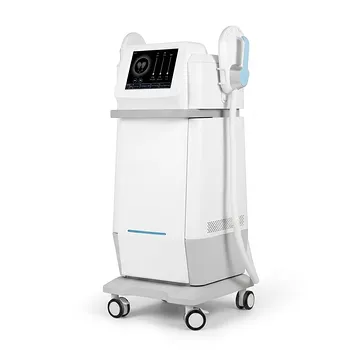
Ultrasound cavitation equipment can provide targeted, less-traumatic fat reduction with little or no recovery, but its clinical value depends heavily on the device type, treatment settings, and operator technique. External, noninvasive systems use acoustic energy to affect subcutaneous fat, while invasive ultrasound-assisted systems use a probe during a surgical procedure and require surgical-level controls. These technologies are intended for localized body contouring, not general weight loss.
The main advantage is selective treatment of small areas with limited disruption to surrounding tissue. The main operational risk is energy-related tissue injury, particularly when the probe is held stationary, energy is excessive, or the treatment medium is inadequately controlled.
How Ultrasound Cavitation Produces Fat Reduction
Acoustic energy creates mechanical effects
Ultrasound systems convert electrical energy into mechanical vibrations. In an appropriate fluid environment, these vibrations can produce microscopic bubbles, a process known as cavitation.
The mechanical forces associated with cavitation can disrupt adipocyte membranes and alter the fat-containing tissue. The exact effect depends on the device’s frequency, power, waveform, applicator design, and whether the system is external or invasive.
Surrounding structures may be selectively spared
A potential clinical advantage is the ability to target fatty tissue while causing less mechanical trauma to nearby structures than conventional surgical fat removal. However, “selective” does not mean risk-free: excessive energy or poor technique can injure skin, connective tissue, nerves, vessels, or other structures.
The treatment is designed for contouring
Ultrasound cavitation is most appropriate for localized adipose deposits and body-shaping goals. It should not be presented as a substitute for weight management or as a method for large-volume fat removal.
Clinical Advantages
Less invasive treatment options
External ultrasound cavitation generally does not require incisions or general anesthesia. This can reduce procedure-related burden compared with liposuction and may allow patients to resume normal activities quickly.
Invasive ultrasound-assisted procedures are different. They involve tissue access, fluid management, sterile technique, anesthesia considerations, and postoperative monitoring, so the advantages of ultrasound do not eliminate the risks of surgery.
Targeted body contouring
The technology can be applied to selected treatment areas rather than affecting the entire body. This makes it potentially useful for patients seeking modest improvement in specific areas that have not responded adequately to diet and exercise.
Potentially limited recovery
Noninvasive treatments typically involve little to no downtime. Patients may experience temporary redness, swelling, tenderness, or sensitivity, but recovery is generally less demanding than after surgical fat removal.
The actual recovery profile depends on the device, treatment intensity, treated area, and individual patient response.
Reduced mechanical trauma in selected applications
When used within validated parameters, ultrasound-assisted fat disruption may reduce the amount of force needed to separate or remove fatty tissue. This can support more controlled tissue handling in appropriate clinical settings.
The benefit is equipment- and technique-dependent. It should not be generalized to every device marketed as “cavitation.”
Possible secondary contouring effects
Some treatment protocols report improvements in the appearance of skin texture or cellulite. These effects should be described as possible aesthetic outcomes rather than guaranteed clinical results.
Ultrasound cavitation is not equivalent to skin tightening, and any improvement in laxity depends on the device and the patient’s tissue characteristics.
What Happens After Treatment
Fat clearance is gradual
Disrupted fat contents and tissue debris are processed and cleared over time through normal physiological pathways. The body does not necessarily eliminate all treated fat immediately, and the process should not be reduced to a guarantee that fat is simply “drained through the lymphatic system.”
Visible changes may be subtle at first and can evolve over several weeks. Treatment response varies considerably between patients.
Hydration is not a substitute for safety controls
Appropriate hydration may be included in some clinical protocols, but drinking water does not prevent excessive energy delivery, thermal injury, poor applicator contact, or inappropriate patient selection.
The primary safety controls remain validated equipment, correct settings, trained operation, and appropriate clinical assessment.
Operational Precautions
Match the protocol to the device
The operator must first determine whether the equipment is an external noninvasive system or an invasive ultrasound-assisted surgical device. Their indications, contraindications, energy controls, infection precautions, and monitoring requirements are not interchangeable.
Operators should follow the manufacturer’s instructions and the applicable clinical, regulatory, and professional standards. Marketing terms such as “cavitation” do not establish that two devices have equivalent performance or safety profiles.
Control the wetting solution and tissue environment
For invasive systems, the wetting or tumescent solution-to-tissue ratio must be controlled carefully. The fluid environment influences acoustic transmission, tissue cooling, energy dissipation, and the risk of thermal injury.
Too little fluid may reduce cooling and increase heat accumulation. Fluid management must therefore be based on the validated protocol rather than improvised during treatment.
Manage energy dissipation
Energy settings should be selected according to the treatment area, tissue characteristics, applicator, and device-specific guidance. Higher power is not automatically more effective and can increase the risk of burns or unintended tissue damage.
The operator should monitor the system’s output and tissue response continuously. Any abnormal heat, resistance, patient pain, skin change, or equipment warning requires immediate reassessment.
Keep the probe moving
A probe should not remain stationary over one location unless the equipment’s validated protocol specifically permits it. Continuous, controlled movement helps distribute energy and limits localized heat accumulation.
This precaution is particularly important near incision sites, where concentrated energy can contribute to thermal skin burns. Probe movement should be deliberate and consistent rather than rapid or erratic.
Maintain appropriate contact and positioning
External applicators require adequate coupling with the skin so that acoustic energy is transmitted as intended. Poor contact can reduce effectiveness and create uneven energy delivery.
The operator should inspect the skin before, during, and after treatment, paying attention to areas with reduced sensation, fragile tissue, scars, or impaired circulation.
Use trained clinical oversight
Safe operation requires more than knowing how to activate the device. Personnel must understand patient selection, anatomy, energy parameters, emergency procedures, documentation, and the device’s limitations.
Invasive use requires appropriately qualified medical personnel and surgical precautions. Noninvasive use still requires screening and supervision appropriate to the device’s risk classification and intended use.
Understanding the Trade-offs
It is not a replacement for liposuction in every case
Ultrasound cavitation is generally better suited to modest, localized contouring than to substantial-volume fat removal. Liposuction remains a surgical procedure capable of removing larger volumes, but it also carries greater procedural and recovery risks.
The correct comparison depends on whether the device is external or used as part of surgery. Comparing a noninvasive cosmetic device directly with invasive ultrasound-assisted liposuction can create misleading expectations.
Results are variable
Some patients may notice early changes, but meaningful contour improvement can require multiple treatments or several weeks. Outcomes depend on the amount and distribution of fat, skin elasticity, treatment settings, lifestyle, and individual healing.
Claims of immediate, permanent, or universal results are not clinically reliable.
“Painless” is not a universal guarantee
Noninvasive treatment may be well tolerated, but patients can still experience warmth, tingling, tenderness, redness, swelling, or discomfort. Invasive procedures involve risks associated with anesthesia, tissue access, fluid administration, and postoperative healing.
Patient comfort should be assessed throughout treatment rather than assumed from the device category.
Safety claims require qualification
Ultrasound can be tissue-selective when correctly applied, but it can also produce unwanted mechanical or thermal effects. The risk increases with excessive energy, prolonged exposure, poor coupling, inadequate cooling, stationary probe placement, or use outside validated indications.
A device’s “non-surgical” label does not remove the need for contraindication screening, informed consent, and adverse-event follow-up.
Evidence and labeling matter
Clinical claims should be supported by the device’s regulatory clearance, intended use, published evidence, and the specific treatment protocol. Evidence for one frequency, applicator, or treatment method cannot automatically be transferred to another system.
Practices should avoid presenting cellulite improvement, lymphatic effects, skin tightening, or fat elimination as guaranteed outcomes unless those claims are supported for the specific equipment and indication.
Making the Right Choice for Your Goal
The appropriate approach depends on whether the priority is localized contouring, surgical fat removal, convenience, or risk control.
- If your primary focus is noninvasive localized contouring: Use an appropriately indicated external system with realistic expectations about gradual, modest results and possible short-term skin reactions.
- If your primary focus is large-volume fat removal: Evaluate surgical options with a qualified clinician, because noninvasive cavitation equipment is generally not intended to replace liposuction.
- If your primary focus is operational safety: Prioritize validated energy settings, correct fluid management where applicable, continuous probe movement, adequate coupling, tissue monitoring, and trained clinical oversight.
- If your primary focus is patient experience: Explain that little or no downtime does not mean zero risk, zero discomfort, or guaranteed results.
- If your primary focus is measurable clinical outcomes: Review device-specific regulatory labeling, published evidence, treatment protocols, and documented adverse events rather than relying on generic cavitation claims.
Ultrasound cavitation is most defensible as a controlled, device-specific body-contouring technique whose benefits depend on disciplined clinical operation and accurate patient expectations.
Summary Table:
| Clinical Advantages | Operational Precautions |
|---|---|
| Less invasive, minimal downtime | Follow device-specific protocols |
| Targeted body contouring | Control wetting solution (for invasive) |
| Modest localized fat reduction | Manage energy dissipation continuously |
| Possible skin texture improvement | Keep probe moving to avoid thermal injury |
| Gradual natural fat clearance | Maintain proper coupling and positioning |
| Can be selective to fat tissue | Use trained clinical oversight |
Enhance your clinic's body contouring offerings with BELIS's professional-grade ultrasound cavitation systems, designed for safety and efficacy. Contact us today to learn more about our advanced aesthetic equipment and how it can benefit your practice. Contact us now!
Related Products
- Cryolipolysis Fat Freezing Machine Ultrasonic Cavitation Fat Reducing Device
- Ultrasonic Cavitation Radiofrecuency Machine for Body Slimming
- Cryolipolysis Fat Freezing Machine and Ultrasonic Cavitation Device
- Ultrasonic Cavitation Machine Lipo Laser Device
- Cryolipolysis Fat Freezing Cavitation Lipo Laser Machine
People Also Ask
- What are the main benefits of using a fat freezing machine? Achieve Permanent, Non-Surgical Body Sculpting
- Do fat freezing machines really work? Achieve Non-Invasive Body Contouring
- What are the potential side effects and risks associated with fat freezing? Safety Profile & Rare Risks Explained
- What is the treatment principle of cryolipolysis fat freezing? Science-Backed Fat Reduction and Body Contouring
- What are the technical advantages of using lower temperatures and shorter durations in cryolipolysis fat reduction?