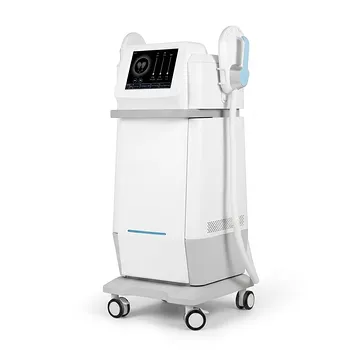
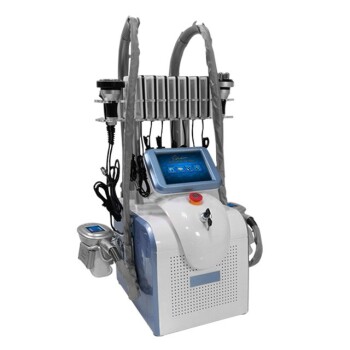
There is no single universal parameter set for RF-assisted vacuum body contouring equipment. Operating settings depend on the device’s RF frequency, optical output, vacuum system, applicator design, treatment area, and manufacturer’s instructions. A commonly described protocol uses conductive fluid, controlled continuous passes, mild-to-moderate warmth, and skin temperatures around 41–43°C, but the device’s validated protocol and safety controls must take priority over generic settings.
RF-assisted vacuum contouring should be treated as a controlled thermal and mechanical procedure, not as a fixed recipe. Begin conservatively, verify the device’s units and temperature feedback, maintain continuous handpiece movement, and adjust treatment to patient tolerance and tissue response.
Establishing a Safe Treatment Protocol
Confirm the Equipment-Specific Instructions
The most important operating reference is the device-specific manual and clinical protocol. RF power, vacuum pressure, pulse timing, optical output, temperature limits, and handpiece motion vary substantially between systems.
A setting reported for one platform may be unsafe or ineffective on another, even when both are marketed as RF vacuum body contouring devices. Operators should confirm whether the device displays power in watts, energy per pulse, percentage output, levels, or another proprietary scale.
Prepare the Treatment Area
Cleanse the skin before treatment and apply the conductive fluid specified by the manufacturer. Adequate hydration and coupling allow the handpiece to move smoothly and help the RF and optical components deliver energy more consistently.
The patient should be positioned comfortably, and the target area should be inspected for conditions that could make treatment inappropriate. Any required screening, consent, protective equipment, and contraindication checks should be completed before energy delivery.
Perform a Test Treatment
Individual skin resistance, hydration, tissue thickness, sensitivity, and tolerance vary. Begin with a conservative test area or low initial setting, then increase only when the tissue response and patient comfort are acceptable.
The expected sensation is deep, tolerable warmth. Pain, sharp heat, burning, or excessive discomfort is a reason to reduce energy or suction immediately and reassess the technique.
Typical Operating Parameters
RF and Optical Output
The primary reference describes a representative setting of approximately 20 W RF output at 1 MHz and 20 W infrared output across 700–1500 nm. These values should be regarded as device-specific examples rather than universal standards.
Supplementary protocols describe RF outputs from approximately 2–10 W, or equivalent device levels from 1–5, while combination systems may provide RF and optical presets from roughly 7–20 W. These ranges are not directly interchangeable because power displays and applicator designs differ.
Vacuum Suction
A commonly cited combination-device setting is pulsed vacuum near 200 mbar, with pulse durations around 100–300 milliseconds. Other systems express suction in inches of mercury and may use ranges near 8–28 inHg.
Operators must verify the unit convention before treatment. 200 mbar is not equivalent to 750 mmHg of negative pressure: 200 mbar is approximately 150 mmHg in magnitude, while 750 mmHg would approach an extreme vacuum and is not a comparable setting. The device manual should determine the correct interpretation.
Pulse Duration and Delivered Energy
Some vacuum-assisted RF devices use pulses lasting approximately 1–5 seconds and report delivered energy of roughly 2–60 joules per pulse. These values apply only when the device measures energy in that manner.
A watt setting, pulse duration, and joule value describe different aspects of delivery. They should not be converted or substituted without the manufacturer’s specifications.
Tissue Temperature
For thermal remodeling and localized contouring protocols, treatment-zone temperatures are commonly maintained around 41–43°C for approximately five minutes per zone. Temperature feedback should be used whenever the device provides it.
The operator should maintain consistent contact, pressure, and motion so that heat is distributed evenly. Temperature should be monitored at the treatment surface or target zone according to the device design; patient sensation alone is not a reliable substitute for measurement.
Handpiece Technique and Session Structure
Maintain Continuous Motion
The handpiece should be moved continuously in controlled forward-and-backward or rolling motions. The primary reference describes four to six passes over a zone during a session.
Other protocols describe approximately three passes per area. The correct number depends on the platform, treatment objective, tissue response, and whether the device uses continuous, pulsed, or combined energy delivery.
Avoid Stationary Contact
Do not hold the applicator in one location for an extended period. Holding a handpiece firmly in place for more than approximately four seconds may increase localized discomfort and the risk of excessive heating or bruising, particularly when suction and mechanical manipulation are active.
Passes should overlap in a controlled manner without repeatedly concentrating energy on bony prominences, thin tissue, or previously treated hot spots.
Session Duration
The primary reference describes approximately 30 minutes per treatment zone. This duration is not a general rule for every platform and should be reconciled with the device’s validated protocol and thermal feedback.
A separate laser-vacuum massage protocol recommends beginning with 8–10 minutes total, extending gradually to 15–20 minutes, and avoiding single sessions longer than 20 minutes. Because these timings describe a different, more conservative protocol, they should not be combined automatically with the 30-minute-per-zone RF protocol.
Observe the Endpoint
A suitable clinical endpoint may include mild, even erythema and a tolerable sensation of deep warmth. Localized swelling can occur, but excessive redness, blistering, persistent pain, marked tenderness, or unusual skin changes require treatment to stop and the area to be assessed.
Warmth commonly subsides within a short period after treatment, but the operator should provide post-treatment monitoring and instructions consistent with the device and local clinical requirements.
Treatment Areas and Scheduling
Common Treatment Areas
Frequently treated body regions include the abdomen, thighs, buttocks, arms, and back. The protocol should be adapted to the size, contour, tissue thickness, and sensitivity of each region.
Treatment near areas with thin tissue or prominent anatomy requires especially careful control of suction, contact pressure, passes, and temperature.
Course Length
The primary reference describes a course of 8–12 treatments performed twice weekly. Supplementary protocols describe courses ranging from 4–6 sessions spaced 2–3 weeks apart, 6–8 sessions approximately two weeks apart, and 8–16 sessions twice weekly.
These differences demonstrate that treatment frequency is platform-specific rather than standardized. The operator should follow the schedule supported by the specific device’s clinical documentation and avoid combining schedules from unrelated technologies.
Maintenance Treatments
Circumference and skin-texture improvements may diminish after approximately 6–8 weeks without maintenance, according to the primary reference. Maintenance sessions may therefore be required, with timing determined by the patient’s response and the device’s recommended regimen.
A maintenance plan should be discussed before the initial course so that temporary improvement is not presented as a permanent result.
Understanding the Trade-offs
Higher Energy Is Not Automatically Better
Increasing RF power, optical output, suction, or treatment time may increase thermal or mechanical stress without producing proportionally better results. Excessive intensity can increase discomfort, bruising, swelling, and the risk of thermal injury.
The practical objective is a controlled tissue response, not the highest available setting.
Vacuum Improves Contact but Adds Mechanical Stress
Vacuum can improve tissue engagement and assist handpiece movement, but stronger suction also increases the likelihood of tenderness and bruising. Systems with greater mechanical manipulation may produce more transient bruising than gentler systems.
Suction should be reduced when bruising, pain, poor tissue mobility, or excessive skin traction develops.
Generic Settings Can Be Misleading
A statement such as “20 W” does not fully describe the treatment. Frequency, waveform, applicator area, duty cycle, contact method, tissue temperature, vacuum timing, and motion pattern all affect delivered energy.
Parameter labels should therefore be interpreted within the complete device protocol rather than copied from another machine.
Cosmetic Endpoints Are Not Safety Limits
Mild erythema and warmth may be expected, but a visible endpoint does not prove that treatment is safe or effective. Conversely, the absence of dramatic redness does not justify automatically increasing energy.
Temperature monitoring, patient feedback, continuous motion, and post-treatment observation are all needed.
Common Adverse Effects Require Disclosure
Transient redness, swelling, tenderness, and bruising can occur. Supplementary material reports minor bruising lasting up to approximately one week and transient crusting lasting under 72 hours in some treatment protocols.
Patients should receive clear instructions about expected effects and warning signs requiring clinical review, including escalating pain, blistering, prolonged discoloration, or other unexpected skin changes.
How to Apply This to Your Project
Use the equipment manufacturer’s validated protocol as the controlling reference, then tailor the session conservatively to the treatment area and patient response.
- If your primary focus is patient safety: Start with a test treatment, maintain continuous motion, monitor temperature, reduce intensity at pain or excessive heat, and verify every pressure unit before operating the vacuum.
- If your primary focus is consistent treatment delivery: Record the device model, applicator, RF and optical settings, vacuum mode, pulse duration, number of passes, treatment time, and observed tissue response for every session.
- If your primary focus is contouring and skin texture: Use the manufacturer-supported course schedule, target controlled warmth around 41–43°C when specified, and plan maintenance because cosmetic improvements may fade over time.
- If your primary focus is adapting treatment to different body areas: Adjust suction, energy, passes, and exposure time for tissue thickness and sensitivity rather than applying one setting to the abdomen, thighs, arms, buttocks, and back.
Reliable RF vacuum treatment comes from controlled, device-specific parameter selection and continuous monitoring, not from a single universal settings table.
Summary Table:
| Parameter | Typical Range/Setting | Notes |
|---|---|---|
| RF Output | ~20 W at 1 MHz (example) | Ranges 2–10 W or levels 1–5 depending on device |
| Optical Output | ~20 W (700–1500 nm) | Not present in all devices |
| Vacuum | ~200 mbar (≈150 mmHg) or 8–28 inHg | Verify unit; not equivalent to 750 mmHg |
| Pulse Duration | 100–300 ms (vacuum), 1–5 s (RF) | Device-dependent |
| Energy per Pulse | 2–60 J | Only if measured |
| Tissue Temperature | 41–43°C for ~5 min/zone | Use temperature feedback |
| Passes | 3–6 per Zone | Continuous motion required |
| Session Duration | ~30 min/zone (example) | Or 8–20 min for conservative protocols |
| Treatment Course | 4–16 sessions, 1–3×/week | Follow device-specific schedule |
| Maintenance | As needed after 6–8 weeks | Cosmetic improvement may fade |
Elevate your clinic's body contouring offerings with BELIS's advanced RF vacuum systems. Our medical-grade devices are trusted by clinics and premium salons worldwide. Explore our range of multipolar RF, laser, and vacuum platforms designed for safe, effective body sculpting. Partner with us for exclusive distributor opportunities, OEM/ODM support, and full certification compliance. Ready to expand your aesthetic portfolio? Contact our team today for personalized product recommendations and expert training. Contact us now!
Related Products
- EMSlim Neo Nova Body Sculpting EMS Sculpting Machine
- EMS Body Sculpting Slimming Machine EMSlim Body Slimming Machine
- Ultrasonic Cavitation Radiofrecuency Machine for Body Slimming
- Cryolipolysis Fat Freezing Machine and Ultrasonic Cavitation Device
- EMSlim Body Slimming Machine for Muscle Building and Beauty
People Also Ask
- How do RF body sculpting devices target subcutaneous fat & tighten skin?
- What is the biological mechanism of action by which radiofrequency (RF) energy achieves body sculpting and cellulite reduction? Discover how controlled heating remodels collagen, influences fat, and smooths skin.
- What anatomical mechanisms cause lower face and submental contour loss, and how do body sculpting and RF technologies address jowls and neck laxity? Discover the key causes and non-surgical solutions.
- How can aesthetic practitioners accurately differentiate between muscular hypertrophy and subcutaneous fat accumulation when evaluating patients for calf or lower face contouring using body sculpting equipment?
- How does the cellular differentiation process of subcutaneous fat inform the mechanism of action behind non-invasive body sculpting equipment such as cryolipolysis and RF cavitation devices? Key insights for clinical practice