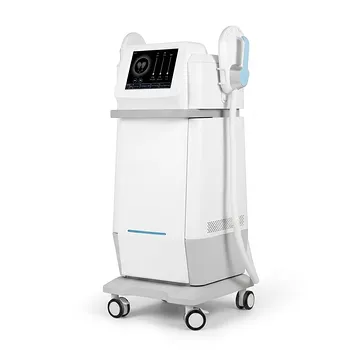
For deep-penetrating unipolar RF body sculpting, use the device’s validated protocol as the controlling authority, with power commonly set around 150–180 W within a 100–200 W operating range. Maintain continuous circular handpiece motion, deliver approximately 3–4 passes per treatment area, and use measured epidermal temperature of 40–42°C as the usual endpoint, stopping earlier if the patient reaches their heat-tolerance limit. Integrated chilled-tip cooling should remain available throughout treatment and be applied without RF activation whenever significant surface heat or discomfort develops.
The key safety principle is controlled, uniform heating rather than maximum power. Energy must be delivered continuously over a properly coupled surface while temperature, patient feedback, handpiece contact, and skin response are monitored together.
Establishing the Treatment Parameters
Use the Device-Specific Operating Range
A practical operating range for systems capable of reaching subcutaneous tissue depths of approximately 20 mm is 100–200 W, with 150–180 W often used as the working range described in the primary protocol.
These values are not interchangeable across manufacturers. Electrode geometry, frequency, impedance control, treatment area, tissue thickness, and built-in temperature algorithms can make the same wattage produce different tissue effects.
Apply a Coupling Agent
Use the coupling medium specified by the manufacturer, such as mineral oil where approved, to support smooth handpiece movement and consistent energy delivery.
The treatment surface should be clean and adequately coupled. Poor contact, inadequate product, or interrupted movement can concentrate energy in small areas and increase the risk of painful hot spots.
Maintain Continuous Motion
Move the unipolar handpiece in a constant circular motion over each treatment section, with approximately 30 seconds per area under the primary protocol.
The handpiece should not remain stationary while RF is active. Continuous motion distributes heat and reduces localized temperature accumulation in the epidermis and underlying tissue.
Use Controlled Passes
Administer approximately 3–4 total passes per treatment area, unless the device’s validated protocol specifies otherwise.
Pass count should be adjusted for tissue thickness, treatment-zone size, patient tolerance, measured temperature, and the device’s automated feedback. More passes do not automatically produce better contouring and may increase thermal risk.
Selecting the Correct Temperature Endpoint
Target the Epidermal Endpoint
The primary clinical endpoint is a measured epidermal temperature of approximately 40–42°C.
Some RF systems use a broader surface target, such as 38–42°C, while other protocols describe treatment-zone temperatures approaching 41–43°C. These ranges should not be treated as universal substitutes: the endpoint must correspond to the sensor location and the device’s cleared or validated operating instructions.
Respect Patient Heat Tolerance
Stop or reduce RF delivery when the patient reaches their upper heat-tolerance limit, even if the numerical target has not been reached.
Pain, burning, sharp discomfort, or rapidly escalating heat are warning signals rather than evidence of treatment effectiveness. Patient feedback is an essential safety input because measured surface temperature may not capture every relevant local condition.
Distinguish Surface and Deep Temperatures
The epidermal endpoint is not the same as the temperature of subcutaneous fat or the deep dermis.
RF produces three-dimensional bulk heating, and the deepest tissue temperature may differ from the displayed surface measurement. Unless the system directly measures internal temperature, operators should not claim that a specific subdermal temperature has been achieved based only on the epidermal reading.
Avoid Extrapolating Collagen-Denaturation Temperatures
Collagen denaturation temperatures reported in laboratory or tissue studies are not treatment targets for routine body sculpting.
Attempting to drive tissue toward approximately 60°C or higher to force collagen denaturation would create unnecessary injury risk, particularly if the device does not directly measure the relevant deep tissue temperature. Clinical protocols generally rely on controlled subablative heating and subsequent remodeling rather than deliberate surface overheating.
Applying Epidermal Cooling Correctly
Use Integrated Cooling Throughout Treatment
Keep the device’s chilled-tip epidermal cooling system operational according to the manufacturer’s protocol.
Cooling protects the skin surface while RF energy heats deeper tissue. It does not eliminate the need for continuous motion, temperature monitoring, appropriate coupling, or patient communication.
Cool Without RF Activation When Needed
If the patient develops substantial heat discomfort, disengage the RF trigger and place the chilled tip directly on the skin to reduce the surface temperature.
Resume RF only after discomfort and temperature have returned to an acceptable level, and only if the skin remains clinically normal and the treatment remains within the device protocol.
Monitor the Skin, Not Only the Display
Inspect the treatment zone for excessive erythema, blanching, tenderness, blistering, or other abnormal changes.
A temperature display can lag behind local tissue conditions or fail to represent a small area of poor contact. Visible skin changes or disproportionate pain require immediate cessation and clinical assessment.
Preserve Full-Surface Contact
Maintain stable handpiece-to-skin contact during movement, following any vacuum or contact-pressure requirements built into the system.
Uneven contact can alter impedance and energy distribution. Systems using vacuum-assisted delivery require their own validated suction settings; parameters from infrared, bipolar, or vacuum-RF platforms should not be transferred to a unipolar device.
Structuring the Treatment Course
Follow the Validated Session Interval
The primary protocol describes seven sessions spaced two weeks apart.
This schedule is associated with progressive collagen remodeling, dermal structural change, and possible improvements in circumference and cellulite appearance, but outcomes depend on the specific indication, device, patient characteristics, and treatment technique.
Avoid Borrowing Schedules From Other Platforms
Supplementary protocols describe courses ranging from eight to twelve sessions and may include infrared energy, vacuum suction, or different RF configurations.
Those schedules are not directly applicable to a deep-penetrating unipolar handpiece. Session number and interval should come from the device-specific clinical protocol and applicable regulatory labeling.
Document Each Session
Record the treatment area, device identification, power range, number of passes, temperature readings, cooling use, patient tolerance, and skin response.
Consistent documentation allows the operator to identify cumulative sensitivity and determine whether later sessions require reduced power, fewer passes, longer cooling intervals, or discontinuation.
Understanding the Trade-offs
Higher Power Increases Thermal Demand
Increasing power may shorten the time needed to reach the endpoint, but it also reduces the margin for uneven contact or inconsistent movement.
A lower setting with uniform passes can be more appropriate for thin tissue, sensitive skin, small treatment zones, or patients with limited heat tolerance.
More Passes Can Increase Risk
Additional passes may increase cumulative heating without providing a proportional clinical benefit.
Once the treatment endpoint has been reached, continuing to add passes can raise the risk of burns, prolonged erythema, pain, and post-treatment complications.
Surface Temperature Is an Imperfect Surrogate
An epidermal reading of 40–42°C helps standardize treatment, but it does not prove that a particular depth has reached a therapeutic temperature.
This is especially important for devices marketed as penetrating to a stated depth: nominal penetration is not equivalent to uniform heating at that depth in every patient.
Cooling Can Mask Poor Technique
Aggressive cooling may make a treatment feel more tolerable while energy continues to accumulate below the surface.
Cooling should protect the epidermis, not compensate for stationary handpiece placement, excessive passes, inadequate coupling, or power settings outside the validated range.
Do Not Mix Incompatible Parameters
Settings such as 20 W RF, infrared output, vacuum pressure, or negative-pressure values from combination systems should not be imported into a unipolar RF protocol.
RF power, temperature endpoints, cooling behavior, and pass technique must be interpreted as one device-specific system.
Making the Right Choice for Your Goal
The safest parameter selection is the one supported by the device’s instructions for use, clinical training, and real-time monitoring.
- If your primary focus is consistent treatment delivery: Use the manufacturer-approved power range, continuous circular motion, approximately 3–4 passes, and documented epidermal temperature readings.
- If your primary focus is epidermal protection: Maintain active chilled-tip cooling, stop RF during significant discomfort, and use the inactive chilled tip for direct surface cooling.
- If your primary focus is treatment efficacy: Reach the validated temperature endpoint without exceeding it, rather than pursuing higher power, longer dwell time, or additional passes.
- If your primary focus is individualized care: Adjust treatment according to tissue thickness, patient tolerance, contact quality, skin response, and the device’s feedback controls.
- If your primary focus is clinical safety: Treat 40–42°C as a protocol reference rather than a universal guarantee, and stop immediately for abnormal pain or skin changes.
Reliable RF body sculpting depends on disciplined temperature control, continuous motion, active cooling, and strict adherence to the specific device’s validated protocol.
Summary Table:
| Parameter | Recommended Setting | Key Notes |
|---|---|---|
| Power | 100–200 W (working 150–180 W) | Use validated protocol, not universal values |
| Motion | Continuous circular, ~30 sec/area | Prevents hot spots |
| Passes | 3–4 passes per area | Adjust to tolerance and tissue |
| Temperature Endpoint | Epidermal 40–42°C (38–43°C range) | Stop at heat limit, don't force |
| Cooling | Chilled tip active, extra cooling without RF | Protects skin, compensates for technique |
| Sessions | 7 sessions, 2 weeks apart | Follow device-specific schedule |
Elevate Your RF Body Sculpting Practice with BELIS
Master safe, effective treatments with our advanced unipolar RF devices, designed for clinics and premium salons. Our portfolio includes professional-grade systems with validated protocols for optimal results.
Why choose BELIS?
- High-performance equipment engineered for safety and efficacy
- Comprehensive support including training and clinical guidance
- Trusted by aesthetic professionals worldwide
Ready to enhance your services and patient satisfaction?
Contact us today to learn more and request a demo!
Related Products
- EMSlim Neo Nova Body Sculpting EMS Sculpting Machine
- EMS Body Sculpting Slimming Machine EMSlim Body Slimming Machine
- EMSlim RG Laser Body Sculpting and Slimming Machine
- EMS Body Sculpting Machine for Body Slimming and Sculpting
- Ultrasonic Cavitation Machine Lipo Laser Device
People Also Ask
- How do RF body sculpting devices target subcutaneous fat & tighten skin?
- What is the biological mechanism of action by which radiofrequency (RF) energy achieves body sculpting and cellulite reduction? Discover how controlled heating remodels collagen, influences fat, and smooths skin.
- What anatomical mechanisms cause lower face and submental contour loss, and how do body sculpting and RF technologies address jowls and neck laxity? Discover the key causes and non-surgical solutions.
- How can aesthetic practitioners accurately differentiate between muscular hypertrophy and subcutaneous fat accumulation when evaluating patients for calf or lower face contouring using body sculpting equipment?
- How does the cellular differentiation process of subcutaneous fat inform the mechanism of action behind non-invasive body sculpting equipment such as cryolipolysis and RF cavitation devices? Key insights for clinical practice