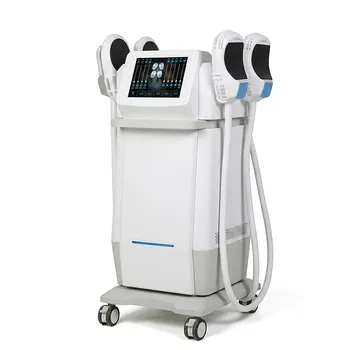
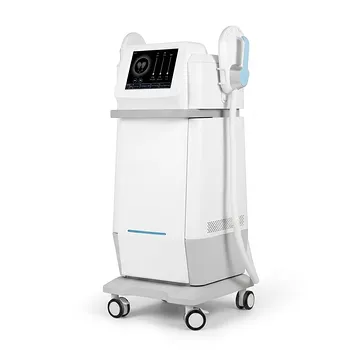
Non-invasive body sculpting and isolated liposuction are insufficient after massive weight loss because the primary problem is not simply excess fat—it is excess, structurally compromised skin and soft tissue. Cryolipolysis, RF cavitation, and related technologies can reduce localized fat or produce modest skin contraction, while liposuction removes fat through suction. None reliably removes large redundant skin flaps, restores stretched fascial support, or corrects major tissue descent and folds.
After massive weight loss, severe contour deformity is usually a structural excess-tissue problem, not a fat-volume problem. Meaningful correction often requires excisional surgery—such as abdominoplasty, circumferential body lift, or surgical mastopexy—with non-invasive treatments reserved for carefully selected residual concerns.
Why Massive Weight Loss Creates a Different Clinical Problem
The tissue has been stretched beyond simple fat excess
After major weight reduction, the skin envelope may remain substantially larger than the underlying body. The result is redundant skin, deflated soft tissue, and folds that cannot be corrected by reducing additional fat.
The supporting tissues may also be weakened. Fascial laxity and loss of soft-tissue suspension contribute to ptosis, or downward displacement, across the abdomen, breasts, arms, thighs, and trunk.
The visible deformity is often caused by skin and support failure
A patient may have little remaining subcutaneous fat but still have substantial hanging tissue. In this situation, further fat reduction can make the deflation more apparent rather than restoring a smooth contour.
This is the key distinction between volume reduction and tissue repositioning. Body sculpting technologies primarily reduce or reshape volume; they do not reliably remove and redrape a redundant skin envelope.
Why Non-Invasive Technologies Cannot Correct Severe Deflation
They target localized fat, not large skin flaps
Cryolipolysis reduces selected pockets of subcutaneous adipose tissue through controlled cooling. RF cavitation and related energy-based treatments may reduce localized fat and promote some degree of collagen contraction or skin firming.
These effects are best suited to mild-to-moderate laxity and localized fat deposits. They are not designed to excise large folds of skin or reconstruct severely stretched soft-tissue anatomy.
Skin tightening has practical limits
Radiofrequency and other thermal modalities may improve skin firmness through tissue heating and collagen remodeling. However, modest contraction should not be equated with surgical skin removal.
When the skin envelope is substantially redundant, the amount of contraction achievable with non-invasive treatment is generally inadequate to eliminate hanging folds, overhanging abdominal tissue, or major post-bariatric ptosis.
Fat reduction can worsen the appearance of deflation
Removing additional fat from already deflated areas may reduce volume without reducing the excess skin. This can leave the patient with a thinner but still loose envelope.
The result may be more pronounced wrinkling, hollowing, or laxity. Patient selection is therefore essential before offering any modality intended primarily for fat reduction.
Why Isolated Liposuction Is Also Inadequate
Liposuction removes fat, not excess skin
Traditional suction-assisted lipectomy uses cannulas to remove subcutaneous fat. It does not directly remove the large skin flaps that commonly remain after massive weight loss.
Liposuction can improve selected fat deposits, but it cannot by itself correct a hanging pannus, severe abdominal skin redundancy, or widespread tissue descent.
It does not restore weakened fascial support
Severe post-weight-loss deformity may involve laxity of the abdominal wall and supporting soft tissues. Liposuction changes fat volume but does not provide the same structural tightening, fixation, or redraping achieved through an excisional procedure.
This is why a patient can undergo technically adequate fat removal and still have significant ptosis or an unsatisfactory contour.
Aggressive suction may accentuate irregularity
When skin recoil is poor, removing more fat can leave the surface uneven or emphasize hollows and folds. The risk is particularly relevant when the skin has lost elasticity and cannot contract around the smaller underlying volume.
Liposuction may therefore be useful as an adjunct to skin excision, but it is often inadequate—and potentially counterproductive—as a standalone treatment for severe laxity.
What Excisional Surgery Addresses That Devices Cannot
It removes the redundant envelope
Procedures such as abdominoplasty and circumferential body lifts directly excise excess skin and soft tissue. This addresses the physical source of large folds rather than attempting to shrink them indirectly.
The remaining tissue can then be redraped to create a more controlled contour.
It can reposition and suspend descended tissue
Post-bariatric surgery may incorporate tissue suspension or fixation techniques to improve soft-tissue position. Dermal suspension mastopexy, for example, is intended to address breast ptosis and deflation rather than merely reduce fat.
The appropriate operation depends on the distribution of excess tissue and the anatomical regions affected.
It treats the overall deformity, not just one fat pocket
Massive weight loss commonly produces a multi-region problem involving the abdomen, flanks, back, breasts, arms, or thighs. A single non-invasive treatment area or isolated liposuction session cannot correct the full three-dimensional pattern of tissue redundancy.
Surgical planning can address these broader relationships through staged or combined procedures when clinically appropriate.
When Non-Invasive Treatment Still Has a Role
Mild-to-moderate laxity with localized residual fat
Non-invasive technologies can be appropriate when the patient has relatively good skin recoil, limited laxity, and a discrete residual fat pocket. The goal should be refinement, not removal of major redundant tissue.
Examples may include small areas of residual adiposity after weight stabilization or contour smoothing around a previously treated region.
Adjunctive treatment after surgical correction
Energy-based treatments may have a role in selected postoperative or nonsurgical pathways for superficial contour refinement, skin texture, or residual edema. They should complement, not replace, an operation when the dominant problem is large-scale tissue excess.
The treatment plan must account for healing status, surgical recommendations, and the possibility that swelling or irregularity represents a complication requiring assessment rather than additional device treatment.
Patients who understand the limits
Appropriate counseling is essential. Patients should understand that “tightening” does not mean excision, and that incremental fat reduction will not recreate a surgically lifted or redraped contour.
Clear expectations help prevent repeated treatments that provide minor changes while delaying definitive management.
Understanding the Trade-offs
Non-invasive treatment has lower procedural burden
Cryolipolysis, RF-based treatments, and similar modalities avoid incisions, cannula passage, general anesthesia, and surgical recovery. They may therefore be attractive for patients with limited contour concerns or those who are not candidates for surgery.
However, lower procedural risk does not mean equivalence of results. The safer and less invasive option may also be incapable of correcting the patient’s actual deformity.
Surgery is more definitive but carries greater risks
Excisional procedures involve anesthesia, scars, recovery time, and risks such as bleeding, infection, wound problems, seroma, thromboembolic events, and contour irregularity. These risks must be evaluated individually.
The relevant comparison is not simply “device versus surgery.” It is whether the expected benefit matches the anatomical problem and whether the patient accepts the trade-off required for a definitive correction.
Treatment selection errors are the main avoidable problem
The most common conceptual error is treating severe skin redundancy as if it were ordinary localized adiposity. Applying more energy or performing more suction cannot compensate for the absence of skin excision and structural redraping.
Clinics should establish protocols that distinguish localized fat, mild skin laxity, and severe post-weight-loss tissue redundancy before recommending treatment.
How to Apply This to Patient Selection
The first step is to identify what is driving the contour problem: residual fat, skin excess, fascial laxity, tissue descent, or a combination of these factors.
- If your primary focus is localized residual fat: Consider non-invasive fat-reduction technologies or carefully selected liposuction when skin recoil and tissue quality are adequate.
- If your primary focus is mild-to-moderate skin laxity: Energy-based skin-tightening treatments may provide incremental improvement, with expectations set conservatively.
- If your primary focus is severe tissue deflation or hanging skin folds: Refer for evaluation for an excisional procedure such as abdominoplasty, circumferential body lift, or regional lift surgery.
- If your primary focus is comprehensive post-bariatric contour correction: Treat the problem as a multi-region structural deformity and plan surgical or staged management rather than isolated fat reduction.
The correct treatment is determined by whether the patient needs volume reduction or removal and repositioning of a compromised skin envelope.
Summary Table:
| Aspect | Non-Invasive Technologies (e.g., RF Cavitation, Cryolipolysis) | Isolated Liposuction | Excisional Surgery (e.g., Abdominoplasty) |
|---|---|---|---|
| Primary Mechanism | Reduces localized fat and mild skin tightening | Removes subcutaneous fat via suction | Excises excess skin and repositions tissue |
| Can Remove Large Skin Flaps? | No | No | Yes |
| Addresses Fascial Laxity? | Limited | No | Yes (via plication/fixation) |
| Suitable for Severe Deflation? | No | No | Yes |
| Typical Candidates | Mild-moderate laxity with localized fat | Localized fat with adequate skin elasticity | Severe tissue redundancy and ptosis |
At BELIS, we understand that managing severe post-weight-loss skin laxity requires more than non-invasive devices. While our advanced aesthetic equipment—including RF cavitation, cryolipolysis, HIFU, and laser systems—are excellent for refining contour in appropriate candidates, true correction of severe deflation often requires surgical intervention. If you're a clinic or premium salon seeking to offer comprehensive body contouring solutions, consult our experts to build a treatment protocol that properly triages patients and integrates non-invasive modalities as adjuncts to surgical care. Contact us today to discover how BELIS can elevate your practice.
Related Products
- EMSlim Neo Nova Body Sculpting EMS Sculpting Machine
- EMSlim RG Laser Body Sculpting and Slimming Machine
- EMS Body Sculpting Machine for Body Slimming and Sculpting
- EMS Body Sculpting Slimming Machine EMSlim Body Slimming Machine
- Cryolipolysis Fat Freezing Machine Ultrasonic Cavitation Fat Reducing Device
People Also Ask
- What anatomical mechanisms cause lower face and submental contour loss, and how do body sculpting and RF technologies address jowls and neck laxity? Discover the key causes and non-surgical solutions.
- How can aesthetic practitioners accurately differentiate between muscular hypertrophy and subcutaneous fat accumulation when evaluating patients for calf or lower face contouring using body sculpting equipment?
- How do the mid-infrared transmission spectra of fatty tissue and lipids assist in understanding selective targeting for body sculpting devices like cryolipolysis and RF cavitation? Mid-infrared spectra reveal lipid-specific markers, aiding tissue characterization.
- How should aesthetic clinics evaluate post-massive weight loss patients using tissue assessment techniques like the pinch test to determine suitability for non-invasive body sculpting devices versus surgical tissue excision? A Comprehensive Guide
- What are the VTE safety advantages of non-invasive body sculpting over surgery? Lower thromboembolic risk without general anesthesia