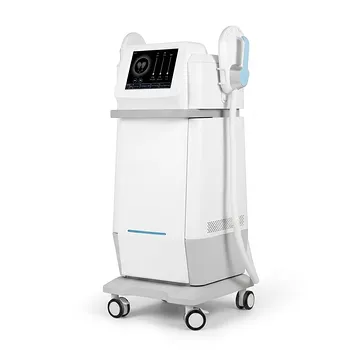
Intrinsic skin aging is a gradual loss of epidermal renewal, dermal support, and mechanical resilience. Histologically, it involves slower epidermal turnover with increased corneocyte retention, flattening of the dermoepidermal junction, reduced dermal papillae and fibroblast activity, cellular senescence, and progressive extracellular-matrix loss. Non-surgical tightening devices target these deficits by delivering controlled energy at selected tissue depths, causing collagen contraction and stimulating longer-term collagen and elastin remodeling.
The central problem is structural, not merely superficial: aged skin has less dermal collagen, weaker elastic support, reduced cell activity, and poorer attachment between the epidermis and dermis. HIFU, radiofrequency, and fractional laser technologies address different parts of this problem through controlled thermal injury and subsequent wound-healing responses.
What Changes During Intrinsic Skin Aging?
The epidermis renews more slowly
Intrinsic aging slows epidermal turnover. As a result, corneocytes remain on the surface for longer, contributing to thinner-looking, duller, and less efficiently renewing skin.
This change is different from typical photoaging, where ultraviolet exposure can produce epidermal thickening, keratinocyte disorganization, uneven pigmentation, and solar elastosis.
The dermoepidermal junction becomes flatter
The dermoepidermal junction normally contains interlocking rete ridges and dermal papillae that increase contact between the epidermis and dermis. With intrinsic aging, this interface flattens and dermal papillae become less dense.
The flatter junction reduces mechanical interlocking and may impair the exchange of nutrients and signaling factors between the two layers. Clinically, this contributes to thinner, more fragile skin.
Dermal fibroblast activity declines
Fibroblasts produce and maintain collagen, elastin, and other extracellular-matrix components. Aging is associated with reduced fibroblast density or activity, cellular senescence, and a diminished capacity to repair and rebuild the dermal matrix.
This means that aged skin does not simply contain less structural protein; it also has a reduced biological capacity to replace it.
Collagen is progressively lost
Dermal collagen declines by approximately 1% per year with intrinsic aging, according to the primary reference. Existing collagen networks also become less organized and less effective at resisting deformation.
The result is reduced dermal thickness, weaker tensile support, and increased susceptibility to fine wrinkling and laxity.
Elastic fibers are degraded
Matrix metalloproteinase activity contributes to the breakdown of elastic fibers and other extracellular-matrix components. As elastic support deteriorates, skin becomes less capable of returning to its original shape after stretching.
This loss of recoil is a key histological basis for visible laxity and tissue ptosis.
How Histological Deficits Become Visible
Skin becomes thinner and less resilient
The combined reduction in epidermal renewal, dermal thickness, collagen, and elastic support produces skin that appears thinner and less robust.
Fine wrinkles become more apparent because the tissue has less structural material to maintain a smooth surface.
Mechanical tension decreases
Healthy dermal collagen and elastin distribute mechanical forces through the skin envelope. When these networks weaken, the skin cannot maintain the same level of tension.
The visible consequences include laxity, reduced firmness, and gradual descent of soft tissue.
Facial support may also diminish
Intrinsic facial aging is not limited to the dermis. Thinning of the subcutaneous fat layer and age-related changes in the underlying bony framework can reduce support for the facial skin envelope.
Energy-based tightening devices can improve some lax connective-tissue deficits, but they do not fully replace lost fat or reverse skeletal remodeling.
How Non-Surgical Devices Target These Deficits
HIFU targets deeper structural layers
High-Intensity Focused Ultrasound concentrates acoustic energy at selected depths, including the deep dermis and, depending on the device and treatment plan, subcutaneous or fascial layers.
The focal thermal effect creates controlled micro-coagulation zones. The resulting wound-healing response can stimulate collagen remodeling and contraction in deeper supporting tissues.
HIFU is therefore most relevant when the treatment objective includes deeper laxity and tissue descent, rather than only surface texture.
Microneedle radiofrequency targets the dermis directly
Microneedle RF uses insulated or non-insulated needles to deliver radiofrequency energy at controlled depths within the dermis. The needles can bypass much of the superficial epidermis while creating localized thermal zones in the target tissue.
This controlled injury stimulates fibroblast activity, collagen remodeling, and extracellular-matrix repair. It is particularly suited to combining tightening with improvements in skin texture and selected scars or wrinkles.
Fractional lasers create patterned dermal remodeling
Fractional laser systems deliver energy in microscopic treatment columns, leaving surrounding tissue intact. Depending on the wavelength and settings, they may produce thermal coagulation, controlled ablation, or both.
The untreated surrounding skin supports healing, while the treated columns trigger tissue repair, collagen remodeling, and surface renewal. Fractional CO₂ is generally more intensive and can involve meaningful recovery, whereas non-ablative fractional approaches typically produce less downtime but may require multiple sessions.
Non-ablative infrared treatments heat without vaporizing skin
Broadband infrared treatments can heat the deeper dermis without epidermal vaporization or tissue necrosis. The thermal stimulus may promote both neocollagenesis and neoelastogenesis, increasing the production of structural proteins over time.
Existing collagen fibrils may contract initially, while newly synthesized collagen and elastin gradually improve tissue organization and elasticity. Clinical tightening is therefore progressive rather than immediate.
What Happens Histologically After Treatment?
Controlled thermal injury initiates repair
These technologies do not simply “shrink” skin in a mechanical sense. Their primary biological effect is a controlled thermal stimulus that activates wound-healing pathways while limiting damage to surrounding tissue.
The response includes inflammatory signaling, fibroblast activation, matrix turnover, and later structural remodeling.
Collagen contracts and is rebuilt
Heat can cause immediate contraction of existing collagen fibrils. This may produce an early tightening effect, although the magnitude and duration vary by device, treatment depth, energy, and tissue characteristics.
Over subsequent weeks and months, fibroblasts produce new collagen and reorganize the extracellular matrix. The reference describes remodeling that includes conversion toward more resilient Type I collagen from more flexible Type III collagen.
Elastin synthesis may increase
Some non-ablative thermal treatments also stimulate elastin fiber synthesis, or neoelastogenesis. This is relevant because improved elasticity requires more than increased collagen quantity; the dermis must also regain some capacity to recoil.
The degree of elastin restoration is treatment-dependent and should not be interpreted as complete reversal of age-related degeneration.
Results develop gradually
Collagen and elastin remodeling require time. Improvement from thermal treatments commonly develops over approximately 2 to 6 months, although treatment schedules and clinical response differ among modalities.
This delayed timeline is important: immediate tightening can reflect collagen contraction, while later improvement reflects biological remodeling.
Choosing the Device According to the Deficit
For deeper laxity and tissue descent
HIFU is generally selected when the intended target includes deeper dermal, subcutaneous, or fascial support. Its value lies in concentrating energy beneath the skin surface rather than primarily resurfacing the epidermis.
It should not be expected to restore substantial lost fat volume or replicate the lifting effect of surgery.
For dermal laxity and textural irregularity
Microneedle RF is useful when the goal is to deliver controlled thermal energy directly into the dermis while also addressing selected textural concerns.
Depth and energy must be individualized, particularly in thin facial areas or in patients at risk of unwanted volume loss.
For surface aging and collagen remodeling
Fractional lasers are appropriate when intrinsic aging is accompanied by fine lines, uneven texture, or superficial photodamage. Their fractional pattern promotes remodeling while preserving intervening islands of untreated tissue.
Ablative fractional lasers can be more effective for pronounced texture change but involve more recovery and greater risk than non-ablative approaches.
For gradual tightening with minimal surface disruption
Non-ablative infrared or other non-ablative thermal systems may suit patients who prioritize limited epidermal disruption. They generally produce more gradual and sometimes more modest changes than aggressive resurfacing.
“Non-ablative” does not mean risk-free, and treatment quality depends on appropriate patient selection and energy control.
Understanding the Trade-offs
Non-surgical tightening is not equivalent to surgery
These devices can stimulate dermal remodeling and improve selected degrees of laxity. They cannot reliably reproduce surgical repositioning, remove redundant skin, restore major volume loss, or correct advanced ptosis.
The realistic objective is improvement in firmness, elasticity, and texture—not complete reversal of aging.
The modalities do not target identical anatomy
HIFU, microneedle RF, fractional lasers, and infrared devices differ in penetration depth, thermal pattern, epidermal impact, and recovery profile. Treating them as interchangeable can lead to poor device selection.
The clinical deficit should determine the modality, rather than the device label alone.
More heat is not automatically better
Excessive or poorly placed thermal energy can cause burns, prolonged inflammation, pigmentary changes, scarring, pain, or unintended tissue effects. This is especially important for thin skin, darker phototypes, and anatomically sensitive regions.
Treatment parameters must be based on tissue thickness, location, skin type, indication, and the specific device’s validated settings.
Recovery varies substantially
Some non-ablative treatments have little visible downtime, but fractional CO₂ and other ablative procedures can cause redness, swelling, crusting, and a meaningful recovery period.
Therefore, claims that all non-surgical tightening involves “zero downtime” are inaccurate. Recovery depends on the technology and treatment intensity.
Photoaging must be distinguished from intrinsic aging
Intrinsic aging typically produces thin, finely wrinkled skin in relatively sun-protected areas. Photoaging more often includes coarse wrinkles, rough texture, dyspigmentation, and solar elastosis.
When ultraviolet damage is prominent, tightening alone is incomplete. Resurfacing, pigment-directed treatment, photoprotection, and appropriate topical therapy may be needed alongside structural remodeling.
How to Apply This to a Treatment Plan
The most reliable approach is to identify the dominant anatomical deficit before selecting an energy device.
- If your primary focus is deeper facial laxity: Consider a modality capable of reaching deeper dermal or fascial targets, such as appropriately selected HIFU, while recognizing that it will not replace lost fat or remove excess skin.
- If your primary focus is dermal firmness with moderate textural irregularity: Microneedle RF can provide depth-controlled dermal heating and stimulate collagen remodeling, provided parameters are carefully tailored.
- If your primary focus is fine lines and surface texture: Fractional laser treatment may be more appropriate, with the intensity balanced against recovery time and pigmentary risk.
- If your primary focus is gradual tightening with minimal epidermal disruption: Non-ablative infrared or related thermal treatments may be suitable, with expectations set around progressive rather than immediate improvement.
- If your primary focus is sun-related texture or pigmentation: Treat photoaging separately or in combination, because intrinsic-aging tightening devices do not correct all UV-induced changes.
A sound treatment plan matches the device’s depth and thermal behavior to the specific histological deficit, while keeping expectations realistic about the limits of non-surgical tightening.
Summary Table:
| Aspect | Intrinsic Aging Changes | Device Target | Modality Example |
|---|---|---|---|
| Epidermal renewal | Slower turnover, corneocyte retention | Stimulate renewal | Fractional laser (ablative/non-ablative) |
| Dermoepidermal junction | Flattening, reduced papillae | Improve dermal-epidermal interaction | Microneedle RF, fractional lasers |
| Fibroblast activity | Reduced density/activity | Activate fibroblasts | Non-ablative infrared, microneedle RF |
| Collagen content | ~1% loss/year, disorganized | Induce neocollagenesis | HIFU, RF, fractional lasers |
| Elastic fibers | Degraded, loss of recoil | Stimulate neoelastogenesis | Non-ablative infrared, certain RF |
| Dermal thickness | Reduced | Increase dermal thickness | HIFU, fractional lasers |
| Mechanical tension | Decreased, laxity | Contraction and remodeling | All devices |
Elevate your clinic's anti-aging offerings with BELIS's advanced HIFU, RF, and laser systems. Our devices are designed to target the structural deficits of intrinsic aging, delivering safe and effective tightening for your clients. Partner with us for cutting-edge technology, training, and support. Contact us today to learn more!
Related Products
- 4D 12D HIFU Machine Device for Skin Tightening
- 4D 12D HIFU Machine Device for Skin Tightening and Lifting
- Ultrasonic Cavitation Machine Lipo Laser Device
- 7D 12D 4D HIFU Machine Device
- Ultrasonic Cavitation Radiofrecuency Machine for Body Slimming
People Also Ask
- How do non-invasive skin tightening devices such as HIFU and microneedle RF compare to surgical rhytidectomy for facial lifting? Discover the key differences in results, longevity, and recovery.
- How does intense ultrasound (HIFU) skin tightening act on facial soft tissues? Discover its key clinical contraindications.
- What is the Difference Between Superficial and Deep Facial Fat? Deep Dive Guide
- What is the mechanism of action of High-Intensity Focused Ultrasound (HIFU) devices in noninvasive body sculpting, and how is surrounding tissue protected?
- How do non-invasive lifting devices like high-intensity focused ultrasound (HIFU) complement soft tissue fillers in treating lower face aging and pre-jowl sulcus depression? Discover the synergistic approach.