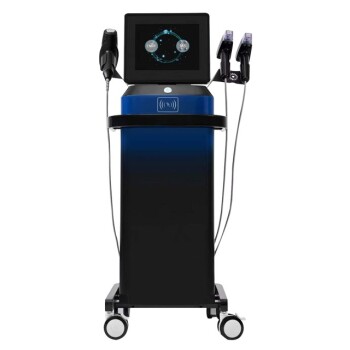
HIFU skin tightening acts below the skin’s surface by concentrating ultrasound energy at selected facial tissue depths. The absorbed energy produces small, controlled zones of thermal coagulation in the deep dermis, subcutaneous tissues, or superficial musculoaponeurotic system (SMAS), while the overlying epidermis is largely spared. This causes localized collagen contraction and initiates wound-healing processes that promote longer-term collagen remodeling, tissue tightening, and gradual facial lifting.
HIFU is a depth-controlled thermal treatment, not a surface resurfacing procedure. Its clinical effect depends on accurately targeting lax supporting tissues while avoiding structures and patient factors that increase the risk of pain, injury, or impaired healing.
How HIFU Acts on Facial Soft Tissues
Focused Energy Reaches Deep Tissue
The device delivers acoustic energy through the skin and concentrates it at a predetermined focal depth. Unlike unfocused ultrasound, this allows substantial energy deposition at the target while minimizing heating along the beam’s superficial path.
Common targets include the deep dermis and the SMAS, a fibrous connective-tissue layer that links facial muscles with the dermis and contributes to facial support and contour.
Thermal Coagulation Creates Controlled Tissue Injury
At the focal point, absorbed ultrasound energy is converted into localized heat. This produces discrete micro-thermal coagulation zones in the targeted tissue rather than broadly heating the entire skin surface.
The treatment is intended to create controlled injury sufficient to stimulate contraction and remodeling, while preserving the epidermis and limiting damage to adjacent tissues.
Collagen Contracts and Remodels
The initial thermal effect can produce contraction of existing collagen fibers. The subsequent healing response recruits cellular and inflammatory signaling processes that stimulate neocollagenesis, or the formation of new collagen.
Over time, this remodeling can improve tissue firmness, reduce laxity, and refine facial contours. The result develops progressively rather than functioning as an immediate surgical lift.
The SMAS Provides Structural Support
Targeting the SMAS is clinically important because it addresses a deeper facial support layer rather than only the superficial skin. This is the same general anatomic plane manipulated during surgical facelift procedures, although HIFU does not surgically reposition or remove tissue.
The treatment therefore aims to improve laxity through controlled thermal stimulation and contraction of existing soft-tissue support structures.
The Epidermis Is Largely Spared
Because the energy is focused beneath the surface, the superficial epidermal layers are not the primary treatment target. This distinguishes HIFU from procedures that intentionally remove or injure the epidermis.
Epidermal sparing does not eliminate risk, however. Incorrect depth selection, excessive energy, poor coupling, or treatment over vulnerable anatomy can still cause significant pain or tissue injury.
Which Factors Determine the Clinical Effect?
Treatment Depth Must Match the Intended Tissue
Different focal depths reach different anatomic layers. Effective treatment requires selecting the depth and energy level according to the patient’s anatomy, degree of laxity, treatment area, and device capabilities.
Energy delivered too superficially may increase epidermal discomfort or injury, while energy delivered at an inappropriate deep location may reduce effectiveness or increase the risk to underlying structures.
Energy Must Be Delivered Precisely
The desired effect depends on placing thermal coagulation points in a controlled pattern. Treatment planning and operator technique are therefore central to both clinical benefit and safety.
The procedure should be performed with equipment approved for the intended use and according to its technical instructions, including specified depths, energy settings, and treatment areas.
Coupling and Cooling Affect Tolerability
Continuous application of acoustic coupling gel helps transmit ultrasound energy, supports consistent contact, and reduces friction and superficial heating. It also improves treatment tolerance and helps protect the epidermis.
During treatment, the clinician should monitor for excessive erythema, localized edema, or disproportionate pain and adjust or stop treatment when clinically indicated.
Key Clinical Contraindications
Metal Prostheses in the Treatment Zone
A metal prosthesis or implant within the treatment area is a key contraindication identified for intense ultrasound treatment. The concern is that the implant may alter energy distribution or increase the risk of an unwanted tissue reaction.
The relevant question is not simply whether a patient has any metal anywhere in the body, but whether a metal prosthesis lies within or close to the planned ultrasound field. Device-specific instructions should determine how particular implants are handled.
Active Dermatosis or Inflammation
Treatment should not be performed over active dermatosis, including an actively inflamed, infected, or otherwise compromised skin condition in the intended treatment area.
Applying thermal energy to diseased or inflamed tissue may increase discomfort, worsen the local condition, or complicate assessment of treatment-related reactions.
Impaired Tissue Healing
Patients with medical conditions or other factors that compromise tissue healing require careful assessment and may be unsuitable for treatment. HIFU relies on a controlled tissue-repair response and subsequent collagen remodeling, so impaired healing can reduce benefit and increase risk.
This category should be assessed clinically rather than treated as a single checklist item. The clinician should consider the patient’s overall health, local tissue quality, and ability to recover from controlled thermal injury.
Impaired Dermal Collagen Remodeling
Factors that substantially interfere with dermal collagen remodeling may limit the expected tightening response. They should be considered during patient selection, particularly when the treatment goal depends on gradual structural improvement rather than an immediate mechanical lift.
A patient may therefore have no obvious skin lesion yet still be a poor candidate if the underlying tissue cannot respond predictably to the treatment.
Understanding the Trade-offs
Deeper Treatment Does Not Mean Unlimited Energy
The SMAS and deep soft tissues are useful targets, but increasing energy or depth does not automatically produce a better lift. Excessive treatment can increase pain, edema, inflammation, or unintended tissue injury.
Treatment intensity must remain within the device’s validated operating parameters and be adapted to anatomy, especially in thin or bony areas.
Bony Prominences Require Extra Care
Areas overlying bony prominences can be more uncomfortable because there is less soft tissue between the focal treatment zone and bone. Clinicians should use extra care and reduce energy density where appropriate.
This is an operational precaution rather than a substitute for proper patient selection or anatomical planning.
Epidermal Sparing Is Not Risk Elimination
Although the epidermis is generally spared, patients can still experience transient erythema, swelling, tenderness, or pain. Poor coupling or inaccurate placement can increase superficial heating and discomfort.
The procedure’s non-invasive nature also does not make it equivalent to surgery. HIFU cannot remove excess skin or replicate the degree of repositioning achieved by a facelift.
Results Are Gradual and Variable
The early effect may include collagen contraction, but much of the visible improvement depends on later remodeling. Outcomes vary with tissue laxity, anatomy, treatment settings, and the patient’s healing response.
Expectations should therefore be based on incremental tightening and contour improvement, not guaranteed surgical-level correction.
How to Apply This to Patient Selection
The safest approach is to confirm the treatment target, examine the overlying and underlying tissues, and review device-specific contraindications before treatment.
- If your primary focus is facial tightening: Target the appropriate deep dermal or SMAS-related tissue plane with controlled energy to stimulate contraction and later collagen remodeling.
- If your primary focus is patient safety: Exclude active dermatosis, metal prostheses in the treatment zone, and factors that significantly impair tissue healing or collagen remodeling.
- If your primary focus is treatment tolerance: Use continuous acoustic coupling gel, reduce energy density over bony prominences, and monitor pain, erythema, and localized edema throughout the procedure.
- If your primary focus is realistic outcomes: Explain that HIFU produces gradual remodeling and tightening, not surgical removal or repositioning of excess facial tissue.
HIFU is best understood as a precisely targeted, controlled thermal stimulus that can strengthen facial soft-tissue support when appropriate anatomy, patient selection, and treatment parameters are carefully matched.
Summary Table:
| Mechanism | Description |
|---|---|
| Focused Energy | Concentrates ultrasound at specific depths, sparing epidermis. |
| Thermal Coagulation | Creates micro-coagulation zones for controlled tissue injury. |
| Collagen Contraction | Immediate fiber contraction; later neocollagenesis. |
| SMAS Targeting | Addresses deep support layer for structural lift. |
| Epidermal Sparing | Minimizes surface damage, but not risk. |
| Key Contraindications | Details |
|---|---|
| Metal Prostheses | In treatment zone; alters energy distribution. |
| Active Dermatosis | Inflamed/infected skin; worsens condition. |
| Impaired Healing | Compromised recovery; reduces benefit. |
| Poor Collagen Remodeling | Limits long-term tightening. |
Elevate your clinic's offerings with cutting-edge HIFU and other aesthetic technologies from BELIS. Our devices are designed for professional use in clinics and premium salons, ensuring precision and safety. Contact us today to discuss how our advanced systems can enhance your practice and patient satisfaction. Get in touch now!
Related Products
- 4D 12D HIFU Machine Device for Skin Tightening
- 4D 12D HIFU Machine Device for Skin Tightening and Lifting
- 22D HIFU Machine Device Facial Machine
- 7D 12D 4D HIFU Machine Device
- 12D HIFU Machine Device for Facial HIFU Treatment
People Also Ask
- How do non-invasive skin tightening devices such as HIFU and microneedle RF compare to surgical rhytidectomy for facial lifting? Discover the key differences in results, longevity, and recovery.
- What is the mechanism of action of High-Intensity Focused Ultrasound (HIFU) devices in noninvasive body sculpting, and how is surrounding tissue protected?
- How do non-invasive lifting devices like high-intensity focused ultrasound (HIFU) complement soft tissue fillers in treating lower face aging and pre-jowl sulcus depression? Discover the synergistic approach.
- What key clinical safety guidelines and contraindications must aesthetic practitioners observe when operating ultrasound skin tightening devices? Essential Safety Protocols for Clinics
- Why is it necessary to fill the transducer chamber with deionized water and PE film in HIFU devices? Key Safety Insights