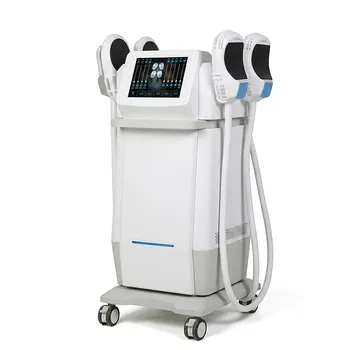
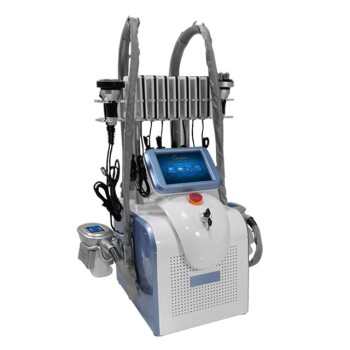
Cavitation is the formation and collapse of microscopic bubbles caused by pressure changes in a fluid. In non-invasive body-sculpting systems, specialized ultrasound energy is directed through the skin toward subcutaneous fat. The resulting acoustic pressure may create mechanical stress around fat cells, contributing to localized fat disruption and contouring without incisions.
Cavitation is an acoustic-mechanical process, not simply “melting fat.” Ultrasound energy interacts with tissue fluids and fat, while the body must process the resulting cellular debris through normal biological pathways.
How Cavitation Works in Body-Sculpting Systems
Ultrasound creates alternating pressure waves
A cavitation applicator produces high-frequency sound waves through a handheld transducer. These waves travel through the skin and enter the underlying soft tissue.
As the sound wave passes, it produces alternating cycles of compression and rarefaction—higher and lower local pressure. In fluid-containing tissue, these pressure changes can encourage microscopic bubble formation.
Bubbles create localized mechanical stress
If the acoustic conditions are appropriate, tiny vapor or gas-filled bubbles can form and rapidly collapse. This process is called acoustic cavitation.
The collapse can generate localized mechanical forces, including fluid movement and shear stress. In aesthetic systems, these forces are intended to affect adipose tissue structures while limiting injury to the skin and surrounding tissues.
Fat-cell disruption supports contouring
The proposed aesthetic effect is disruption of the membranes or structure of targeted subcutaneous fat cells. This can reduce the volume of fat in a localized area and improve the visible body contour.
The treatment does not remove fat immediately in the way surgical liposuction does. Instead, the body must clear and metabolize the affected cellular material over time.
What the Equipment Actually Does
The applicator controls energy delivery
The device’s transducer determines how ultrasound energy is produced and delivered. Important operating parameters include frequency, acoustic intensity, pulse pattern, treatment duration, and applicator design.
These factors influence how deeply the energy penetrates and whether the dominant effect is mechanical, thermal, or a combination of both.
Treatment is directed at subcutaneous tissue
Non-invasive body-sculpting systems are designed to deliver energy externally through the skin. Their purpose is to affect localized fat deposits without surgical incisions or direct removal of tissue.
The treatment area, tissue thickness, device settings, and coupling between the applicator and skin all affect energy transmission.
Radiofrequency is a separate mechanism
Some systems combine ultrasound cavitation with radiofrequency, or RF, energy. The ultrasound component is intended to provide mechanical effects, while RF primarily produces controlled tissue heating.
RF heating may support temporary tissue tightening or improved firmness by affecting collagen-rich tissue. It should not be described as the cause of cavitation, because RF and ultrasound use different forms of energy and produce different biological effects.
How Cavitation Differs From Surgical Ultrasound-Assisted Liposuction
Surgical systems use substantially different conditions
Ultrasound-assisted liposuction uses ultrasonic energy during a surgical procedure to emulsify or loosen fat before it is removed through suction. The surgeon directly controls the treatment area and then physically extracts the disrupted tissue.
This can be useful in dense or fibrous regions, but it involves incisions, anesthesia-related considerations, bleeding risk, and recovery.
Non-invasive systems do not extract fat
External cavitation devices do not suction out emulsified fat. They are intended to produce localized tissue effects that may reduce fat volume gradually.
Consequently, the magnitude and predictability of contour change are generally different from surgical liposuction.
Similar physics does not mean equivalent treatment
Both approaches may use ultrasonic energy, but their energy levels, delivery methods, clinical control, and outcomes are not interchangeable. A non-invasive cavitation treatment should not be presented as a non-surgical equivalent of liposuction.
What Results Can Be Expected
Cavitation targets localized contouring
These systems are generally intended for localized fat reduction or body contour refinement, not broad weight loss. They are most relevant when a person has a relatively stable body weight but has discrete areas of unwanted fat.
The visible result depends on the device, treatment protocol, tissue characteristics, and individual biological response.
Results develop over time
Because non-invasive treatment does not physically remove tissue during the session, changes may appear gradually. The body’s handling of affected cellular material is part of the overall process.
A treatment can therefore produce a contouring effect without producing an immediate, dramatic reduction in total body mass.
Skin appearance may be addressed separately
Fat-volume reduction and skin tightening are different goals. When RF is included, the thermal component may be used to improve tissue firmness or support skin redraping, but it does not guarantee skin tightening.
Significant laxity may not respond adequately to an energy-based contouring procedure alone.
Understanding the Trade-offs
“Fat destruction” can overstate the mechanism
Marketing language often describes cavitation as painless fat-cell destruction. The more precise description is that acoustic energy may create mechanical stresses and cellular disruption in targeted tissue.
The exact biological response depends on the system and protocol, so results should not be guaranteed solely from the word “cavitation.”
Treatment is not a weight-loss method
Cavitation is not a substitute for nutrition, physical activity, or medical treatment of obesity. It addresses localized contouring rather than the underlying causes of excess body weight.
Patients seeking substantial weight reduction require a different clinical strategy.
Device claims are not all equivalent
Different systems may use different frequencies, power levels, applicators, and combined technologies. Evidence for one device or protocol should not automatically be transferred to another.
A credible evaluation should consider the specific device, its regulatory status, operator training, contraindications, and published clinical data.
Safety depends on controlled energy delivery
Poor coupling, excessive energy, incorrect settings, or inappropriate patient selection can increase the risk of unwanted heating or tissue injury. Treatment should be performed according to the manufacturer’s instructions and applicable clinical standards.
A qualified provider should screen for relevant medical conditions and explain realistic outcomes before treatment.
How to Apply This to Your Goal
Cavitation is best understood as one component of a localized, non-invasive contouring approach rather than a universal fat-removal solution.
- If your primary focus is localized fat reduction: Choose a system and provider with a clearly defined ultrasound protocol, realistic outcome claims, and appropriate patient screening.
- If your primary focus is skin firmness: Consider whether the system includes a separate, evidence-supported RF or other skin-tightening component, because cavitation alone is not primarily a collagen-tightening treatment.
- If your primary focus is major weight loss: Do not rely on cavitation; pursue a comprehensive medical and lifestyle-based weight-management plan.
- If your primary focus is avoiding surgery: Non-invasive cavitation may offer contouring without incisions or liposuction recovery, but its results are generally more gradual and less extensive than surgical fat removal.
Understanding the distinction between acoustic cavitation, RF heating, and surgical fat extraction makes it easier to judge what a body-sculpting system can realistically deliver.
Summary Table:
| Aspect | Cavitation (Ultrasound) | Radiofrequency (RF) | Surgical Liposuction |
|---|---|---|---|
| Mechanism | Acoustic pressure creates bubbles that disrupt fat cells | Thermal energy tightens collagen and may aid fat metabolism | Physical removal of fat via suction |
| Invasiveness | Non-invasive | Non-invasive | Invasive (incisions) |
| Fat Removal | Gradual, via body metabolism | Indirect, may enhance results | Immediate, direct removal |
| Skin Tightening | Limited | Yes, can improve firmness | Possible but depends on skin elasticity |
| Downtime | None | None | Significant recovery |
| Best for | Localized fat reduction | Skin laxity and contouring | Larger volume fat removal |
| Results | Gradual over weeks | Gradual, often combined with cavitation | Immediate but with risks |
Elevate your clinic's body sculpting offerings with BELIS's advanced ultrasound cavitation systems. Designed exclusively for medical professionals, our devices combine cutting-edge technology with proven safety and efficiency. Whether you're targeting stubborn fat or enhancing skin firmness, BELIS provides the tools you need. Contact us today to schedule a demo and discover how our solutions can boost patient satisfaction and grow your practice. Get in touch now.
Related Products
- Ultrasonic Cavitation Machine Lipo Laser Device
- Cryolipolysis Fat Freezing Machine Ultrasonic Cavitation Fat Reducing Device
- Cryolipolysis Fat Freezing Machine with Cavitation and Laser Lipolysis
- Cryolipolysis Fat Freezing Machine and Ultrasonic Cavitation Device
- EMS Body Sculpting Machine for Body Slimming and Sculpting
People Also Ask
- Why are non-invasive RF skin tightening devices preferred over ablative laser resurfacing? Safe Operator Techniques
- How does patient age affect clinical outcomes and candidate selection for non-invasive radiofrequency (RF) skin tightening procedures? Age matters, but it's not the only criterion for success.
- How does patient age influence the clinical efficacy of non-invasive radiofrequency (RF) skin tightening procedures? Key Insights for Optimal Outcomes
- What is the biological mechanism of RF and laser skin tightening? How do multi-energy combinations enhance clinical outcomes?
- How do RF skin tightening devices minimize PIH risk in skin of color? Safe Protocols & Device Selection