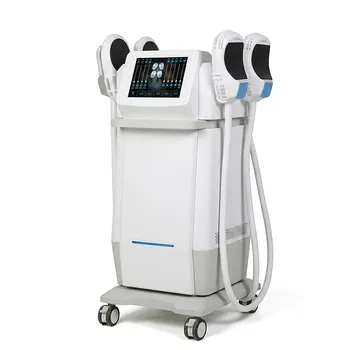
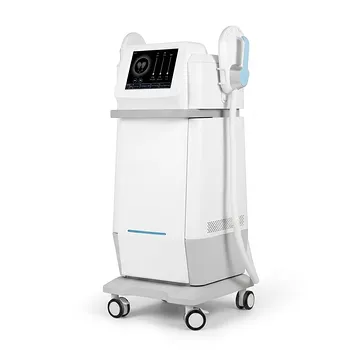
Monopolar and bipolar RF differ primarily in how current travels through tissue. Monopolar devices use one active electrode plus a separate return or grounding pad, allowing energy to pass through a broader and deeper tissue volume. Bipolar devices place both electrodes in the handpiece, confining current—and therefore heating—to the tissue between them, producing more localized and generally shallower treatment.
Core takeaway: Monopolar RF is designed for broad, deeper volumetric heating that can reach the deep dermis and subcutaneous tissue. Bipolar RF provides more controlled superficial heating, making it better suited to localized dermal tightening and procedures where precise energy placement is important.
How the Two RF Configurations Operate
Monopolar RF creates a larger current path
A monopolar system has a single active treatment electrode and a separate passive return electrode, commonly called a grounding pad. The patient’s tissue completes the electrical circuit between these two components.
Because the return electrode is positioned away from the handpiece, current travels through a relatively large volume of tissue. This produces broader, deeper volumetric heating rather than limiting energy to the immediate area beneath the applicator.
Bipolar RF confines current between two electrodes
A bipolar system contains two active electrodes within the same handpiece. Current travels directly from one electrode to the other through the tissue located between them.
This eliminates the need for a separate grounding pad and creates a more confined treatment field. The approximate depth is commonly related to the electrode spacing—often described as roughly half the distance between the electrodes—although actual heating depends on the specific device and treatment settings.
Both systems convert RF energy into heat
In both configurations, RF energy establishes an electrical field that causes charged particles in tissue to move. The resulting molecular motion generates thermal energy.
The biological response is therefore not fundamentally different because of the electrode configuration. Both systems can produce collagen contraction, stimulate wound-healing pathways, and support longer-term collagen remodeling when appropriate temperatures and treatment protocols are achieved.
Where the Energy Is Delivered
Monopolar RF targets deeper tissue volumes
Monopolar RF is intended to heat a broad column or volume extending from the dermis toward deeper tissue layers. Depending on the device, settings, applicator, and tissue characteristics, penetration may extend into the deep dermis and subcutaneous tissue, with some systems designed to reach approximately 2 cm.
This makes monopolar RF more relevant to deep tissue tightening, broad body contouring, and subcutaneous tissue remodeling than to highly localized superficial treatment.
Bipolar RF targets the superficial dermis more precisely
Bipolar RF concentrates energy between the handpiece electrodes. Its heating zone is therefore typically shallower and more localized, often focused on the superficial dermis and near-surface tissue.
This configuration is commonly used for localized skin tightening and other applications where control over the treatment depth is more important than heating a large deep volume.
Treatment depth is not determined by polarity alone
The labels “monopolar” and “bipolar” describe the electrical configuration, not a guaranteed anatomical depth. Actual tissue heating also depends on electrode design, RF frequency, power, contact, impedance, treatment motion, cooling, tissue composition, and the device’s control system.
Therefore, claims that one configuration always reaches a precise depth should be treated cautiously. The manufacturer’s validated treatment parameters and clinical data are more informative than polarity alone.
What Tissue Effects Should Be Expected?
Collagen contraction provides an immediate effect
RF heating can cause existing collagen fibers to contract, producing an early tightening effect. This is a thermal response within the treated tissue rather than an instantaneous creation of new collagen.
The visible result depends on how uniformly and safely the target tissue is heated. Excessive or uneven heating can increase the risk of pain, burns, or unwanted tissue injury.
Remodeling develops over time
Following controlled heating, the tissue may undergo a healing and remodeling response that supports neocollagenesis, or the formation of new collagen, and structural reorganization.
This longer-term response can improve firmness, but its magnitude and duration vary with treatment protocol, anatomy, skin quality, baseline laxity, and individual healing.
Deeper heating may affect subcutaneous tissue
When monopolar RF reaches the subcutaneous compartment, the clinical objective may extend beyond dermal tightening to deeper tissue remodeling or body-contouring effects. Some systems and protocols are designed to affect adipose tissue, but this should not be assumed for every monopolar device.
RF polarity alone does not establish that a device will reduce fat. The intended tissue effect must be confirmed from the specific device’s indications, applicator, energy settings, and clinical evidence.
Why the Difference Matters for Body Contouring
Monopolar RF is suited to broad body areas
The larger current path and deeper volumetric heating of monopolar RF make it appropriate for treating areas where the goal is broad tissue tightening or deeper contouring.
It may also require fewer treatment sessions in some protocols because a larger volume can be treated during each session. That is a protocol-dependent advantage, not an inherent guarantee of every monopolar system.
Bipolar RF is suited to localized tightening
Bipolar RF offers a more predictable, confined treatment zone. This can be advantageous when treating smaller or more delicate areas where limiting energy spread is important.
It is frequently used for superficial skin tightening and may be incorporated with suction or liposuction-based procedures to support localized skin contraction.
The two approaches can be complementary
A deeper monopolar system and a superficial bipolar system are not necessarily competing technologies. They address different tissue compartments and may be selected according to whether the primary issue is deep laxity, superficial laxity, or both.
The appropriate choice should follow the anatomy and treatment objective rather than the assumption that deeper energy is always better.
Understanding the Trade-offs
Depth versus control
Monopolar RF offers broader and deeper heating, which is useful for volumetric treatment but makes precise control of the entire current path more challenging. Bipolar RF restricts the field and allows more localized delivery, but its treatment depth and treated volume are generally more limited.
Coverage versus localization
Monopolar systems can address larger tissue volumes, which may support body-contouring workflows. Bipolar systems concentrate energy in a smaller field and may require more deliberate applicator placement or multiple passes to treat a broader area.
Comfort and safety depend on more than polarity
Bipolar RF is often associated with more controlled heating and potentially less discomfort because the current path is shorter and more localized. However, discomfort and adverse events also depend on energy level, temperature monitoring, cooling, contact, motion, tissue thickness, and operator technique.
A grounding pad does not by itself make monopolar RF unsafe, and the absence of one does not make bipolar RF risk-free. Both systems require appropriate patient selection and temperature or energy control.
Do not equate heating with guaranteed fat reduction
Deep heating may be part of a body-contouring protocol, but it does not automatically produce predictable fat reduction or sculpting. The device’s regulatory indication, treatment protocol, and supporting clinical evidence determine what outcomes can reasonably be expected.
How to Apply This to Your Project
The most useful selection process begins by identifying the tissue compartment and the desired clinical effect.
- If your primary focus is deep volumetric tightening or broader body contouring: Favor a monopolar configuration when the specific device is validated for deep dermal and subcutaneous heating, and evaluate its temperature-control and safety systems carefully.
- If your primary focus is localized superficial skin tightening: Favor a bipolar configuration when its electrode spacing and treatment parameters provide the required control over the superficial dermis.
- If your primary focus is combining RF with suction or liposuction: Assess bipolar systems designed for that workflow, while confirming the device-specific indication and evidence for skin contraction.
- If your primary focus is comparing devices objectively: Compare electrode geometry, delivered power, cooling, monitoring, applicator motion, validated depth, treatment endpoints, and clinical outcomes—not polarity alone.
Monopolar RF generally prioritizes depth and treated volume, while bipolar RF prioritizes localization and control.
Summary Table:
| Aspect | Monopolar RF | Bipolar RF |
|---|---|---|
| Electrode Configuration | Single active electrode + separate grounding pad | Two active electrodes in same handpiece |
| Current Path | Broad, deep through tissue | Localized between electrodes |
| Typical Depth | Deep dermis to subcutaneous (~2 cm) | Superficial dermis (depth ~ half electrode spacing) |
| Targeted Tissue | Deep volumetric heating | Localized superficial heating |
| Suitable Applications | Broad body contouring, deep tightening | Superficial skin tightening, delicate areas |
| Control & Precision | Less precise, deeper | More precise, shallower |
Elevate your practice with BELIS's advanced RF body contouring solutions, including monopolar and bipolar systems designed for deep volumetric tightening and precise superficial skin remodeling. Our professional-grade devices are trusted by clinics and premium salons worldwide, offering superior control, safety, and results. Contact our experts today (#ContactForm) to find the optimal RF device for your aesthetic needs and boost your clinic's success.
Related Products
- EMSlim Neo Nova Body Sculpting EMS Sculpting Machine
- Ultrasonic Cavitation Radiofrecuency Machine for Body Slimming
- 22D HIFU Machine Device Facial Machine
- EMS Body Sculpting Slimming Machine EMSlim Body Slimming Machine
- Cryolipolysis Fat Freezing Machine and Ultrasonic Cavitation Device
People Also Ask
- What anatomical mechanisms cause lower face and submental contour loss, and how do body sculpting and RF technologies address jowls and neck laxity? Discover the key causes and non-surgical solutions.
- How do the mid-infrared transmission spectra of fatty tissue and lipids assist in understanding selective targeting for body sculpting devices like cryolipolysis and RF cavitation? Mid-infrared spectra reveal lipid-specific markers, aiding tissue characterization.
- How should aesthetic clinics evaluate post-massive weight loss patients using tissue assessment techniques like the pinch test to determine suitability for non-invasive body sculpting devices versus surgical tissue excision? A Comprehensive Guide
- What are the VTE safety advantages of non-invasive body sculpting over surgery? Lower thromboembolic risk without general anesthesia
- What common soft tissue complications follow surgical fat extraction, and how do non-invasive body sculpting modalities eliminate these risks? Discover safer alternatives for your patients