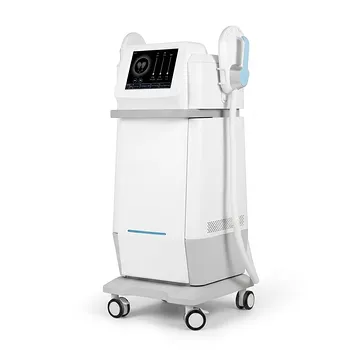
The primary clinical advantage of non-surgical laser, radiofrequency, and ultrasound equipment is that these technologies can improve mild to moderate skin laxity without surgery, incisions, or substantial recovery time. By delivering controlled thermal energy to targeted tissue layers, they can stimulate collagen remodeling, improve firmness, soften wrinkles, and enhance skin texture while preserving a natural-looking appearance. For appropriately selected patients, this creates a lower-burden alternative or complement to surgical lifting procedures.
Non-surgical energy-based devices provide controlled tissue remodeling with minimal disruption to the skin surface. Their main clinical value is the combination of modest lifting and tightening, limited downtime, broad treatment flexibility, and a comparatively low risk profile when used by qualified practitioners.
How Energy-Based Devices Tighten Skin
Controlled Heating Stimulates Collagen Remodeling
Radiofrequency, non-ablative laser, and ultrasound systems deliver energy into targeted skin or subcutaneous tissue layers. The resulting controlled thermal effect can cause some immediate collagen contraction and initiate longer-term neocollagenesis, in which new collagen is produced during the remodeling process.
Over time, this may improve dermal thickness, elasticity, firmness, and the appearance of fine lines. The clinical effect is generally progressive rather than equivalent to the immediate repositioning achieved through surgery.
Different Technologies Reach Different Tissue Targets
Radiofrequency generates heat through tissue resistance and does not depend on melanin or hemoglobin absorption. This allows RF systems to provide volumetric dermal heating across a broad range of skin types.
Laser systems can address both tightening and surface concerns, depending on their wavelength and delivery method. Non-ablative lasers leave the epidermis substantially intact while targeting deeper structures, whereas fractional approaches may also improve textural irregularities.
Ultrasound can deliver focused thermal energy to selected deeper tissue planes. This makes it useful when the protocol requires a more targeted approach to laxity rather than primarily superficial skin resurfacing.
Primary Clinical Advantages
Minimal Downtime and No Surgical Incisions
Most non-surgical tightening treatments do not require incisions, sutures, or general anesthesia. Patients can often return to normal activities quickly, although temporary redness, swelling, tenderness, or sensitivity may occur depending on the device and treatment intensity.
This makes the procedures clinically useful for patients who are unwilling or unable to accept the recovery associated with surgery.
Lower Procedural Burden
Compared with surgical lifting, non-surgical treatments generally involve less preparation, less post-treatment care, and fewer procedural barriers. Many protocols can be performed in an office setting within a relatively short appointment.
The lower burden can make treatment appropriate for patients seeking incremental improvement rather than a major anatomical change.
Natural-Looking Improvement
Energy-based tightening usually produces gradual changes through collagen contraction and remodeling. This can help patients achieve a firmer, smoother appearance without the abrupt visual change sometimes associated with more invasive procedures.
The result is typically an improvement in skin quality and laxity, not a replacement for surgical repositioning of substantially descended tissue.
Broad Skin-Tightening Applications
Protocols may be used for mild to moderate laxity involving the face, neck, and selected body areas. They may also reduce the appearance of fine lines while improving tone, texture, and overall skin smoothness.
The appropriate treatment area depends on the device, tissue depth, treatment parameters, and the patient’s anatomy.
Compatibility With Different Skin Types
RF energy is delivered through tissue resistance rather than selective absorption by chromophores such as melanin or hemoglobin. This characteristic can make RF particularly adaptable across diverse skin tones and ethnicities.
Laser treatment requires more careful consideration of wavelength, fluence, cooling, and the patient’s pigmentation risk. Device selection and parameter control remain essential, especially for patients prone to post-inflammatory hyperpigmentation.
Potential for Combination Protocols
Different energy sources can address different components of the patient’s concern. For example, a protocol may combine a laser or light-based treatment for superficial tone and texture with RF or ultrasound for deeper dermal or structural laxity.
Combination treatment should be based on complementary clinical objectives and appropriate sequencing. Combining technologies does not automatically improve outcomes and may increase tissue stress if poorly planned.
Repeatable, Office-Based Care
Because these treatments are less invasive, they can be incorporated into staged or maintenance-oriented care plans. Patients may undergo a series of treatments followed by periodic reassessment as collagen remodeling and the durability of results evolve.
This approach is particularly relevant because non-surgical tightening generally provides temporary improvement rather than permanent correction of the aging process.
Matching Treatment to Patient Needs
Patients With Mild to Moderate Laxity
Non-surgical tightening is best suited to patients with early or moderate laxity who want visible improvement without surgery. It is less appropriate when excess skin is substantial or when the primary issue involves significant tissue descent.
A careful assessment should distinguish skin quality concerns from deeper anatomical changes that energy treatment cannot adequately correct.
Patients Seeking Texture and Tone Improvement
Laser-based protocols may be especially valuable when laxity occurs alongside fine lines, uneven tone, or textural irregularities. In these cases, the treatment plan can address surface quality while also supporting dermal remodeling.
RF and ultrasound may contribute to firmness but are not interchangeable with treatments specifically designed for pigmentation or resurfacing.
Patients With Limited Recovery Availability
Patients with professional, caregiving, or personal obligations may prioritize procedures that allow a rapid return to routine activities. Minimal downtime can therefore be a meaningful clinical selection factor, provided expectations remain realistic.
Low downtime does not mean zero risk or zero recovery. Patients still need appropriate aftercare and monitoring.
Understanding the Trade-offs
Results Are More Modest Than Surgical Lifting
Non-surgical devices can tighten and remodel tissue, but they do not remove excess skin or surgically reposition facial structures. Patients expecting a facelift-level result may consider an otherwise appropriate treatment unsuccessful.
Consultations should define the realistic degree, timing, and durability of improvement before treatment begins.
Outcomes Develop Gradually and Vary
Some patients experience an early tightening sensation, while collagen remodeling develops over a longer period. Results vary according to age, baseline laxity, skin quality, treatment parameters, device design, and individual healing response.
A standardized assessment and consistent photography can help clinicians evaluate change more reliably.
Treatments May Require Maintenance
The underlying decline in collagen and elastin production continues with age. As a result, improvements may diminish over time, and some patients may benefit from repeat or maintenance treatments.
The expected duration should be presented as variable rather than guaranteed. Claims of universally lasting results are not clinically appropriate.
Adverse Effects Remain Possible
Even non-invasive or minimally invasive devices can cause pain, erythema, edema, burns, pigmentary changes, prolonged sensitivity, or other complications when used improperly. Risk depends on the technology, energy settings, cooling, treatment depth, patient characteristics, and operator training.
Qualified providers must perform appropriate screening, use evidence-based parameters, and explain both common and less common risks.
Device Categories Are Not Interchangeable
“Laser,” “RF,” and “ultrasound” describe broad technology families rather than single standardized treatments. Their clinical effects differ according to energy type, wavelength or frequency, delivery pattern, tissue depth, and whether the treatment is ablative, non-ablative, fractional, monopolar, bipolar, or microneedle-based.
Protocol design should therefore be based on the specific device and treatment objective, not on the technology label alone.
How to Apply This to Your Clinic Protocols
The strongest protocols begin with patient selection, realistic expectations, and a clear distinction between surface texture, dermal laxity, and deeper tissue descent.
- If your primary focus is minimizing downtime: Prioritize non-ablative laser, RF, or appropriately selected ultrasound protocols that preserve the epidermal surface and support a rapid return to routine activities.
- If your primary focus is improving skin firmness: Select an energy source and treatment depth that target the relevant dermal or subdermal tissue, with collagen remodeling as the principal objective.
- If your primary focus is treating diverse skin tones: Consider RF-based approaches that do not rely primarily on melanin absorption, while applying careful risk assessment and parameter selection to any laser treatment.
- If your primary focus is addressing both laxity and texture: Use complementary technologies only when their tissue targets and treatment objectives are clearly defined and the combined protocol is clinically justified.
- If your primary focus is patient satisfaction: Use candid counseling, standardized outcome assessment, and maintenance planning so patients understand the likely degree, timing, and durability of improvement.
Used within appropriate indications, non-surgical energy-based equipment allows clinics to deliver controlled, lower-burden skin tightening with clinically meaningful improvements in firmness, texture, and patient experience.
Summary Table:
| Advantage | Key Benefit |
|---|---|
| Minimal Downtime | No incisions, rapid return to daily activities |
| Natural-Looking Results | Gradual collagen remodeling preserves appearance |
| Broad Applicability | Safe for diverse skin types, especially RF |
| Combination Potential | Can be used with other modalities for enhanced outcomes |
| Office-Based & Repeatable | Convenient, staged treatments with maintenance plans |
Elevate your clinic's skin tightening offerings with advanced non-surgical technologies from BELIS. Our portfolio includes state-of-the-art RF, laser, and ultrasound systems designed for professional use in clinics and premium salons. Discover how our devices can enhance your patients' satisfaction and your practice's growth. Contact our team today for expert guidance and tailored solutions.
Related Products
- 4D 12D HIFU Machine Device for Skin Tightening
- 4D 12D HIFU Machine Device for Skin Tightening and Lifting
- Ultrasonic Cavitation Machine Lipo Laser Device
- Ultrasonic Cavitation Radiofrecuency Machine for Body Slimming
- 7D 12D 4D HIFU Machine Device
People Also Ask
- How do non-invasive skin tightening devices such as HIFU and microneedle RF compare to surgical rhytidectomy for facial lifting? Discover the key differences in results, longevity, and recovery.
- What is the mechanism of action of High-Intensity Focused Ultrasound (HIFU) devices in noninvasive body sculpting, and how is surrounding tissue protected?
- How do non-invasive lifting devices like high-intensity focused ultrasound (HIFU) complement soft tissue fillers in treating lower face aging and pre-jowl sulcus depression? Discover the synergistic approach.
- What key clinical safety guidelines and contraindications must aesthetic practitioners observe when operating ultrasound skin tightening devices? Essential Safety Protocols for Clinics
- Why is it necessary to fill the transducer chamber with deionized water and PE film in HIFU devices? Key Safety Insights