Cellulite is a structural tissue problem, not simply excess fat. Its primary drivers are altered fibrous septa, localized adipocyte enlargement, interstitial fluid retention, and progressive collagen degradation influenced by matrix metalloproteinases (MMPs) and hormones such as estrogen. Equipment selection should therefore match the mechanism being targeted: skin and septal remodeling for dimpling and laxity, fat-reduction technologies for adipocyte volume, and complementary mechanical or thermal methods for fluid movement and tissue compliance.
The central principle is mechanism matching. Fat-reduction devices can decrease adipocyte volume, but they do not automatically correct dermal laxity or tethering. The most rational professional protocols combine modalities only when each addresses a distinct anatomical contributor to the client’s cellulite.
Why Cellulite Requires More Than Fat Reduction
Fibrous septa create the surface dimpling
The superficial subcutaneous fat contains compartments formed by fibrous septa that connect the dermis to deeper tissue. In many female patients, these septa are oriented relatively perpendicular to the skin.
When the septa become shortened, thickened, stiff, or unevenly lax, they exert downward traction on the dermis. At the same time, fat compartments can push upward, producing the characteristic orange-peel texture and dimples.
Enlarged adipocytes increase local pressure
Localized adipocyte hypertrophy increases the volume within these fibrous compartments. The enlarged fat cells can protrude toward the dermis and intensify the contrast between tethered depressions and elevated areas.
This explains why cellulite can occur in people who are not overweight. Overall body weight and cellulite severity are related imperfectly, because cellulite also depends on connective-tissue architecture and skin quality.
Fluid retention changes the tissue environment
Microcirculatory impairment and interstitial edema can increase fluid within the extracellular matrix. Glycosaminoglycan-related changes may further promote water retention and tissue congestion.
Fluid accumulation does not represent the entire cause of cellulite, but it can increase tissue pressure and make the surface appear more irregular. It also influences how soft, mobile, or fibrotic the subcutaneous tissue feels during assessment.
Collagen degradation reduces skin support
Collagen breakdown in the dermis and connective tissue reduces the skin’s ability to resist upward fat protrusion and downward septal traction. MMP activity contributes to the remodeling and degradation of the extracellular matrix.
Hormonal influences, particularly estrogen-related changes, can affect collagen behavior, vascular function, and fat distribution. The result is a gradual reduction in structural support rather than a single isolated fat deposit.
How Anatomy Guides Equipment Selection
Match the device to the tissue depth
The first question is not which brand or device is most powerful. It is which anatomical layer requires intervention.
- Dermis: skin laxity and collagen support.
- Fibrous septa: tethering, stiffness, and irregular traction.
- Subcutaneous fat: localized adipocyte volume.
- Interstitial tissue: fluid retention and tissue congestion.
- Muscle layer: contour and muscle definition rather than direct cellulite correction.
A device that reaches only superficial skin cannot be expected to reduce a deep fat layer. Conversely, a fat-reduction device may have limited effect on dermal laxity or fibrous tethering.
Address skin laxity and collagen support
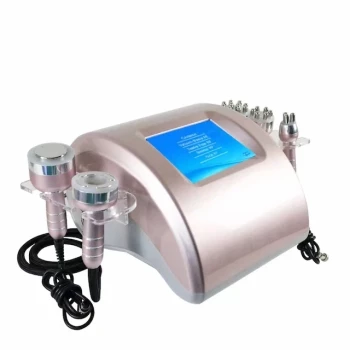
Radiofrequency systems heat tissue through electrical resistance. Depending on the configuration and treatment parameters, RF can generate dermal and subdermal thermal stimulation that supports collagen contraction and longer-term remodeling.
Microneedle RF places RF energy through insulated or non-insulated needles into selected tissue depths. It is most relevant when dermal laxity, poor skin texture, or collagen loss is a major part of the visible problem.
Focused ultrasound and HIFU systems can also deliver deep acoustic heating or, in some configurations, mechanically affect targeted tissue. Their value depends on the specific device, treatment depth, energy delivery, and regulatory indication.
Address localized adipocyte volume
Cryolipolysis, focused ultrasound body-contouring systems, and selected laser-based technologies are primarily directed at reducing localized subcutaneous fat volume. They may improve the appearance of cellulite when enlarged fat compartments are a significant contributor.
However, these modalities do not directly release every fibrous tether or restore dermal collagen. A reduction in fat volume can improve contour while leaving dimpling partly unchanged if the connective-tissue component remains dominant.
Address tissue mobility and fluid-related congestion
Vacuum massage and mechanical manipulation can temporarily improve tissue mobility and support fluid movement. They may be useful as complementary treatments when edema, congestion, or reduced tissue compliance is present.
Mechanical methods should not be described as permanently restructuring cellulite by themselves. Their strongest role is generally adjunctive, particularly when combined with a treatment that addresses collagen remodeling or localized fat.
Address contour and muscle contribution separately
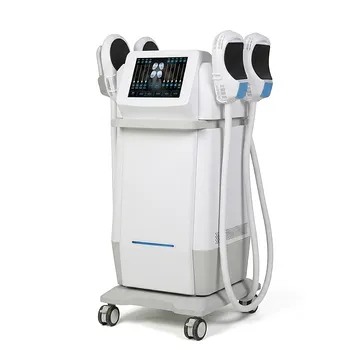
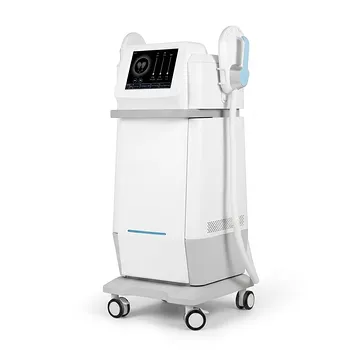
High-intensity electromagnetic muscle-stimulation systems, such as EMS-based body sculpting platforms, primarily produce muscle contractions and may influence muscle tone or contour.
They should not be treated as direct substitutes for septal remodeling, dermal tightening, or adipocyte reduction. They may complement a cellulite plan when muscle definition or regional contour contributes to the patient’s aesthetic goal.
Building a Mechanism-Based Treatment Plan
Start with a clinical tissue assessment
A useful assessment distinguishes between:
- Visible dimpling at rest
- Dimpling that appears mainly with muscle contraction or pinching
- Skin laxity
- Localized fat thickness
- Edema or tissue congestion
- Palpable fibrotic bands
- Reduced tissue mobility
This prevents a common error: selecting a fat-reduction device for a patient whose dominant issue is loose skin and tethered septa.
Use a primary modality for the dominant problem
If skin laxity and collagen loss dominate, a controlled RF or microneedle RF strategy may be more logical than aggressive fat reduction.
If localized fat volume dominates, cryolipolysis, focused ultrasound, selected laser systems, or other approved fat-reduction technologies may be appropriate, depending on the treatment area and patient factors.
If fluid retention and poor tissue mobility are prominent, mechanical manipulation or massage may be added as a supportive component rather than used as the sole corrective treatment.
Combine technologies selectively
A multi-technology plan is justified when the patient has more than one clinically significant mechanism. For example, a protocol might combine localized fat reduction with a separate skin-tightening or collagen-remodeling treatment.
Combination does not mean applying every available modality. Each treatment should have a defined target, compatible timing, appropriate safety parameters, and a measurable endpoint.
Set realistic treatment endpoints
The relevant endpoint may be:
- Reduced appearance of dimples
- Improved skin firmness
- Lower localized fat volume
- Greater tissue mobility
- Smoother contour
- Improved patient-reported appearance
A device may improve one endpoint without correcting all others. Before-and-after photography, standardized lighting, consistent positioning, and circumference or tissue-quality assessments help distinguish genuine improvement from temporary changes in swelling or fluid distribution.
Understanding the Trade-offs
Fat reduction may not eliminate cellulite
Reducing adipocyte volume can improve contour, but cellulite may persist when septal tethering and dermal collagen loss are substantial. Treating fat alone can therefore produce an uneven or incomplete result.
More energy is not automatically better
Thermal devices depend on controlled temperature, exposure time, tissue depth, and patient selection. Excessive energy can increase the risk of burns, pain, pigmentary changes, prolonged inflammation, or unwanted contour irregularities.
Professional treatment requires device-specific protocols, temperature monitoring where applicable, and appropriate screening.
Collagen remodeling is gradual
RF, microneedle RF, and focused thermal treatments generally rely on biological remodeling rather than an instant structural correction. Visible change may develop over time and may require multiple sessions.
Results are also influenced by skin quality, hormonal status, age, weight stability, and the severity of connective-tissue changes.
Device claims require careful interpretation
Terms such as “cavitation,” “body sculpting,” “tightening,” and “cellulite reduction” do not describe identical mechanisms. RF, ultrasound, light, cryolipolysis, mechanical massage, and electromagnetic stimulation should be evaluated as distinct technologies.
Selection should be based on the device’s validated indication, treatment depth, safety profile, clinical evidence, and operator training—not on the label alone.
Cellulite can recur or fluctuate
Hormonal changes, weight changes, aging, edema, and reduced skin elasticity can alter the appearance over time. Professional treatment should therefore be presented as appearance management, not a permanent cure for the underlying anatomy.
Making the Right Choice for Your Goal
The most effective equipment strategy begins with identifying the dominant anatomical contributor rather than choosing the most aggressive device.
- If your primary focus is skin laxity and dimpling: Prioritize clinically appropriate RF, microneedle RF, or focused thermal technologies that target dermal collagen support and tissue remodeling.
- If your primary focus is localized fat volume: Consider an approved fat-reduction modality such as cryolipolysis, focused ultrasound, or selected laser-based systems, while recognizing that fat reduction alone may not release fibrous tethering.
- If your primary focus is edema and tissue congestion: Use mechanical manipulation or massage as a complementary approach aimed at tissue mobility and fluid movement.
- If your primary focus is overall body contour: Combine fat reduction, skin tightening, and—where appropriate—muscle-stimulation technologies only when each modality addresses a documented treatment need.
- If your primary focus is safe, predictable outcomes: Choose equipment according to treatment depth, validated indications, contraindications, operator training, and objective follow-up measurements.
The strongest cellulite protocols are not the ones with the most technologies, but the ones that precisely match each technology to the anatomy responsible for the patient’s visible concern.
Summary Table:
| Anatomical Mechanism | Contributing Factor | Target Equipment Category | Example Technologies |
|---|---|---|---|
| Fibrous septa alteration | Thickened/tight septa | Skin remodelling & septal release | RF, microneedle RF, HIFU |
| Adipocyte hypertrophy | Increased fat volume | Fat reduction | Cryolipolysis, focused ultrasound, lasers |
| Fluid retention | Edema & congestion | Mechanical manipulation | Vacuum massage, mechanical massage |
| Collagen degradation | Reduced skin support | Skin tightening & collagen remodeling | RF, microneedle RF, focused thermal |
Elevate your practice with BELIS professional-grade aesthetic equipment. Our portfolio covers all key technologies for cellulite treatment, from RF and HIFU to cryolipolysis and EMSlim, ensuring you can exactly match each mechanism. Ready to enhance your patients' results and your clinic's reputation? Contact us today to schedule a consultation and discover the right solutions for your patients.
Related Products
- Ultrasonic Cavitation Machine Lipo Laser Device
- EMS Body Sculpting Machine for Body Slimming and Sculpting
- EMSlim RG Laser Body Sculpting and Slimming Machine
- Ultrasonic Cavitation Radiofrecuency Machine for Body Slimming
- EMSlim Neo Nova Body Sculpting EMS Sculpting Machine
People Also Ask
- What are the clinical advantages and operational precautions associated with ultrasound cavitation technology in fat reduction equipment? Maximize Safety and Efficacy
- How do the physiological effects of acoustic cavitation and thermal stress on adipocytes explain the functional mechanism of non-invasive ultrasonic RF cavitation body sculpting equipment? | Key Insights
- What are the primary technical advantages of using ultrasound energy for non-invasive skin tightening and body sculpting compared to superficial thermal treatments? Discover depth control, collagen remodeling, and more.
- Why are non-invasive RF skin tightening devices preferred over ablative laser resurfacing? Safe Operator Techniques
- How does patient age affect clinical outcomes and candidate selection for non-invasive radiofrequency (RF) skin tightening procedures? Age matters, but it's not the only criterion for success.