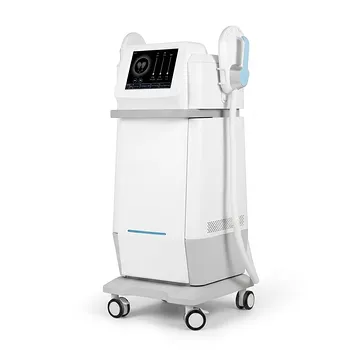
Surgical body contouring requires deliberate fluid management, while non-invasive systems avoid infiltration altogether. Early dry liposuction used no injected fluid but was associated with substantially greater blood loss. Wet, superwet, and tumescent techniques progressively improved safety by infiltrating saline-based solutions—often with diluted local anesthetic and epinephrine—but they require careful control of fluid volumes, drug absorption, blood loss, and postoperative recovery. Clinics may therefore choose cryolipolysis, radiofrequency (RF), cavitation, HIFU, or electromagnetic systems when they want localized contouring with no surgical fluid infiltration, incisions, or prolonged downtime.
The central distinction is operational as well as clinical: surgical contouring manages large fluid and anesthesia loads, whereas non-invasive sculpting delivers controlled energy through the skin. This can simplify treatment logistics and broaden access, although non-invasive systems are intended primarily for localized fat reduction and gradual contour improvement—not every surgical contouring indication.
What Fluid Management Requires During Surgical Contouring
Dry techniques provide no fluid buffer
The dry technique involves no fluid infiltration into the treatment area. Its major disadvantage is that the procedure historically involved higher blood loss, reported in the reference range as approximately 20–45% of the aspirated volume.
Because no infiltrated solution helps constrict vessels or separate tissue planes, clinicians must pay close attention to blood loss, hemodynamic status, and the patient’s need for fluid replacement.
Wet techniques add saline and vasoconstriction
Wet techniques typically use approximately 100–300 mL of saline per treatment site. The fluid helps expand the tissue and may contain agents intended to reduce bleeding and improve local anesthesia.
Reported blood loss is lower than with the dry approach, in the range of approximately 15–30%, but the technique still creates a meaningful fluid-management responsibility.
Superwet techniques use a near 1:1 ratio
The superwet approach generally uses a 1:1 infusion-to-aspirate ratio. The infiltrated solution expands the subcutaneous tissue, supports vasoconstriction, and reduces the proportion of blood removed with the aspirate.
The reference associates superwet and tumescent approaches with a much lower blood-loss range of approximately 1–7.8%. Actual risk varies with the treated area, aspirate volume, patient condition, technique, and perioperative monitoring.
Tumescent techniques use more infiltrate
Tumescent liposuction commonly uses an infusion-to-aspirate ratio of approximately 2:1 to 3:1. The solution usually contains dilute local anesthetic and epinephrine, allowing the tissue to become swollen and firm before aspiration.
This method can substantially reduce bleeding and may allow procedures under local or regional anesthesia in selected cases. However, it also means that the clinical team must account for the volume infiltrated, the volume recovered, the amount absorbed, and any intravenous replacement.
Why Fluid Balance Matters Clinically
Large procedures can involve substantial volumes
Large-scale surgical fat removal may require several liters of infiltrated fluid; the supplementary reference describes volumes reaching 10–20 liters in some cases. These quantities are not incidental—they affect surgical planning, monitoring, recovery, and discharge decisions.
The relevant calculation is not simply how much fluid was injected. Clinicians must consider fluid remaining in the tissues, fluid recovered in the aspirate, blood loss, urine output, intravenous fluids, and ongoing physiologic losses.
Excess fluid can create systemic risk
Inadequate replacement can contribute to hypovolemia, while excessive infiltration or intravenous rehydration can contribute to fluid overload. In vulnerable patients, poor management may increase the risk of cardiovascular complications, including arrhythmias.
Tumescent anesthetic also introduces a drug-absorption issue. Local anesthetic dose, tissue absorption, timing, and patient factors must be managed carefully to reduce the risk of systemic toxicity.
Infiltration changes the treatment field
Injected fluid expands and distorts the subcutaneous tissue. This can make anatomical landmarks less representative of their untreated appearance and complicate assessment of how much fat has been removed or whether contouring is symmetrical.
That distortion is a technical trade-off: the fluid helps reduce bleeding and facilitate aspiration, but it can make intraoperative visual judgment less straightforward.
Recovery extends beyond the procedure
Surgical contouring requires care for incisions, swelling, bruising, drainage, pain, infection risk, and possible contour irregularities. The patient may also need compression garments and restrictions on activity during recovery.
These requirements affect clinic capacity as well as patient experience. Operating-room time, anesthesia support, postoperative observation, and follow-up must all be incorporated into the service model.
How Non-Invasive Body Sculpting Avoids Fluid Infiltration
Energy is delivered through the skin
Non-invasive systems apply controlled physical energy externally rather than filling the subcutaneous tissue with saline or anesthetic solution. Depending on the platform, the mechanism may involve cooling, radiofrequency heating, focused ultrasound, laser energy, or electromagnetic muscle stimulation.
This eliminates the need to calculate an infusion-to-aspirate ratio because there is no aspirate and no surgical infiltration phase.
Cryolipolysis targets localized fat with cooling
Cryolipolysis applies controlled cooling to a localized fat pocket. The intended effect is selective injury to susceptible fat cells while preserving surrounding tissue, followed by gradual processing of the affected cells by the body.
It is most relevant to patients with discrete, pinchable fat deposits rather than patients seeking major-volume removal.
RF and cavitation combine contouring with tissue effects
RF systems deliver thermal energy into the dermal and subcutaneous layers. Depending on the device and protocol, this may support localized fat reduction while promoting collagen contraction and an appearance of improved skin firmness.
Cavitation systems use ultrasound-based energy to target subcutaneous tissue. Outcomes, treatment depth, and clinical evidence vary by device, so clinics should evaluate the specific system rather than treating all “cavitation” platforms as equivalent.
HIFU and related systems provide focused treatment
High-intensity focused ultrasound (HIFU) concentrates acoustic energy at selected depths. This can provide a non-invasive option for targeted tissue treatment without fluid infiltration or surgical access.
Treatment planning remains important because the energy must be delivered within the device’s intended tissue depth and safety parameters.
Why Clinics May Choose Non-Invasive Systems
They reduce procedural complexity
Without infiltration, aspiration, surgical incisions, or general anesthesia, clinics can avoid many of the fluid-balance tasks associated with liposuction. The workflow may be easier to schedule and integrate into an outpatient aesthetic practice.
This does not remove the need for clinical assessment or monitoring. It changes the nature of the operational burden from perioperative fluid management to device selection, treatment parameters, patient screening, and follow-up.
They offer shorter or minimal recovery periods
Many non-invasive treatments allow patients to return to routine activities more quickly than surgical contouring. This is valuable for patients who cannot accommodate significant downtime and for clinics seeking treatments that do not require extended postoperative care.
Recovery is not necessarily symptom-free. Temporary discomfort, redness, swelling, bruising, altered sensation, or other device-specific effects may occur.
They broaden service accessibility
Non-invasive treatments can lower the threshold for patients who are unwilling or unsuitable to undergo surgery. They also allow clinics to create multi-session protocols tailored to the patient’s treatment area, goals, and response.
This supports a more flexible service model, particularly for localized fat pockets, mild contour concerns, and maintenance after substantial weight loss.
They complement rather than replace surgery
Patients who have undergone bariatric surgery, medical weight loss, or liposuction may retain localized fat deposits or mild tissue laxity. Non-invasive technologies can serve as an adjunct for selected residual concerns without immediately pursuing another operation.
However, substantial excess skin or severe laxity is generally a surgical problem. Energy-based contouring cannot reproduce the tissue removal achieved by excisional body-contouring surgery.
Understanding the Trade-offs
Non-invasive does not mean risk-free
Non-invasive systems avoid fluid infiltration, blood loss from aspiration, and incision-related complications, but they still have contraindications and potential adverse effects. These may include thermal or cold injury, pain, sensory changes, uneven response, and device-specific tissue effects.
Clinics must use validated equipment, follow manufacturer protocols, document treatment parameters, and maintain appropriate medical oversight.
Results are usually more gradual and limited in scale
Surgical liposuction can remove a larger volume of fat in a single procedure. Non-invasive systems generally produce more modest, localized changes that develop over time and may require multiple sessions.
Patients expecting a surgical-level transformation may be dissatisfied unless the clinic clearly explains the achievable outcome.
Patient selection determines value
Good candidates typically have localized fat pockets that have not responded adequately to diet and exercise, sufficient skin elasticity, and realistic expectations. The clinician must also screen for conditions that make exposure to cold, heat, ultrasound, or electromagnetic energy inappropriate.
Severe skin laxity, diffuse obesity, or a need for major-volume reduction may indicate that non-invasive treatment is not the appropriate primary solution.
Evidence and device quality vary
The label “body sculpting” covers multiple technologies with different mechanisms, treatment depths, protocols, and levels of clinical support. A clinic should assess the specific device’s regulatory status, published evidence, contraindications, training requirements, and maintenance support.
Purchasing a multi-technology platform does not guarantee consistent outcomes. Clinical technique and patient selection remain decisive.
Making the Right Choice for Your Goal
The best option depends on the amount of tissue change required, the patient’s tolerance for surgery, and the clinic’s ability to support perioperative care.
- If your primary focus is major-volume fat removal: Surgical contouring may be more appropriate, but it requires rigorous management of infiltrated fluid, blood loss, anesthetic exposure, and postoperative recovery.
- If your primary focus is localized fat reduction with minimal downtime: Consider a validated non-invasive modality such as cryolipolysis, RF, cavitation, or HIFU after proper candidate screening.
- If your primary focus is skin firmness alongside contouring: Evaluate RF or other systems specifically designed to provide thermal tissue-tightening effects, while setting realistic expectations.
- If your primary focus is post-weight-loss maintenance: Non-invasive treatment may help address selected residual fat pockets, but significant excess skin may require surgical assessment.
- If your primary focus is clinic workflow and accessibility: Non-invasive systems can reduce fluid-management and recovery demands, provided the clinic invests in training, screening, documentation, and consistent protocols.
The practical decision is not simply surgery versus technology; it is matching the required magnitude of contour change with the patient’s risk tolerance and the clinic’s capacity for safe care.
Summary Table:
| Aspect | Surgical Techniques | Non-Invasive Systems |
|---|---|---|
| Fluid Infiltration | Yes (dry to tumescent) | No |
| Blood Loss | 1–45% of aspirate | None |
| Anesthesia | Local/general | None or topical |
| Procedure Time | Longer | Shorter |
| Recovery | Extended | Minimal |
| Result Scale | Larger volume | Localized & gradual |
| Clinical Complexity | High | Low |
Streamline your practice with BELIS's advanced non-invasive body sculpting systems. Our portfolio includes Cryolipolysis, RF, HIFU, and more, designed for effective localized fat reduction with minimal downtime. Perfect for clinics and premium salons seeking to expand services with safe, proven technology. Contact us today to learn how BELIS can elevate your offerings.
Related Products
- EMSlim Neo Nova Body Sculpting EMS Sculpting Machine
- EMS Body Sculpting Machine for Body Slimming and Sculpting
- EMSlim Body Sculpting Machine EMS Body Slimming Machine
- EMS Body Sculpting Slimming Machine EMSlim Body Slimming Machine
- EMSlim RG Laser Body Sculpting and Slimming Machine
People Also Ask
- How do RF body sculpting devices target subcutaneous fat & tighten skin?
- What is the biological mechanism of action by which radiofrequency (RF) energy achieves body sculpting and cellulite reduction? Discover how controlled heating remodels collagen, influences fat, and smooths skin.
- What anatomical mechanisms cause lower face and submental contour loss, and how do body sculpting and RF technologies address jowls and neck laxity? Discover the key causes and non-surgical solutions.
- How can aesthetic practitioners accurately differentiate between muscular hypertrophy and subcutaneous fat accumulation when evaluating patients for calf or lower face contouring using body sculpting equipment?
- What are the primary fluid management and safety protocols required when performing large-volume fat removal in body sculpting treatments? Master the essential protocols for safe outcomes.