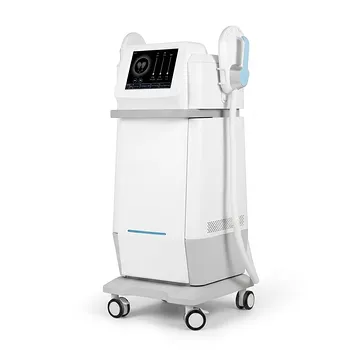
Multi-frequency ultrasound enhances professional body sculpting by matching acoustic energy to the depth and characteristics of the target tissue. Lower frequencies generally penetrate more deeply, while higher frequencies act closer to the skin. This allows clinicians to customize treatment for different fat-layer thicknesses, improve the consistency of adipose-tissue disruption, and support dermal tightening for a smoother contour.
Multi-frequency technology improves versatility and treatment precision by allowing practitioners to adjust energy delivery across tissue depths. Its value is not simply using more energy, but directing the appropriate frequency to the appropriate anatomical layer while protecting surrounding tissue.
Why Single-Frequency Treatment Can Be Limited
Body areas have different fat-layer thicknesses
Subcutaneous fat is not distributed uniformly across the abdomen, waist, thighs, arms, or back. A fixed-frequency system may therefore deliver energy too superficially in thicker regions or too deeply for thinner treatment areas.
Because ultrasound frequency and penetration depth are inversely related, professional systems can use lower frequencies for deeper targets and higher frequencies for shallower layers. The precise depth depends on the device, applicator, tissue properties, and treatment protocol rather than frequency alone.
Adipose tissue is structurally variable
Fat deposits can differ in density, organization, and relationship to connective tissue. Stubborn or fibrotic areas may respond differently from softer, more uniform deposits.
Multiple frequency settings give the practitioner greater control over how acoustic energy interacts with these variations. This can make treatment planning more adaptable than relying on a single acoustic setting for every patient and body region.
How Multi-Frequency Ultrasound Improves Clinical Contouring
It improves depth targeting
The main advantage is selective delivery across different tissue depths. A practitioner can choose a setting intended for deeper subcutaneous tissue or shift toward a higher-frequency setting when treating a shallower fat layer.
For example, some systems associate approximately 4.0 MHz with a treatment depth near 4.5 mm and 7.0 MHz with a depth near 3.0 mm. These values are device-specific reference points, not universal clinical rules, so treatment depth must be confirmed from the equipment’s validated specifications.
It supports more consistent fat disruption
Ultrasound cavitation systems use acoustic pressure changes and vibration to stress adipose cells. Depending on the system and protocol, this may contribute to cellular disruption and the release of lipid contents for subsequent processing by the body.
Multi-frequency operation allows the practitioner to adapt energy to the target area instead of treating all tissue as though it has identical thickness and composition. That adaptability can improve treatment uniformity and reduce untreated or overtreated zones.
It can complement tissue contraction
The same treatment platform may also affect the surrounding dermal layers through thermal or mechanical stimulation, depending on its technology and settings. This can support collagen remodeling and skin contraction, which helps the visible contour appear smoother after volume reduction.
This effect should be distinguished from fat disruption. Reducing adipose volume does not automatically produce skin tightening, and the degree of contraction depends on skin elasticity, tissue quality, age, and other patient factors.
It makes complex contours easier to manage
Areas such as the waistline, trunk, and regions near anatomical transitions require careful control of treatment depth and energy distribution. Multi-frequency equipment gives clinicians more options for addressing these changes in tissue thickness.
The result can be more harmonious contouring, provided the practitioner uses appropriate patient selection, mapping, applicator placement, and energy settings.
How Adaptive Systems May Improve Energy Selectivity
Tissue conditions change during treatment
During ultrasound cavitation, tissue composition and fluid distribution may change as cells are disrupted and lipid material is released. These changes can alter acoustic impedance and the way energy propagates through the treatment area.
Systems that monitor tissue conditions and adjust frequency or output in real time may help maintain a more consistent treatment response. However, this capability is not present in every multi-frequency device and should be verified in the manufacturer’s technical documentation.
Adaptation may reduce unnecessary exposure
When a system can respond to changing tissue conditions, it may avoid applying the same acoustic load throughout the entire procedure. In principle, this can improve energy efficiency and limit unnecessary thermal or mechanical stress on surrounding tissue.
The actual safety and efficiency benefit depends on the quality of the feedback system, its validation, and how accurately the operator interprets its readings. Automatic adjustment is a technical aid, not a substitute for clinical judgment.
How Clinicians Can Measure the Result
Ultrasound imaging provides objective assessment
High-frequency diagnostic ultrasonography can measure changes in subcutaneous fat thickness and assess dermal or connective-tissue characteristics. This provides more objective information than visual inspection or circumference measurements alone.
Imaging can establish a baseline before treatment and help determine whether observed contour changes correspond to measurable tissue changes.
Imaging can support skin-quality evaluation
Frequencies commonly used for superficial diagnostic imaging, including approximately 10 to 15 MHz, can help visualize the dermohypodermal junction and aspects of connective-tissue structure. This may be useful when evaluating cellulite-related changes, edema, skin density, or collagen remodeling.
These imaging frequencies serve a diagnostic and monitoring role. They should not be confused with the therapeutic frequencies used to deliver body-contouring energy.
Understanding the Trade-offs
More settings require more clinical expertise
A multi-frequency platform increases treatment flexibility, but it also increases the number of decisions the practitioner must make. Incorrect frequency selection, excessive exposure, poor coupling, or inadequate movement can reduce effectiveness or increase the risk of adverse tissue effects.
The device’s frequency options should therefore be linked to a documented protocol based on tissue thickness, treatment area, patient characteristics, and safety limits.
Results are not guaranteed by frequency selection alone
Multi-frequency ultrasound can improve targeting and procedural versatility, but it does not guarantee a specific amount of fat reduction. Outcomes vary with body composition, skin elasticity, treatment parameters, number of sessions, and the patient’s response.
Non-invasive contouring should also be distinguished from ultrasound-assisted surgical fat extraction. Surgical procedures involve different mechanisms, risks, recovery requirements, and clinical endpoints.
The technology does not replace patient selection
Patients with substantial skin laxity, unrealistic expectations, unsuitable medical conditions, or anatomy outside the device’s intended use may not be appropriate candidates. A careful consultation remains necessary even when the equipment includes automated monitoring or multiple operating modes.
Monitoring claims require verification
Claims about real-time impedance measurement, automatic resonance matching, reduced sonication time, or lower thermal stress should be evaluated against independent validation and the specific system’s regulatory documentation. These features may improve control, but they should not be assumed to exist or perform identically across all professional devices.
Making the Right Choice for Your Goal
The most effective use of multi-frequency ultrasound combines appropriate equipment with tissue assessment, conservative parameter selection, and objective follow-up.
- If your primary focus is deeper fat-layer targeting: Use a system with validated lower-frequency options and protocols that account for the thickness of the treatment area.
- If your primary focus is superficial contour refinement: Choose higher-frequency capabilities designed for shallower tissue, while maintaining appropriate protection for the dermal layers.
- If your primary focus is smoother skin appearance: Evaluate whether the platform provides a separate, validated tissue-tightening modality rather than assuming fat disruption alone will contract the skin.
- If your primary focus is treatment consistency: Prioritize systems with clear energy controls, reliable coupling guidance, tissue-monitoring features, and documented clinical protocols.
- If your primary focus is proving clinical outcomes: Use standardized photography, circumference measurements, and—when clinically justified—high-frequency ultrasound imaging to compare baseline and follow-up findings.
Multi-frequency ultrasound enhances professional body sculpting chiefly by improving depth control, treatment customization, and procedural consistency, while final outcomes still depend on validated equipment, skilled application, and appropriate patient selection.
Summary Table:
| Advantage | Key Benefit | Clinical Relevance |
|---|---|---|
| Depth Targeting | Adjust energy delivery to specific tissue depths (e.g., 4.0 MHz for deeper fat, 7.0 MHz for superficial layers) | Treat heterogeneous fat thickness across body areas (abdomen, waist, thighs) |
| Consistent Fat Disruption | Adapt acoustic parameters to tissue density/composition | Improve uniformity of adipose disruption, reduce untreated or overtreated zones |
| Complementary Skin Tightening | Stimulate dermal contraction via thermal/mechanical effects | Support smoother contour after volume reduction |
| Versatility for Complex Contours | Match frequency to anatomical transitions | Manage challenging regions like waistline and trunk |
| Adaptive Tissue Response | Monitor tissue changes in real-time; adjust output | Maintain consistent treatment response; limit unnecessary exposure |
Ready to elevate your body sculpting results? At BELIS, we offer advanced multi-frequency ultrasound systems designed for clinics and premium salons. Our professional devices provide precise depth control, optimal fat disruption, and enhanced skin tightening—helping you deliver outstanding outcomes and grow your practice. Partner with us for cutting-edge technology, reliable support, and tailored solutions. Contact us today to learn more about our innovative body contouring equipment and how we can help you achieve clinical excellence.
Related Products
- EMSlim Neo Nova Body Sculpting EMS Sculpting Machine
- EMS Body Sculpting Slimming Machine EMSlim Body Slimming Machine
- EMS Body Sculpting Machine for Body Slimming and Sculpting
- EMSlim RG Laser Body Sculpting and Slimming Machine
- Ultrasonic Cavitation Machine Lipo Laser Device
People Also Ask
- How do RF body sculpting devices target subcutaneous fat & tighten skin?
- What is the biological mechanism of action by which radiofrequency (RF) energy achieves body sculpting and cellulite reduction? Discover how controlled heating remodels collagen, influences fat, and smooths skin.
- What anatomical mechanisms cause lower face and submental contour loss, and how do body sculpting and RF technologies address jowls and neck laxity? Discover the key causes and non-surgical solutions.
- How can aesthetic practitioners accurately differentiate between muscular hypertrophy and subcutaneous fat accumulation when evaluating patients for calf or lower face contouring using body sculpting equipment?
- What are the primary fluid management and safety protocols required when performing large-volume fat removal in body sculpting treatments? Master the essential protocols for safe outcomes.