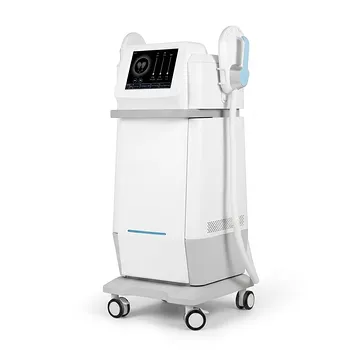
In direct clinical comparison, RF-based vacuum systems and 808 nm diode laser vacuum systems produce broadly comparable body-contouring results. Both can reduce thigh circumference and improve the visible appearance of cellulite, with comparative evaluations reporting approximately 28%–30% improvement under their respective protocols. The main difference is recovery: RF systems tend to cause more transient bruising, erythema, and edema, while diode laser systems with contact cooling generally produce less bruising and tissue trauma.
The clinical outcome is often similar, but the tolerability profile is not. Choose RF when deeper thermal remodeling or skin tightening is a priority and mild short-term bruising is acceptable; choose an 808 nm diode laser system when minimizing post-treatment bruising and recovery burden is more important.
What Both Technologies Can Achieve
Comparable circumference reduction
RF-assisted vacuum systems and 808 nm diode laser systems have both demonstrated meaningful reductions in treated thigh circumference. Comparative data place improvement in the approximate range of 28% to 30%, although results depend on treatment settings, number of sessions, patient anatomy, and measurement methods.
These figures should not be interpreted as a guaranteed percentage of fat loss. They describe cosmetic improvement in the treated region, which may reflect changes in tissue fluid, contour, skin appearance, and localized adipose tissue.
Similar cellulite improvement
Both systems combine energy delivery with mechanical suction or massage. This combination can improve the appearance of cellulite by influencing local tissue structure, circulation, fluid movement, and skin surface smoothness.
Neither technology should be regarded as a permanent substitute for weight management or surgical fat removal. The visible result depends substantially on patient selection and the severity and composition of the treated tissue.
Where the Technologies Differ Clinically
RF produces deeper thermal action
RF systems deliver radiofrequency energy through tissue while using vacuum and, in some platforms, near-infrared light. Their principal advantage is deep, controlled heating, which may support tissue remodeling and skin contraction in addition to contour improvement.
Supplementary evaluations suggest that RF may be particularly useful when skin laxity or tissue redundancy is a major concern. However, stronger thermal action requires careful control of treatment temperature, exposure time, handpiece movement, and suction intensity.
Diode laser systems emphasize controlled optical heating
An 808 nm diode laser system delivers optical energy while commonly incorporating contact cooling and vacuum massage. The cooling interface is intended to protect the superficial skin and improve patient comfort while the treatment energy is applied.
The available comparison indicates that this approach can maintain effective contour and cellulite outcomes while reducing the degree of post-treatment bruising and micro-injury relative to the RF-vacuum approach.
Skin tightening may favor RF
RF-assisted platforms have stronger positioning when skin contraction and subdermal remodeling are central treatment goals. Some RF-assisted lipolysis platforms have reported substantial skin surface contraction, although those results may not be directly comparable with noninvasive body-contouring studies or with every RF device.
This potential advantage should be weighed against the need for stricter thermal management. Excessive or uneven heating can increase discomfort and may contribute to irregular tissue response.
Comparing Side Effects and Recovery
Bruising is the clearest practical difference
Vacuum-coupled RF systems show a higher incidence and intensity of bruising than diode laser vacuum systems in the comparative data. One cited evaluation reported bruising in approximately 35% of RF-treated legs versus 5% of laser-treated legs.
The primary reference summarizes this difference more conservatively as up to a 30% higher incidence of mild transient bruising with RF-based treatment. The exact rate varies by device, suction strength, operator technique, treatment area, and patient susceptibility.
RF-related effects are usually temporary
RF treatments may produce mild erythema, localized edema, warmth, and bruising. These effects generally resolve within days, while the sensation of deep warmth commonly subsides within approximately two hours.
Minor bruising may persist for up to about a week, particularly during early treatment sessions or when the system uses stronger mechanical manipulation. Patients who bruise easily may therefore experience a more noticeable recovery period with RF.
Cooling may reduce diode laser recovery burden
Integrated contact cooling in diode laser systems is associated with less fluid retention, superficial tissue trauma, and bruising in the cited comparison. This can make the treatment more suitable for patients who need minimal visible downtime.
Lower bruising risk does not mean zero risk. Temporary redness, sensitivity, warmth, or localized swelling can still occur, and the outcome remains dependent on correct device use and patient screening.
Understanding the Trade-offs
RF: stronger remodeling potential, more visible short-term effects
RF is attractive when the treatment objective includes skin tightening, tissue remodeling, or treatment of areas with some laxity. Its trade-off is a greater likelihood of transient bruising and the need for careful thermal control.
The operator must keep the handpiece moving and avoid excessive dwell time in one location. Holding the handpiece firmly in one spot for more than approximately four seconds may cause moderate localized discomfort.
808 nm diode laser: gentler recovery, potentially narrower role
The diode laser approach offers a favorable bruising profile and may be preferable for patients who prioritize comfort and rapid return to normal activities. Contact cooling also provides an important safety and tolerability feature.
Its potential limitation is that it may not provide the same degree of thermal skin contraction as a well-controlled RF platform when substantial skin laxity is the dominant concern. The best choice therefore depends on whether the primary problem is cellulite and contour or contour combined with lax skin.
Vacuum intensity can alter the risk profile
The energy source is only part of the treatment. Suction pressure, pulse duration, handpiece movement, treatment passes, and operator pressure can materially change both comfort and bruising risk.
Higher mechanical manipulation or suction intensity may increase transient bruising by as much as 30% compared with gentler approaches. Device comparisons are therefore most meaningful when treatment protocols are reasonably equivalent.
Numerical outcomes require cautious interpretation
Reported percentages should not be compared as though they represent identical endpoints. “Circumference reduction,” “cellulite improvement,” “skin contraction,” and “fat reduction” are different clinical measures.
The reported 28%–30% improvement for thigh contour and cellulite should not be directly equated with the higher skin-contraction figures reported for some RF-assisted lipolysis platforms. Those technologies, treatment depths, and outcome measurements may differ substantially.
How to Apply This to Your Project
The appropriate choice should be based on the patient’s anatomy, tolerance for downtime, treatment area, and the clinic’s ability to standardize treatment parameters.
- If your primary focus is cellulite and circumference reduction: Either technology can be clinically effective, so compare comfort, cooling, protocol consistency, and patient recovery expectations.
- If your primary focus is minimizing bruising and visible downtime: An 808 nm diode laser system with integrated contact cooling generally offers the more favorable side-effect profile.
- If your primary focus is skin tightening or tissue laxity: An RF-based system may provide a stronger rationale because of its deeper thermal remodeling and contraction potential.
- If your primary focus is operational safety: Select the platform with reliable temperature control, appropriate suction safeguards, clear treatment protocols, and well-trained operators rather than choosing solely by energy type.
- If your primary focus is predictable patient satisfaction: Match the technology to the patient’s tolerance for temporary bruising and to the specific distinction between cellulite, localized contour, and skin laxity.
The most defensible decision is not simply RF versus diode laser; it is matching the system’s thermal and mechanical behavior to the desired result and acceptable recovery profile.
Summary Table:
| Feature | RF Vacuum Systems | 808nm Diode Laser Vacuum Systems |
|---|---|---|
| Clinical Outcome | Comparable (28-30% improvement) | Comparable (28-30% improvement) |
| Skin Tightening | Stronger (deeper thermal remodeling) | Moderate (less thermal contraction) |
| Bruising Incidence | Higher (up to 35% vs 5%) | Lower (5% or less) |
| Recovery Time | Longer (bruising may last a week) | Shorter (minimal downtime) |
| Comfort & Safety | Requires careful thermal control | Contact cooling improves comfort |
| Ideal For | Laxity + contour | Cellulite + contour with minimal downtime |
Choose the Right Body Sculpting Technology for Your Clinic
At BELIS, we offer both advanced RF vacuum systems and 808nm diode laser devices, along with a full range of professional aesthetic equipment. Our experts can help you select the perfect solution based on your patients' needs and your practice goals. From OEM/ODM support to global certifications, we ensure you get reliable, high-performance devices that enhance outcomes and patient satisfaction.
Contact us today for a free consultation and discover how BELIS can elevate your body sculpting services.
Related Products
- EMSlim Neo Nova Body Sculpting EMS Sculpting Machine
- EMS Body Sculpting Slimming Machine EMSlim Body Slimming Machine
- EMSlim RG Laser Body Sculpting and Slimming Machine
- Ultrasonic Cavitation Machine Lipo Laser Device
- Ultrasonic Cavitation Radiofrecuency Machine for Body Slimming
People Also Ask
- How do RF body sculpting devices target subcutaneous fat & tighten skin?
- What is the biological mechanism of action by which radiofrequency (RF) energy achieves body sculpting and cellulite reduction? Discover how controlled heating remodels collagen, influences fat, and smooths skin.
- What anatomical mechanisms cause lower face and submental contour loss, and how do body sculpting and RF technologies address jowls and neck laxity? Discover the key causes and non-surgical solutions.
- How can aesthetic practitioners accurately differentiate between muscular hypertrophy and subcutaneous fat accumulation when evaluating patients for calf or lower face contouring using body sculpting equipment?
- How does radiofrequency (RF) operating frequency influence tissue selectivity and therapeutic outcomes in non-invasive RF body sculpting systems?