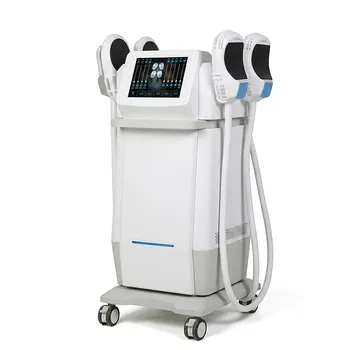
Deep dermal radiofrequency (RF) is recommended alongside volume restoration because lower facial aging involves both tissue deflation and skin laxity. Fillers can replace lost volume, but they do not directly contract or remodel sagging dermal tissue. Deep dermal RF delivers controlled volumetric heat that produces immediate collagen contraction and stimulates longer-term neocollagenesis, creating a firmer foundation around the jawline and melomental folds. This allows practitioners to use less filler while achieving a more balanced, natural-looking result.
Fillers restore what has been lost; deep dermal RF improves the tissue that remains. Combining both approaches addresses the two structural contributors to lower facial aging: volume depletion and dermal laxity.
Why Fillers Alone May Be Insufficient
Volume loss is only one part of lower facial aging
Facial aging is multi-layered. Deep structural volume can decrease while the overlying dermis simultaneously loses collagen and elastin, reducing its ability to support and retract the skin.
Fillers address the volume-deflation component by restoring selected areas such as the cheeks or midface. They do not, by themselves, substantially tighten a lax skin matrix.
Excess filler can mask, rather than correct, laxity
When deep folds are caused partly by skin descent, adding volume directly to the fold may improve the depression but leave the surrounding tissue loose. Increasing filler further can produce an over-filled appearance without adequately correcting the underlying sagging.
This is especially relevant to deep melomental folds, where the visible crease may reflect a combination of volume loss, dermal weakening, and downward tissue movement.
How Deep Dermal RF Complements Volume Restoration
RF creates immediate collagen contraction
Professional RF systems deliver uniform volumetric thermal energy into the deep dermis and, depending on the system, adjacent subdermal layers. The controlled heating causes existing collagen fibers to contract, producing an initial firming effect.
The result is not equivalent to replacing lost volume. Instead, RF improves the tension and organization of the tissue supporting the skin.
RF stimulates longer-term remodeling
Thermal stimulation also initiates neocollagenesis, the production of new collagen during subsequent tissue remodeling. Over time, this can improve dermal firmness and help tighten the skin matrix around the jawline and melomental region.
Because collagen remodeling develops progressively, RF should be understood as a tissue-quality and tightening treatment rather than an instant substitute for a volumizer.
The treatments address different layers
The combination works because the modalities have complementary roles:
- Volume restoration replaces selected areas of deep structural deflation.
- Deep dermal RF contracts and remodels lax cutaneous tissue.
- Neuromodulators, when clinically appropriate, can reduce the contribution of hyperkinetic muscle activity, such as platysmal band activity.
Together, these interventions support a more comprehensive, multi-layered correction.
Why the Combination Can Look More Natural
Tightening establishes a firmer foundation
Treating laxity first, or incorporating RF into the treatment plan, can create a more elevated and supported cutaneous foundation. Fillers can then be placed selectively where a genuine volume deficit remains.
This reduces the need to use filler as a substitute for skin tightening.
Lower filler volumes may be sufficient
When the overlying tissue has been tightened, practitioners may be able to achieve visible improvement with minimal volume restoration rather than progressively increasing filler to compensate for laxity.
The goal is not simply to fill the fold. It is to improve the surrounding structural support so the fold appears softened as part of a broader lower-face lift.
The correction becomes more balanced
RF can improve firmness across the jawline and around the melomental folds, while fillers restore specific areas of deflation. Addressing both concerns helps avoid a result in which one area appears excessively augmented while adjacent skin remains lax.
Planning the Lower-Face Treatment
Assess laxity and deflation separately
A useful treatment plan distinguishes between missing volume and loose tissue. A hollow or depressed contour may require a volumizer, whereas redundant or descended skin requires a tightening strategy.
Many patients have both problems, which is why a single-modality approach may provide an incomplete correction.
Treat the broader facial zone
The visible fold is not always an isolated defect. Lower facial aging can involve the cheek, submalar region, jawline, submental area, and neck.
A zone-based assessment helps determine where RF tightening should be applied and where targeted volume restoration may be appropriate.
Match the device to the degree of laxity
Non-surgical RF options are generally most relevant for patients with mild-to-moderate laxity or for patients seeking refinement without surgery. Device type, energy delivery, treatment depth, and clinical protocol determine which tissue layers are affected.
RF cannot reproduce the correction of substantial surgical skin excision. Patient selection and realistic expectations are therefore essential.
Understanding the Trade-offs
RF does not replace lost volume
RF can tighten and remodel tissue, but it cannot recreate a depleted cheek or midface compartment. Using RF alone when the primary issue is structural deflation may leave the face looking thin or under-supported.
Conversely, using filler alone when laxity is prominent may require excessive product and still fail to provide adequate lift.
Results develop on different timelines
Filler can provide an immediate change in contour, while RF produces an initial contraction followed by longer-term collagen remodeling. The final assessment should account for these different response patterns.
Treatment sequencing may be immediate, staged, or individualized according to the patient’s anatomy, device, and clinical objectives.
Skin quality may need separate treatment
Deep RF primarily addresses structural firmness. Fine crepiness, superficial wrinkles, or dyschromia may require additional surface-focused modalities, such as fractional RF or laser treatments.
These treatments should be viewed as complementary rather than interchangeable.
Thermal treatment requires clinical judgment
RF energy must be delivered with appropriate control of temperature, depth, and treatment area. Indications, contraindications, device-specific protocols, and patient factors should be evaluated by a qualified practitioner.
The recommendation to combine RF with injectables is therefore a treatment-planning principle, not a reason to apply every modality to every patient.
Making the Right Choice for Your Goal
The most effective plan depends on whether the dominant concern is laxity, deflation, or both.
- If your primary focus is reducing deep melomental folds: Combine targeted volume restoration with treatment of the surrounding lax dermal tissue so the fold is softened without relying on excessive filler.
- If your primary focus is a natural-looking lower-face lift: Use deep dermal RF to establish tissue firmness, then add only the volume needed to correct genuine structural deficits.
- If your primary focus is jawline and submental definition: Consider RF for dermal tightening and, where clinically appropriate, address contributing submental fat or platysmal muscle activity separately.
- If your primary focus is superficial skin texture: Treat deep laxity with RF first or alongside volume correction, then assess whether a surface-focused resurfacing modality is also necessary.
A layered treatment plan works best when each modality corrects the problem it is designed to address: RF tightens lax tissue, while volume restoration replaces structural loss.
Summary Table:
| Aspect | Deep Dermal RF | Volume Restoration (Fillers) |
|---|---|---|
| Primary role | Tightens lax dermal tissue, stimulates collagen contraction and remodeling | Replaces lost volume, restores facial fullness |
| Mechanism | Delivers controlled volumetric heat to deep dermis for immediate contraction and neocollagenesis | Adds hyaluronic acid or other fillers to specific areas |
| Target tissue | Dermis and subdermal layers | Deep structural compartments |
| Results timeline | Initial contraction, progressive collagen remodeling over months | Immediate change in contour |
| Ideal for | Mild-to-moderate laxity, improving tissue firmness | Volume loss, hollowing, contour deficits |
| Effect on folds | Softens folds by tightening surrounding tissue | Fills fold depression directly |
| Combination benefit | Creates firmer foundation, reducing filler needed for a natural look | Restores lost volume while RF improves tissue quality |
Enhance Your Lower Face Results with Combined RF and Fillers
At BELIS, we specialize in professional-grade aesthetic equipment for clinics and premium salons. Our advanced RF systems are designed to complement volume restoration, helping you achieve firmer, more youthful results with less filler. Whether you're addressing deep melomental folds or jawline laxity, our devices offer the precision and efficacy you need.
Contact our experts today to learn how BELIS RF technology can elevate your practice and patient outcomes. Get in touch now to discuss your specific needs and discover our full range of laser, IPL, and body contouring solutions.
Related Products
- 4D 12D HIFU Machine Device for Skin Tightening and Lifting
- 4D 12D HIFU Machine Device for Skin Tightening
- 22D HIFU Machine Device Facial Machine
- Clinic Use IPL SHR ND YAG Laser Hair Removal RF Skin Tightening Machine
- 7D 12D 4D HIFU Machine Device
People Also Ask
- What is the mechanism of HIFU devices for facial lifting? Unlock Non-Surgical SMAS Tightening Secrets
- How do non-invasive skin tightening devices such as HIFU and microneedle RF compare to surgical rhytidectomy for facial lifting? Discover the key differences in results, longevity, and recovery.
- What are the technical principles behind HIFU for facial tightening? Master Deep SMAS Lifting Technology
- What is the primary anatomical mechanism of micro-focused ultrasound (HIFU) skin lifting devices compared to traditional superficial thermal treatments? Deep tissue tightening explained
- Is HIFU skin tightening safe? Ensure Your Safety with a Qualified Professional