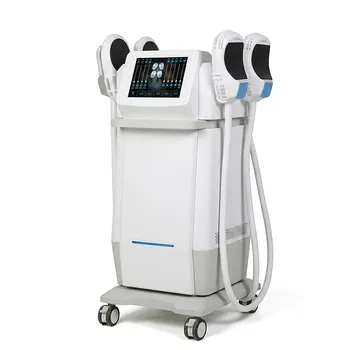
For Fitzpatrick IV–VI skin, infrared tightening should be treated as a controlled dermal-heating procedure—not like a pigment-targeting laser or IPL treatment. A commonly cited starting range is approximately 32–40 J, but the correct setting depends on the device, applicator, treatment area, skin condition, and patient tolerance. Operators should prioritize manufacturer-approved parameters, continuous contact cooling, conservative escalation, and a staged course of approximately 3–5 sessions.
The central safety principle is controlled heating without epidermal injury. Darker skin does not automatically require the same pigment-specific parameter reductions used for Alexandrite, IPL, or other melanin-targeting systems, but operators must still control surface temperature, monitor endpoints, and avoid excessive cumulative heat.
Establish What Technology Is Being Used
Confirm that the device is genuinely infrared-based
“Infrared” is a broad description. Devices may use near-infrared light, broadband infrared energy, radiofrequency, or combined technologies, and their fluence, pulse, temperature, and cooling requirements are not interchangeable.
Before treatment, confirm the device’s:
- Wavelength or operating spectrum
- Energy unit and treatment scale
- Applicator type and spot size
- Pulse or exposure duration
- Cooling method
- Maximum permitted skin temperature
- Contraindications and treatment endpoints
Do not transfer IPL or laser settings to infrared tightening
Parameters intended for pigment-specific lasers or IPL should not be applied to a non-melanin-targeted infrared tightening system. Longer-wavelength filters, sub-pulse timing, and IPL fluence recommendations are device-specific and may be irrelevant—or unsafe—on another platform.
Set Parameters Conservatively
Use the device’s validated treatment range
The primary reference identifies approximately 32–40 J as a typical range for infrared volumetric dermal heating in darker complexions. This should be treated as a reference range, not a universal prescription.
The operator should verify whether the manufacturer expresses energy as joules, joules per square centimeter, energy per pulse, or another device-specific metric. The numerical value cannot be interpreted safely without the platform’s documentation.
Start at the lower end when risk is uncertain
Begin conservatively when the patient has:
- Fitzpatrick V or VI skin
- Recent tanning or increased baseline pigmentation
- A history of PIH, keloids, burns, or prolonged erythema
- Active inflammation, dermatitis, or recent procedures
- Reduced sensation or difficulty reporting heat accurately
- Uncertain tolerance during the first treatment
Increase energy only when the tissue response and patient comfort remain appropriate. Do not escalate simply to achieve a stronger sensation.
Use tolerance as one input, not the only endpoint
For this type of volumetric heating, pigmentation is generally less important to energy absorption than it is with melanin-targeted devices. However, patient tolerance alone is insufficient because heat injury can occur before the patient fully recognizes it.
Monitor comfort alongside:
- Surface temperature, where the device permits
- Persistent or worsening pain
- Excessive erythema
- Edema or localized swelling
- Blanching, graying, blistering, or epidermal whitening
- Unusual tenderness after treatment
Stop or reduce treatment if an abnormal endpoint appears.
Protect the Epidermis During Treatment
Apply liberal contact cooling gel
A continuous, liberal layer of contact cooling gel should be maintained throughout treatment when required by the device design. The gel should not be allowed to dry, thin out, or become uneven over the treatment zone.
Cooling improves coupling and helps dissipate heat from the epidermis. It does not make excessive energy safe, so cooling should support—not replace—conservative parameter selection.
Maintain uniform applicator contact
The handpiece should remain fully and evenly coupled to the skin. Avoid rocking, excessive pressure, gaps, or repeated delivery to the same small area unless the manufacturer specifically authorizes that technique.
Uneven coupling can create localized hot spots and inconsistent clinical results.
Avoid uncontrolled pulse stacking
Repeated pulses or passes over the same location can produce cumulative thermal injury. Operators should follow the manufacturer’s limits for overlap, passes, dwell time, and movement speed.
Do not stack pulses to compensate for inadequate coupling, insufficient treatment time, or an insufficient number of sessions.
Use a Structured Patient Protocol
Complete a baseline assessment
Document Fitzpatrick type, recent sun exposure, tanning, prior procedures, active skin disease, medication use, scarring history, pigmentary history, and the patient’s ability to report heat accurately.
Defer treatment over active infection, open wounds, significant inflammation, or recently injured skin. Follow the device-specific contraindications for implanted devices, pregnancy, medications, and other medical conditions.
Perform a test area when appropriate
A small test area is particularly prudent for a first treatment, uncertain skin response, recent tanning, or a patient with a history of PIH or thermal sensitivity.
The test should use a conservative, device-approved setting. Assess both the immediate response and delayed reaction according to the manufacturer’s instructions before treating a larger area.
Treat in stages rather than aggressively
For darker skin types, a staged plan is generally safer than attempting maximal tightening in one session. The primary reference supports a course of approximately 3–5 treatment sessions to support gradual improvement in laxity and collagen remodeling.
The interval should be determined by the device protocol, tissue response, and recovery—not by an assumption that more frequent treatments are better.
Reassess before every subsequent session
At each visit, examine the treated area for persistent erythema, tenderness, pigment change, textural change, blistering, or delayed healing. Do not escalate parameters if the prior response suggests excessive thermal stress.
Document energy, treatment area, passes, cooling method, patient-reported heat, observed endpoints, and any delayed reaction.
Recognize and Manage Risk in Darker Skin
Understand the risk of PIH and dyspigmentation
Fitzpatrick IV–VI skin has a higher risk of post-inflammatory hyperpigmentation and other pigmentary changes after epidermal injury. The risk is especially important when treatment causes burns, blistering, prolonged inflammation, or excessive cumulative heat.
Infrared tightening may be less dependent on melanin absorption than pigment-targeting systems, but darker skin is not immune to thermal injury or PIH.
Treat abnormal endpoints as warnings
Expected warmth and transient erythema should be distinguished from injury. Concerning findings include:
- Sharp or escalating pain
- Blistering
- Pronounced edema
- Gray, white, or charred epidermal change
- Persistent intense erythema
- Focal hot spots
- Delayed erosions or pigment changes
Stop treatment in the affected area and follow the clinic’s medical adverse-event pathway. Escalate to the supervising clinician when injury is suspected.
Give clear aftercare instructions
Patients should be told to report increasing pain, blistering, crusting, marked swelling, or pigment changes. They should also follow the clinic’s instructions regarding heat exposure, sun protection, irritating topical products, and other procedures.
Sun protection is particularly important when minimizing the risk of post-inflammatory pigment alteration.
Understanding the Trade-offs
Higher energy is not automatically better
Increasing energy may intensify heating, but it also narrows the margin between therapeutic dermal warming and epidermal injury. In darker skin, an avoidable inflammatory injury may produce pigmentary complications that outweigh any incremental tightening benefit.
Conservative treatment may require more sessions
A staged course may produce slower visible change than an aggressive single treatment. However, gradual treatment generally provides better control over tolerance, delayed reactions, and cumulative heat exposure.
Cooling can mask excessive treatment
A well-cooled surface can feel comfortable even when excessive energy is being delivered beneath it. Cooling must therefore be paired with parameter control, tissue observation, and adherence to the device’s temperature and exposure limits.
Do not rely on generic numerical recipes
Values such as IPL fluences, cutoff filters, pulse durations, or fixed overlap percentages cannot be safely generalized to infrared tightening equipment. A number is meaningful only in the context of the specific platform and its validated protocol.
Making the Right Choice for Your Goal
Use the following framework when creating or auditing a clinical protocol:
- If your primary focus is safe treatment of Fitzpatrick IV–VI skin: Use the device’s validated infrared protocol, begin conservatively, maintain liberal contact cooling, and monitor both immediate and delayed tissue responses.
- If your primary focus is treatment efficacy: Use a staged course of approximately 3–5 sessions rather than pursuing maximal energy in one visit, and reassess response before each escalation.
- If your primary focus is minimizing PIH: Prevent epidermal injury through accurate skin assessment, uniform coupling, controlled cumulative heating, and prompt cessation when abnormal endpoints appear.
- If your primary focus is protocol standardization: Record device-specific energy units, exposure settings, cooling method, passes, patient tolerance, clinical endpoints, and delayed reactions at every session.
- If your primary focus is treating pigment or vascular lesions instead: Use the separate manufacturer-approved laser or IPL protocol; do not substitute the infrared tightening range or technique.
Safe infrared tightening on darker skin depends less on a single “correct” number than on device-specific parameters, controlled thermal delivery, effective cooling, and disciplined clinical monitoring.
Summary Table:
| Parameter / Protocol | Recommended Approach for Fitzpatrick IV–VI |
|---|---|
| Initial Energy Range | 32–40 J (device-specific, start low) |
| Cooling | Liberal continuous contact cooling gel |
| Test Area | Recommended for first/uncertain cases |
| Sessions | 3–5, staged, with reassessment |
| Escalation | Only if prior response is normal |
| Endpoint Monitoring | Watch for pain, blistering, edema, etc. |
| Aftercare | Sun protection, report delayed reactions |
Ensure safe and effective infrared skin tightening for your darker-skinned clients. At BELIS, we provide advanced aesthetic devices with validated protocols and dermal cooling systems. Our portfolio includes professional infrared, laser, and combined-energy platforms designed for clinics and premium salons. Contact our experts today to optimize your treatment parameters and minimize risks. Get in touch with us for personalized guidance and training.
Related Products
- 4D 12D HIFU Machine Device for Skin Tightening and Lifting
- 4D 12D HIFU Machine Device for Skin Tightening
- 22D HIFU Machine Device Facial Machine
- Clinic Use IPL SHR ND YAG Laser Hair Removal RF Skin Tightening Machine
- 7D 12D 4D HIFU Machine Device
People Also Ask
- What is the mechanism of HIFU devices for facial lifting? Unlock Non-Surgical SMAS Tightening Secrets
- How do non-invasive skin tightening devices such as HIFU and microneedle RF compare to surgical rhytidectomy for facial lifting? Discover the key differences in results, longevity, and recovery.
- What are the technical principles behind HIFU for facial tightening? Master Deep SMAS Lifting Technology
- What is the primary anatomical mechanism of micro-focused ultrasound (HIFU) skin lifting devices compared to traditional superficial thermal treatments? Deep tissue tightening explained
- Is HIFU skin tightening safe? Ensure Your Safety with a Qualified Professional