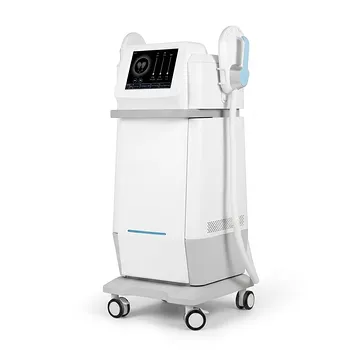
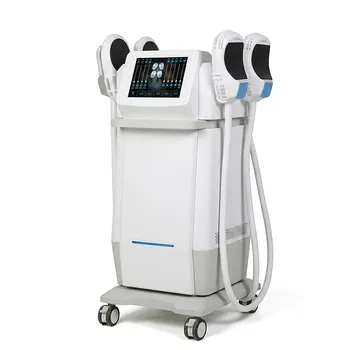
HIFU destroys subcutaneous fat by concentrating ultrasound energy at a precisely selected depth, where it produces localized thermal injury and, depending on the device and settings, mechanical tissue disruption. The acoustic energy passes through the skin and superficial tissues at relatively low intensity, then converges within the targeted adipose layer. At the focal zone, the resulting heat and mechanical stress damage adipocytes while largely preserving the overlying epidermis and dermis.
The central mechanism is focal energy deposition: HIFU creates a controlled zone of adipocyte injury without surgical access, after which the body gradually removes the damaged cellular material through inflammatory, lymphatic, and metabolic clearance processes.
How HIFU Reaches the Fat Layer
Focused acoustic transmission
A HIFU transducer emits ultrasound waves through the skin. The waves are shaped and focused so that their highest energy density occurs at a predetermined depth within the subcutaneous tissue, rather than across the entire tissue path.
The focal depth varies by device, applicator, treatment area, and clinical protocol. A fixed depth such as approximately 1 cm should therefore be treated as an example, not a universal specification.
Why superficial skin is relatively preserved
The epidermis and dermis are exposed to the ultrasound beam but are not exposed to the same concentrated energy found at the focal point. Because the strongest thermal and mechanical effects are localized, tissue outside the focal zone experiences substantially less injury.
This selectivity depends on correct patient selection, treatment depth, energy settings, applicator positioning, and the device's safety controls. “Non-invasive” does not mean risk-free.
How the Focal Zone Destroys Adipocytes
Localized thermal coagulation
At the focal point, acoustic energy is converted into heat. When the target tissue reaches the device's effective treatment threshold, adipocytes and nearby structural tissue undergo irreversible thermal injury, commonly described as coagulative necrosis.
Published descriptions often cite temperatures in the mid-50s Celsius or higher, but the clinically relevant result depends on the complete time-temperature exposure, not temperature alone. Exact thresholds vary with the system and treatment protocol.
Mechanical disruption and cavitation
Rapid pressure changes from focused ultrasound can also produce mechanical stress. Depending on the device's acoustic intensity and operating parameters, this may cause membrane disruption, micromechanical tissue injury, and cavitation-related effects.
These mechanical effects should not be assumed to occur identically in every HIFU body-contouring system. Some devices are designed primarily around thermal coagulation, while others produce a more substantial mechanical contribution.
The role of precision
HIFU does not remove fat by suction or physically extract it from the body. Its clinical value comes from placing a controlled injury within selected subcutaneous fat while limiting exposure to adjacent skin and non-target tissues.
The treated volume is therefore determined by the focal geometry and treatment pattern. A single focal point does not represent treatment of an entire body-contouring area.
What Happens After Treatment
Inflammatory clearance
Damaged adipocytes do not simply disappear at the moment of energy delivery. The initial treatment creates cellular injury, followed by an inflammatory and remodeling response in which cellular debris is progressively processed and cleared.
The resulting contour change develops over time rather than appearing solely from immediate fat-cell removal.
Metabolic processing
The contents of injured fat cells can enter normal tissue-clearance and metabolic pathways. It is more accurate to describe this generally as lymphatic and metabolic processing than to state that all released triglycerides are directly transported to and cleared by the liver in a uniform manner.
The clinical outcome depends on the amount and distribution of treated tissue, the individual's response, and whether additional causes of contour change are present.
Expected clinical effect
Clinical studies have reported reductions in localized fat thickness, abdominal girth, or waist circumference after treatment. These findings support HIFU as a localized body-contouring procedure, not as a general weight-loss treatment.
Measured outcomes vary by study design, treatment area, number of sessions, follow-up interval, and patient characteristics. A stable body weight can help distinguish contour change from broad weight loss, but it does not guarantee the same result for every patient.
How HIFU Differs From Other Ultrasound Uses
Focused versus non-focused ultrasound
Focused systems concentrate acoustic energy at a selected depth and can produce the energy density required for focal tissue injury. Non-focused ultrasound distributes energy more broadly and may provide mild heating or other adjunctive effects without creating the same defined adipocyte-destruction zone.
Therefore, “ultrasound body treatment” is not a sufficient description of the mechanism. The device's focusing geometry, frequency, intensity, pulse pattern, and approved indication determine what it can plausibly do.
Fat reduction versus tissue tightening
HIFU is also used in some applications to create thermal coagulation points in deeper connective-tissue layers, including fascia, with the goal of tissue tightening or lifting. That mechanism is distinct from subcutaneous fat destruction.
A device marketed for facial lifting or SMAS treatment should not automatically be assumed to provide validated fat-reduction performance, and vice versa.
Understanding the Trade-offs
It is contouring, not liposuction
HIFU can reduce localized adipose tissue without an incision or aspiration, but it does not provide the immediate volume removal or direct sculpting control of liposuction.
Its effect is gradual and generally more modest. It is most appropriate when the goal is limited contour improvement rather than substantial fat-volume reduction.
Results are not fully predictable
Treatment response depends on adipose thickness, tissue composition, applicator contact, focal depth, delivered energy, and biological clearance. Outcomes reported in clinical trials are averages, not guarantees.
Poor targeting can reduce efficacy, while excessive or incorrectly placed energy can increase the risk of pain, burns, nerve effects, or other tissue injury.
Device claims require scrutiny
Claims about precise temperatures, energy densities, treatment depths, or expected centimetre reductions cannot be generalized across all HIFU devices. Clinical evidence should be evaluated for the specific device, applicator, treatment protocol, and body area.
Regulatory authorization and published clinical evidence are more meaningful than the label “HIFU” alone.
How to Apply This to Your Project
The practical decision is whether the device and protocol can create a controlled focal injury in the intended fat layer while maintaining an acceptable safety profile.
- If your primary focus is mechanism: Look for evidence describing focal thermal coagulation, the device's acoustic focusing characteristics, and any documented mechanical or cavitation effects.
- If your primary focus is clinical effectiveness: Evaluate controlled studies using the specific device and measure outcomes such as fat thickness or waist circumference over an appropriate follow-up period.
- If your primary focus is patient safety: Confirm validated treatment depths, contraindications, energy controls, operator training, and monitoring procedures rather than relying on the non-invasive label.
- If your primary focus is practice selection: Distinguish HIFU fat-reduction systems from HIFU devices intended for dermal or SMAS tightening, because their targets and clinical mechanisms differ.
HIFU body contouring is best understood as precisely targeted, non-surgical adipose-tissue injury followed by gradual biological clearance, not as instant fat extraction or a substitute for weight management.
Summary Table:
| Mechanism Aspect | Description |
|---|---|
| Energy Delivery | Focused ultrasound waves converge at a selected depth within subcutaneous fat, sparing overlying skin. |
| Thermal Effect | Conversion of acoustic energy to heat causes coagulative necrosis of adipocytes at temperatures typically >55°C. |
| Mechanical Effect | Acoustic pressure changes induce membrane disruption and cavitation, contributing to cell damage. |
| Biological Clearance | Inflammatory and lymphatic processes gradually remove debris, with metabolic processing of released lipids. |
| Clinical Outcome | Gradual reduction in fat thickness and circumference over weeks; results vary by device and patient. |
Ready to Elevate Your Practice with Advanced HIFU Technology?
At BELIS, we specialize in professional-grade medical aesthetic equipment for clinics and premium salons. Our portfolio includes cutting-edge HIFU systems designed to deliver precise, non-invasive fat reduction and skin tightening. By partnering with us, you gain access to:
- State-of-the-Art Devices: Our HIFU machines feature advanced focusing technology for optimal safety and efficacy.
- Comprehensive Support: From training to after-sales service, we ensure your team is fully equipped to succeed.
- Certified Quality: All devices meet international standards, providing reliability and peace of mind.
Whether you're expanding your services or starting a new venture, we're here to help you achieve outstanding patient outcomes. Contact us today to discuss how BELIS can empower your business with top-tier aesthetic solutions.
Related Products
- 4D 12D HIFU Machine Device for Skin Tightening
- 12D HIFU Machine Device for Facial HIFU Treatment
- 4D 12D HIFU Machine Device for Skin Tightening and Lifting
- 22D HIFU Machine Device Facial Machine
- 7D 12D 4D HIFU Machine Device
People Also Ask
- How do non-invasive skin tightening devices such as HIFU and microneedle RF compare to surgical rhytidectomy for facial lifting? Discover the key differences in results, longevity, and recovery.
- What is the mechanism of action of High-Intensity Focused Ultrasound (HIFU) devices in noninvasive body sculpting, and how is surrounding tissue protected?
- What key clinical safety guidelines and contraindications must aesthetic practitioners observe when operating ultrasound skin tightening devices? Essential Safety Protocols for Clinics
- Why is it necessary to fill the transducer chamber with deionized water and PE film in HIFU devices? Key Safety Insights
- Why is a HIFU device essential for non-invasive facial lifting? Discover the Power of Deep SMAS Layer Targeting