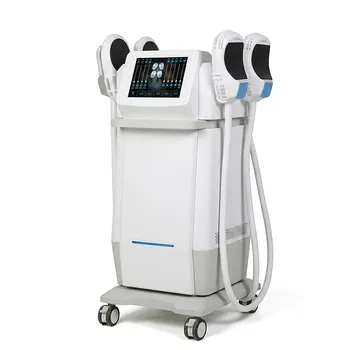
HIFU achieves non-invasive facial lifting by concentrating ultrasound energy at controlled depths beneath the skin, where it creates tiny zones of thermal coagulation. The overlying epidermis remains largely unaffected because the energy is focused below the surface rather than broadly heating the skin. This localized heat produces immediate tissue contraction and activates a longer-term wound-healing response that promotes collagen remodeling and new collagen formation.
HIFU works like a deep, precisely controlled tightening treatment: focused acoustic energy heats selected dermal or fascial layers without incisions, producing short-term contraction and gradual structural remodeling.
How HIFU Delivers Energy Beneath the Skin
Focused Acoustic Energy
HIFU devices convert electrical energy into high-frequency sound waves. These waves travel through the skin and are concentrated at a defined focal point, similar to how a magnifying glass concentrates sunlight.
At the focal point, acoustic energy is absorbed by the tissue and converted into heat. The surrounding tissue receives substantially less energy, allowing treatment to remain localized.
Controlled Treatment Depths
Clinical systems may target different depths depending on the treatment area, device, and clinical objective. A focal depth such as 4.5 mm can reach deep dermal or subdermal tissue, while other settings may be selected for more superficial or deeper structures.
Some HIFU systems are designed to target the superficial muscular aponeurotic system, or SMAS, a connective-tissue layer involved in facial support. However, the exact target and depth depend on the specific device and its approved clinical use.
Protection of the Epidermis
Because the highest concentration of energy is delivered below the surface, the epidermis can remain relatively spared. This is the key distinction between focused ultrasound and treatments that heat the skin broadly from the outside.
“Non-invasive” does not mean that no tissue response occurs. HIFU intentionally creates controlled microscopic thermal injury beneath the surface while limiting unnecessary injury to the skin above it.
How Thermal Coagulation Produces Lifting
Microscopic Thermal Coagulation Zones
At precisely selected focal points, HIFU raises tissue temperature enough to create micro-thermal coagulation zones. These are small, controlled areas of thermal injury rather than a continuous layer of burned or damaged tissue.
The treatment pattern allows the clinician to distribute these points through a chosen tissue plane. The result is a controlled structural response without surgical dissection or removal of skin.
Immediate Tissue Contraction
Heat causes existing collagen fibers to contract and change their three-dimensional structure. This can create an early tightening effect in the treated tissue.
The immediate response is usually only part of the visible result. HIFU’s intended benefit also depends on the slower biological remodeling process that follows.
Remodeling of Deeper Support Tissues
When treatment reaches an appropriate deep dermal or fascial plane, contraction can influence the tissue’s mechanical support. This may contribute to lifting and improved facial contour.
The effect should not be interpreted as identical to a surgical facelift. Surgery physically repositions and removes tissue, while HIFU relies on controlled thermal stimulation and the body’s remodeling response.
How Collagen Remodeling Develops Over Time
The Wound-Healing Response
Micro-thermal coagulation zones signal a controlled tissue-repair process. The treated area releases inflammatory mediators and cytokines associated with healing and remodeling.
These signals recruit cellular activity around the treatment sites. The response is localized and intended to replace or reorganize damaged structural proteins over time.
Neocollagenesis
A central mechanism is neocollagenesis, the formation of new collagen. Fibroblasts and related repair processes generate and organize collagen within the treated tissue.
This process can improve firmness progressively rather than producing the entire result immediately. The visible outcome therefore develops over weeks or months, depending on the patient, treatment parameters, and tissue characteristics.
Tissue Reorganization
The response is not limited to making more collagen. Existing collagen and surrounding connective tissue can also undergo reorganization, producing broader tissue remodeling.
This combination of fiber contraction, new collagen formation, and structural reorganization explains why HIFU is used for gradual tightening and contour improvement.
What Clinical Results Represent
Measurable Elevation
Clinical evaluations have reported measurable structural changes after treatment. One example from the primary clinical description is eyebrow elevation of at least 0.5 cm after a single treatment.
Such measurements help distinguish an observed lifting effect from a purely subjective impression. They do not mean that every patient will experience the same degree of elevation.
Treatment Outcomes Vary
Results depend on factors such as skin laxity, age-related tissue changes, facial anatomy, collagen response, treatment depth, energy settings, and the clinician’s technique. A patient with substantial excess skin may require a different intervention from a patient with mild to moderate laxity.
HIFU is generally better understood as a tightening and contouring treatment than as a replacement for surgery in every case.
Understanding the Trade-offs
Precision Requires Appropriate Planning
The same precision that protects superficial skin also makes treatment planning important. Energy must be delivered at an appropriate depth and intensity for the intended tissue target.
Incorrect settings, poor device selection, or inadequate anatomical assessment can reduce effectiveness or increase the risk of unwanted pain, swelling, numbness, burns, or deeper tissue injury.
Results Are Gradual and Limited
HIFU does not remove excess skin or reposition facial structures as directly as surgery. Its results are typically more subtle and develop progressively through biological remodeling.
Patients seeking a major correction of advanced laxity should have realistic expectations and should be assessed for surgical and non-surgical options.
“SMAS Targeting” Needs Precision
Marketing descriptions sometimes imply that all HIFU devices treat the same deep SMAS layer targeted during a facelift. In practice, devices differ in their transducers, focal depths, energy delivery, indications, and regulatory clearances.
A credible clinical explanation should identify the actual treatment depth and approved use of the specific system rather than treating “SMAS” as a universal technical specification.
Clinical Safety Still Depends on the Operator
Although the epidermis is designed to be spared, HIFU is not risk-free. The face contains nerves, vessels, glands, and variable tissue thickness, so anatomical knowledge and appropriate device training are essential.
Treatment should be performed with equipment approved for the relevant indication and under the supervision of an appropriately qualified clinician.
Making the Right Choice for Your Goal
HIFU is most appropriate when the objective is controlled, non-surgical tightening with gradual improvement rather than immediate surgical repositioning.
- If your primary focus is mild to moderate facial laxity: HIFU may provide gradual lifting and tightening by combining immediate collagen contraction with longer-term remodeling.
- If your primary focus is deep structural support: Ask which tissue plane and focal depth the specific device is designed to treat, including whether a deeper fascial target is clinically appropriate.
- If your primary focus is avoiding incisions and extended recovery: HIFU offers a non-surgical approach, but the trade-off is that results are generally more gradual and less dramatic than those of a facelift.
- If your primary focus is predictable correction of substantial excess skin: Seek a clinical assessment of surgical options, because HIFU does not remove skin or mechanically reposition tissue.
Understanding the energy depth, thermal response, collagen biology, and treatment limitations allows HIFU to be evaluated as a precise clinical tool rather than as a generic “skin tightening” procedure.
Summary Table:
| Mechanism | Description | Clinical Effect |
|---|---|---|
| Focused Acoustic Energy | Ultrasound waves concentrated at focal points beneath the skin. | Localized heating without epidermal damage. |
| Thermal Coagulation | Heat creates microscopic zones of coagulation in deep tissue. | Immediate tissue contraction and structural remodeling. |
| Collagen Remodeling | Wound-healing response triggers neocollagenesis. | Gradual improvement in skin firmness over months. |
| Lifting Effect | Contraction and remodeling of deeper support layers. | Measurable lifting, e.g., eyebrow elevation of 0.5 cm. |
Elevate Your Aesthetic Practice with BELIS
At BELIS, we specialize in professional-grade medical aesthetic equipment designed exclusively for clinics and premium salons. Our advanced technology portfolio includes HIFU systems that deliver precise, non-invasive lifting and tightening, alongside a full range of solutions such as laser systems, IPL, PDT, and body sculpting devices.
Why partner with BELIS?
- Proven Technology: Our HIFU devices feature precise focal depth control to ensure safety and efficacy for your clients.
- Comprehensive Support: We provide OEM/ODM services, certifications, and reliable supply to help you grow.
- Expand Your Offerings: From high-margin aesthetic devices to advanced skin care tools, we cover virtually every category.
Ready to enhance your clinic's capabilities and drive patient satisfaction? Contact us today to discuss your needs and discover how BELIS can be your trusted partner in aesthetic excellence.
Related Products
- 4D 12D HIFU Machine Device for Skin Tightening
- 12D HIFU Machine Device for Facial HIFU Treatment
- 7D 12D 4D HIFU Machine Device
- 4D 12D HIFU Machine Device for Skin Tightening and Lifting
- 22D HIFU Machine Device Facial Machine
People Also Ask
- How do non-invasive skin tightening devices such as HIFU and microneedle RF compare to surgical rhytidectomy for facial lifting? Discover the key differences in results, longevity, and recovery.
- What is the mechanism of action of High-Intensity Focused Ultrasound (HIFU) devices in noninvasive body sculpting, and how is surrounding tissue protected?
- What key clinical safety guidelines and contraindications must aesthetic practitioners observe when operating ultrasound skin tightening devices? Essential Safety Protocols for Clinics
- Why is it necessary to fill the transducer chamber with deionized water and PE film in HIFU devices? Key Safety Insights
- Why is a HIFU device essential for non-invasive facial lifting? Discover the Power of Deep SMAS Layer Targeting