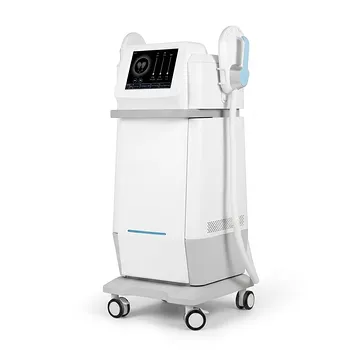
The selected depth corresponds to the anatomical layer where the ultrasound energy is focused. In facial tightening procedures, 1.5 mm generally targets the superficial dermis, 3.0 mm targets the deeper dermis, and 4.5 mm reaches the superficial musculoaponeurotic system (SMAS) in suitable facial areas. These settings are nominal focal depths rather than universal anatomical boundaries, so patient anatomy and treatment location determine the actual tissue reached.
The practical distinction is depth versus function: 1.5 mm primarily improves superficial skin quality, 3.0 mm supports dermal thickening and collagen remodeling, and 4.5 mm produces deeper contraction and lifting through the SMAS.
How MFU/HIFU Depth Settings Map to Facial Anatomy
1.5 mm: Superficial Dermis
The 1.5 mm setting focuses energy in the superficial dermis, close beneath the epidermis.
Its main purpose is to stimulate fine collagen formation, early remodeling, and skin-texture improvement. It is therefore more relevant to fine lines and surface laxity than to substantial facial lifting.
This setting should not automatically be described as targeting the epidermis. The epidermis is much thinner than 1.5 mm in most facial areas; the intended target is generally the superficial dermal tissue.
3.0 mm: Deep Dermis
The 3.0 mm setting is generally directed toward the deep dermis.
Heating this layer creates controlled thermal injury that encourages collagen remodeling, dermal thickening, and improved firmness. It addresses a deeper component of skin laxity than the 1.5 mm setting but does not provide the same structural effect as treatment at the SMAS level.
The exact tissue reached can vary with skin thickness, anatomical site, age, and individual facial structure. A 3.0 mm cartridge should therefore be selected according to the treatment area rather than treated as a precise universal boundary.
4.5 mm: SMAS-Level Tissue
The 4.5 mm setting is designed to reach the superficial musculoaponeurotic system, or SMAS, in appropriate facial regions.
The SMAS is a dense fibromuscular connective-tissue layer that lies beneath the subcutaneous tissues and is connected to the facial muscle and retaining-ligament system. It provides an important structural plane for facial support.
Thermal coagulation points at this depth can produce localized tissue contraction and deeper remodeling, creating a lifting effect that dermal heating alone cannot usually provide.
Why Different Depths Produce Different Results
Superficial Settings Improve Skin Quality
Energy delivered at 1.5 mm primarily affects the dermal matrix near the skin surface.
The expected benefit is improved texture, fine lines, and mild superficial laxity, supported by collagen synthesis during the healing response.
Intermediate Settings Build Dermal Support
At 3.0 mm, the treatment acts more substantially on the dermal collagen network.
The resulting remodeling may improve skin firmness and thickness, helping the skin appear tighter even when the deeper supporting structures are not the principal target.
Deep Settings Influence Facial Contour
At 4.5 mm, the objective shifts from surface refinement to structural contraction and lifting.
This is particularly relevant to laxity and sagging in areas such as the lower face, jawline, and selected midface regions, provided the tissue thickness and anatomy are appropriate for that focal depth.
How the Treatment Mechanism Works
Focused Acoustic Energy Creates Thermal Coagulation Points
MFU/HIFU devices use transducers to focus acoustic energy at a selected depth.
At the focal points, mechanical energy is converted into heat, producing small, controlled zones of thermal coagulation while limiting energy deposition along much of the path above the focus.
The Immediate Effect Is Followed by Remodeling
The initial response includes localized collagen contraction and tissue tightening.
Over time, the controlled injury activates a wound-healing response involving fibroblast activity and new collagen production. This delayed remodeling contributes to longer-term firmness.
Multiple Depths Can Be Combined
Practitioners may combine 1.5 mm, 3.0 mm, and 4.5 mm settings to address different layers during one treatment.
This creates a layered approach: superficial refinement, dermal reinforcement, and deeper structural lifting. The combination should be based on the patient's laxity pattern rather than applied uniformly to every area.
Why Facial Anatomy Matters
Tissue Thickness Is Not Uniform
Facial tissue depth changes between the forehead, cheeks, temples, perioral region, jawline, and neck.
A 4.5 mm focal depth may reach the SMAS in one region but may be too deep, too superficial, or anatomically inappropriate in another. Depth selection must therefore account for the specific treatment site.
The SMAS Is Not the Same as Facial Fat
The superficial fat compartment lies between the dermis and the SMAS, while deeper fat compartments are positioned beneath or around the facial muscles.
Because facial volume and support vary considerably, treatment planning should distinguish dermal remodeling, subcutaneous tissue effects, and SMAS-level treatment rather than treating all deeper tissue as interchangeable.
Depth Settings Are Not Exact Anatomical Labels
A cartridge labeled 1.5 mm, 3.0 mm, or 4.5 mm identifies the intended focal depth of the device.
It does not guarantee that the focal point will correspond to the same named anatomical structure in every patient. Skin thickness, tissue compression, probe placement, and regional anatomy can all affect the effective target.
Understanding the Trade-offs
Deeper Is Not Automatically Better
The 4.5 mm setting may provide a stronger lifting effect when the SMAS is an appropriate target, but it is not inherently superior for every patient or facial region.
Using an unnecessarily deep setting can reduce the relevance of the treatment to superficial concerns and may increase the risk of unwanted effects if energy is delivered in an unsuitable plane.
Superficial Treatment Does Not Replace Structural Lifting
A 1.5 mm treatment can improve texture and fine lines, but it should not be expected to reproduce the contour-lifting effect associated with SMAS-level treatment.
Conversely, deep treatment is not a substitute for addressing surface photodamage or fine textural irregularities.
Excessive Treatment Can Be Counterproductive
Facial fat provides volume and support. In areas where volume is limited, indiscriminate treatment of deeper tissues may contribute to an undesirable hollowed or overly thinned appearance.
Treatment density, energy level, line placement, and anatomical selection are therefore as important as the nominal depth.
Device Settings Are Not Directly Interchangeable
Different MFU/HIFU platforms can vary in transducer design, frequency, focal geometry, energy delivery, and visualization capabilities.
A 4.5 mm setting on one system should not automatically be assumed to produce an identical tissue effect to a 4.5 mm setting on another system.
Making the Right Choice for Your Goal
The appropriate depth depends on the dominant problem, tissue thickness, facial region, and desired degree of lifting.
- If your primary focus is skin texture and fine lines: The 1.5 mm setting is generally the most relevant because it targets the superficial dermis and supports fine collagen remodeling.
- If your primary focus is firmness and dermal laxity: The 3.0 mm setting is generally used to stimulate deeper dermal collagen remodeling and thickening.
- If your primary focus is facial lifting and contour definition: The 4.5 mm setting may be selected to reach the SMAS where anatomy permits, producing deeper contraction and structural lifting.
- If your primary focus is comprehensive rejuvenation: A carefully planned combination of depths can address surface quality, dermal support, and deeper laxity without treating every area identically.
The most effective MFU/HIFU treatment is not the deepest one, but the one whose focal depth matches the patient's anatomy and clinical objective.
Summary Table:
| Depth | Target Layer | Main Effect |
|---|---|---|
| 1.5 mm | Superficial dermis | Improves texture, fine lines |
| 3.0 mm | Deep dermis | Enhances collagen, firmness |
| 4.5 mm | SMAS | Provides lifting, contouring |
Ready to elevate your clinic's aesthetic offerings with advanced MFU/HIFU technology? At BELIS, we provide professional-grade devices designed for clinics and premium salons. Our portfolio includes cutting-edge HIFU systems, along with laser, IPL, and PDT equipment, ensuring you can deliver precise, effective treatments. Partner with us for reliable supply, OEM/ODM support, and certified quality. Contact us today to learn more!
Related Products
- 4D 12D HIFU Machine Device for Skin Tightening
- 7D 12D 4D HIFU Machine Device
- 22D HIFU Machine Device Facial Machine
- 4D 12D HIFU Machine Device for Skin Tightening and Lifting
- Multifunctional Laser Hair Growth Machine Device for Hair Growth
People Also Ask
- How do non-invasive skin tightening devices such as HIFU and microneedle RF compare to surgical rhytidectomy for facial lifting? Discover the key differences in results, longevity, and recovery.
- What is the mechanism of action of High-Intensity Focused Ultrasound (HIFU) devices in noninvasive body sculpting, and how is surrounding tissue protected?
- How do non-invasive lifting devices like high-intensity focused ultrasound (HIFU) complement soft tissue fillers in treating lower face aging and pre-jowl sulcus depression? Discover the synergistic approach.
- What key clinical safety guidelines and contraindications must aesthetic practitioners observe when operating ultrasound skin tightening devices? Essential Safety Protocols for Clinics
- Why is it necessary to fill the transducer chamber with deionized water and PE film in HIFU devices? Key Safety Insights