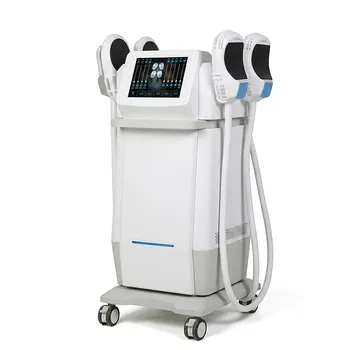
The key distinction is mechanism: botulinum toxin can spread from the injection site and weaken nearby muscles, whereas HIFU and Microneedle RF deliver energy to selected tissue layers without introducing a neuromuscular-blocking drug. Therefore, energy-based devices do not carry the same chemical diffusion, unintended muscle paralysis, brow ptosis, or eyelid ptosis mechanism associated with neurotoxin injections—but they are not risk-free and do not produce identical results.
Botulinum toxin primarily changes muscle activity; HIFU and Microneedle RF primarily change tissue structure. The former can cause upper facial complications if product affects adjacent muscles, while the latter avoids chemical diffusion and muscle blockade but depends heavily on correct energy depth, treatment settings, anatomy, and operator technique.
How the Treatments Work Differently
Botulinum toxin acts on muscle function
Injectable botulinum toxin temporarily reduces nerve-to-muscle signaling. It is therefore effective for dynamic wrinkles caused by repeated contraction in areas such as the glabella, forehead, and crow’s feet.
Its therapeutic effect depends on selectively relaxing the intended muscles. If the product reaches adjacent muscles, however, the result can extend beyond the treatment target.
HIFU acts through focused acoustic energy
High-Intensity Focused Ultrasound delivers concentrated acoustic energy to selected dermal or subdermal depths. Depending on the device and protocol, treatment may target layers associated with tissue contraction and collagen remodeling, including deeper structural planes.
HIFU does not inject a toxin and does not intentionally paralyze facial muscles. Its objective is tissue tightening and structural lifting, not chemical muscle relaxation.
Microneedle RF acts through controlled thermal energy
Microneedle RF uses small needles to deliver radiofrequency energy into controlled dermal depths. This distinguishes it from completely non-invasive treatment, although it remains substantially less invasive than an injection-based drug treatment or surgery.
Its primary effects are dermal heating, collagen stimulation, and tissue tightening. It does not create the same pharmacological diffusion field as botulinum toxin.
Why Botulinum Toxin Can Cause Upper Facial Complications
Brow ptosis
The frontalis muscle helps elevate the eyebrows. If botulinum toxin weakens the frontalis beyond the intended area, the brow may descend, producing brow ptosis or a heavy upper-face appearance.
This complication can result from product spread, inaccurate placement, excessive dosing, or an unsuitable treatment plan for the patient’s baseline brow support.
Eyelid ptosis
Eyelid ptosis may occur if toxin affects the upper eyelid levator muscle or nearby structures involved in eyelid elevation. The visible effect is drooping of the upper eyelid, which can be functionally and cosmetically troubling.
Reported effects can persist for weeks and, in some cases, up to approximately three months as the temporary pharmacological effect resolves.
Asymmetry and excessive relaxation
Uneven placement or dosing can produce asymmetric brow position, an unnatural “frozen” appearance, or imbalance between the treated and untreated muscles.
In lower facial applications, excessive or inaccurate treatment may contribute to mouth asymmetry, impaired lip function, mouth incompetence, or speech difficulties.
How HIFU and Microneedle RF Compare
They eliminate chemical diffusion risk
Because HIFU and Microneedle RF do not introduce botulinum toxin into tissue, they do not carry the same risk of toxin diffusion into adjacent facial muscles.
They therefore do not cause brow or eyelid ptosis through unintended neuromuscular blockade in the way botulinum toxin can.
They do not intentionally paralyze facial muscles
Energy-based tightening preserves the functional role of the facial muscles rather than weakening them. This makes these modalities relevant when the goal is to improve laxity, skin quality, or contour without changing facial movement.
That difference is particularly important in the upper face, where small changes in frontalis or eyelid muscle activity can noticeably alter brow position and eyelid opening.
Their effects are depth- and technique-dependent
Energy does not “diffuse” in the same pharmacological sense, but it is not completely confined to an ideal mathematical point. Treatment outcomes depend on the device, handpiece, energy settings, treatment depth, anatomical landmarks, and operator technique.
Incorrect targeting or excessive energy can create unwanted tissue effects. The absence of botulinum toxin diffusion should therefore be understood as a different risk profile, not a guarantee of complication-free treatment.
What Each Modality Can and Cannot Address
Botulinum toxin is strongest for dynamic wrinkles
Botulinum toxin is well suited to wrinkles created primarily by muscle contraction. It can soften lines in the glabella, forehead, and lateral canthal region by reducing movement.
It does not directly restore dermal elasticity or tighten significantly lax structural tissue.
HIFU is aimed at structural tightening
HIFU is generally selected when the objective is tissue contraction, lifting, jawline definition, or improvement in laxity. Its effects depend on generating controlled treatment zones followed by collagen remodeling.
It is not a direct substitute for muscle-relaxing treatment when dynamic muscle activity is the main cause of a wrinkle.
Microneedle RF is aimed at dermal remodeling
Microneedle RF is particularly relevant to dermal tightening and collagen stimulation. It can improve skin quality and laxity without chemically altering facial muscle activity.
Because it uses needles, it should not be described as entirely non-invasive. It is better classified as a minimally invasive energy-based procedure.
Understanding the Trade-offs
Energy-based treatment is not a universal replacement
HIFU and Microneedle RF address tissue laxity and dermal structure, while botulinum toxin addresses muscle contraction. Selecting one solely because it avoids diffusion may lead to a mismatch between the treatment and the underlying problem.
Some patients may benefit from a carefully planned combination of muscle relaxation and structural tightening, provided the indications and safety considerations are appropriate.
Energy devices have their own safety requirements
HIFU and RF require accurate treatment depth, appropriate energy selection, and protection of sensitive anatomical areas. Potential adverse effects are generally different from toxin-related ptosis and may include treatment-related pain, redness, swelling, or unwanted thermal tissue effects.
Microneedle RF also involves needle penetration, so it is not equivalent to a fully contactless procedure.
“No diffusion” does not mean “no risk”
The strongest defensible claim is that these devices eliminate chemical diffusion and unintended pharmacological muscle paralysis. It is too broad to claim that they eliminate all localized complications or guarantee perfect symmetry.
Patient anatomy, device design, clinical training, and treatment planning remain decisive factors for upper facial safety.
Making the Right Choice for Your Goal
The correct choice depends on whether the primary problem is muscle activity, skin laxity, or a combination of both.
- If your primary focus is dynamic forehead, glabellar, or crow’s-feet wrinkles: Botulinum toxin may be more directly suited to reducing muscle-driven movement, but precise dosing and placement are essential to limit brow or eyelid complications.
- If your primary focus is skin laxity, lifting, or jawline definition: HIFU or Microneedle RF may be more appropriate because they target collagen remodeling and tissue tightening without chemical muscle diffusion.
- If your primary focus is preserving facial movement and avoiding neuromuscular blockade: Energy-based treatment offers a mechanism that does not intentionally weaken facial muscles.
- If your primary focus is comprehensive facial rejuvenation: A qualified clinician may evaluate whether separate, carefully planned modalities are appropriate rather than treating every concern with one technology.
Understanding whether the problem is muscle-driven or structure-driven is the most reliable way to choose between botulinum toxin, HIFU, Microneedle RF, or a combination approach.
Summary Table:
| Feature | Botulinum Toxin | HIFU | Microneedle RF |
|---|---|---|---|
| Mechanism | Blocks nerve signals | Focused ultrasound energy | RF via needles |
| Primary effect | Reduces muscle activity | Tissue tightening & lifting | Dermal remodeling & tightening |
| Risk of chemical diffusion | Yes | No | No |
| Risk of muscle paralysis | Yes | No | No |
| Best for | Dynamic wrinkles | Laxity & lifting | Skin texture & mild laxity |
| Invasiveness | Injection | Non-invasive | Minimally invasive |
Choosing the right modality for your patients requires precision. At BELIS, we offer professional-grade HIFU and Microneedle RF systems designed for clinics and premium salons. Our advanced energy-based devices deliver safe, effective results for non-invasive lifting and tightening—without the risks of muscle diffusion. Partner with us to expand your aesthetic offerings and enhance patient satisfaction. Contact our experts today for tailored solutions and OEM/ODM support. Get in touch to learn more!
Related Products
- 4D 12D HIFU Machine Device for Skin Tightening
- 12D HIFU Machine Device for Facial HIFU Treatment
- 7D 12D 4D HIFU Machine Device
- 4D 12D HIFU Machine Device for Skin Tightening and Lifting
- 22D HIFU Machine Device Facial Machine
People Also Ask
- How do non-invasive skin tightening devices such as HIFU and microneedle RF compare to surgical rhytidectomy for facial lifting? Discover the key differences in results, longevity, and recovery.
- What is the mechanism of action of High-Intensity Focused Ultrasound (HIFU) devices in noninvasive body sculpting, and how is surrounding tissue protected?
- What key clinical safety guidelines and contraindications must aesthetic practitioners observe when operating ultrasound skin tightening devices? Essential Safety Protocols for Clinics
- Why is it necessary to fill the transducer chamber with deionized water and PE film in HIFU devices? Key Safety Insights
- Why is a HIFU device essential for non-invasive facial lifting? Discover the Power of Deep SMAS Layer Targeting