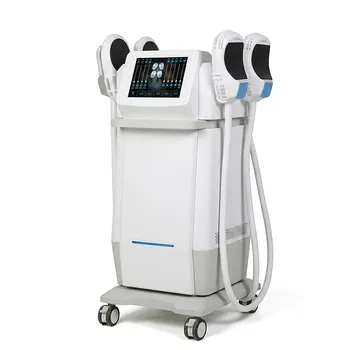
The key difference is what the device is designed to change. Microfocused ultrasound generally delivers precisely controlled thermal injury in the dermis and supporting tissue, often at depths up to about 5 mm, to tighten skin and stimulate collagen remodeling. Body-contouring HIFU typically uses lower acoustic frequencies to penetrate more deeply into subcutaneous fat, where cavitation, mechanical forces, and heat can damage adipocytes and reduce fat thickness.
Microfocused ultrasound is primarily a skin-tightening and lifting treatment, while body-contouring HIFU is primarily a fat-reduction treatment. The terms can overlap commercially, so the device’s frequency, focal depth, energy mode, imaging capability, and intended indication matter more than the label alone.
Why the Terminology Causes Confusion
HIFU Describes a Technology Family
High-intensity focused ultrasound describes the use of concentrated ultrasound energy to create a focal effect inside tissue without cutting the skin. It is not, by itself, a precise description of treatment depth or clinical purpose.
Some HIFU systems are configured for facial lifting and tightening, while others are designed to affect deeper subcutaneous fat. Therefore, “HIFU” should not automatically be interpreted as either a skin treatment or a body-contouring treatment.
Microfocused Ultrasound Is a More Specific Application
Microfocused ultrasound uses focused acoustic energy to create small, controlled zones of thermal coagulation at selected superficial tissue depths. Imaging guidance can help the operator confirm the intended layer and position treatment points accurately.
In aesthetic practice, this approach is commonly associated with tightening the skin and deeper supporting structures rather than removing a substantial volume of fat.
How Depth of Penetration Differs
Microfocused Ultrasound Targets Superficial Structural Layers
Microfocused ultrasound typically targets the deep dermis and adjacent supporting tissues, with treatment depths generally extending to approximately 5 mm. The goal is to place energy where collagen-rich tissue can contract and remodel.
This depth is sufficient to influence skin laxity and contour definition without making the subcutaneous fat compartment the primary target.
Body-Contouring HIFU Reaches Subcutaneous Fat
HIFU systems designed for body lipolysis use lower ultrasound frequencies that allow energy to reach deeper subcutaneous tissue. Their focal zones are selected according to the thickness and location of the fat layer being treated.
The intended outcome is a measurable reduction in fat thickness, not merely a visual improvement caused by skin contraction.
Depth Is Determined by the Device and Applicator
Neither treatment should be defined by a single universal depth. Cartridge selection, transducer design, acoustic frequency, focal geometry, energy level, and treatment area all influence where the ultrasound effect occurs.
Facial systems may use multiple depths, including treatment planes around the deep dermis and SMAS region. That configuration overlaps conceptually with some microfocused ultrasound treatments, which is why product terminology can be misleading.
How the Mechanisms Differ
Microfocused Ultrasound Creates Controlled Thermal Coagulation
Microfocused ultrasound concentrates energy into discrete focal points that can heat target tissue above approximately 60°C. This produces localized thermal coagulation and collagen denaturation.
The immediate tissue response is followed by collagen contraction, wound-healing activity, and neocollagenesis, which can gradually improve firmness and definition.
Body-Contouring HIFU Damages Adipocytes
Body-contouring HIFU is designed to affect fat cells through a combination of acoustic cavitation, mechanical shearing, frictional heating, and thermal injury. These effects can lead to adipocyte necrosis and cellular apoptosis.
The damaged fat cells are then cleared through the body’s normal biological processes, producing a reduction in the thickness of the treated fat layer over time.
Both Can Use Heat, but the Biological Target Changes
Thermal energy is involved in both approaches, but the target tissue and desired biological response are different. Microfocused ultrasound uses heat to initiate structural tightening and collagen remodeling.
HIFU for lipolysis uses focused energy to injure fat cells sufficiently to produce localized fat reduction. The same broad technology therefore supports two distinct aesthetic strategies.
What This Means for Contouring and Tightening
Microfocused Ultrasound Refines Loose Skin
Microfocused ultrasound is best suited to laxity, loss of firmness, and mild contour descent where the principal problem is inadequate tissue support. The expected change is a tighter, more lifted appearance rather than a large reduction in volume.
Its effect develops gradually because much of the visible improvement depends on collagen remodeling after treatment.
HIFU Reduces Localized Fat Volume
Body-contouring HIFU is more appropriate when localized subcutaneous fat contributes substantially to an unwanted contour. Its defining outcome is a reduction in fat thickness within the treated area.
It should not be treated as a general solution for skin laxity. Removing or reducing fat without addressing loose skin can produce an outcome that differs from the patient’s intended contour.
Facial HIFU May Overlap With Microfocused Ultrasound
Facial HIFU systems may target depths such as the deep dermis or SMAS to create thermal coagulation points and stimulate lifting. In practical terms, these facial applications can resemble microfocused ultrasound more closely than body-lipolysis HIFU.
The distinction is therefore not always the word printed on the device. It is the combination of treatment depth, energy delivery, imaging, and intended tissue response.
Understanding the Trade-offs
Deeper Treatment Is Not Automatically Better
Treating deeper tissue can be valuable when subcutaneous fat is the main concern, but depth alone does not guarantee better lifting or tightening. Energy must be delivered to the correct anatomical layer and at a level appropriate for that tissue.
Misidentifying the target layer can reduce effectiveness or increase the risk of unwanted tissue injury.
Fat Reduction and Skin Tightening Are Different Outcomes
A treatment that damages adipocytes is not equivalent to one that stimulates collagen. Patients seeking firmer skin may be dissatisfied with a fat-reduction treatment, while patients seeking a smaller contour may see limited benefit from a collagen-focused procedure.
The treatment plan should begin with the dominant cause of the contour concern: laxity, excess fat, or both.
Device Labels Can Conceal Important Differences
Commercial materials sometimes use HIFU as a broad marketing term for several ultrasound-based facial and body procedures. Claims about “deep lifting” or “skin tightening” should therefore be evaluated against the device’s documented focal depths and intended indication.
A technically meaningful comparison requires more than comparing treatment names.
Treatment Precision and Safety Matter
Focused ultrasound is intended to spare the skin surface and surrounding tissue by concentrating energy at a selected focal point. However, the procedure still depends on accurate depth selection, appropriate energy settings, anatomical knowledge, and competent application.
Imaging guidance is particularly valuable when precise placement is important, because it can help verify the tissue plane being treated.
Making the Right Choice for Your Goal
The appropriate modality depends on whether the main problem is tissue laxity, localized fat, or a combination of both.
- If your primary focus is skin tightening or lifting: Choose a microfocused or facial-focused ultrasound approach that targets the dermis and supporting layers to induce controlled thermal coagulation and collagen remodeling.
- If your primary focus is localized fat reduction: Choose a body-contouring HIFU system designed to reach subcutaneous fat and produce adipocyte injury through focused acoustic and thermal effects.
- If your primary focus is both laxity and excess volume: Confirm that the proposed treatment addresses each tissue target separately, because collagen stimulation and fat reduction are different biological processes.
- If your primary focus is treatment precision: Prioritize documented focal depths, applicator specifications, and imaging guidance rather than relying on the HIFU or microfocused ultrasound label alone.
The most reliable choice is the one that matches the device’s focal depth and mechanism to the specific tissue causing the contour problem.
Summary Table:
| Feature | Microfocused Ultrasound | Body-Contouring HIFU |
|---|---|---|
| Primary Target | Dermis and supporting tissue (e.g., SMAS) | Subcutaneous fat |
| Typical Depth | Up to ~5 mm | Deeper, depending on applicator |
| Mechanism | Thermal coagulation, collagen remodeling | Cavitation, mechanical stress, thermal injury to adipocytes |
| Clinical Goal | Skin tightening, lifting | Fat reduction, body contouring |
| Examples | Skin tightening devices | Lipolysis devices |
Ready to choose the right ultrasound technology for your clinic? Contact BELIS today to explore our range of professional-grade HIFU and microfocused ultrasound systems, designed to deliver safe and effective lifting and contouring results. Contact us now to find the perfect solution for your practice.
Related Products
- 4D 12D HIFU Machine Device for Skin Tightening
- 12D HIFU Machine Device for Facial HIFU Treatment
- 7D 12D 4D HIFU Machine Device
- 4D 12D HIFU Machine Device for Skin Tightening and Lifting
- 22D HIFU Machine Device Facial Machine
People Also Ask
- How do non-invasive skin tightening devices such as HIFU and microneedle RF compare to surgical rhytidectomy for facial lifting? Discover the key differences in results, longevity, and recovery.
- What is the mechanism of action of High-Intensity Focused Ultrasound (HIFU) devices in noninvasive body sculpting, and how is surrounding tissue protected?
- How do non-invasive lifting devices like high-intensity focused ultrasound (HIFU) complement soft tissue fillers in treating lower face aging and pre-jowl sulcus depression? Discover the synergistic approach.
- What key clinical safety guidelines and contraindications must aesthetic practitioners observe when operating ultrasound skin tightening devices? Essential Safety Protocols for Clinics
- Why is it necessary to fill the transducer chamber with deionized water and PE film in HIFU devices? Key Safety Insights