
No, laser hair removal is not designed to tighten your skin. The primary and intended function of this procedure is to destroy hair follicles using concentrated light energy. While some of the heat generated can have a minor, incidental effect on collagen, it is not a reliable or effective method for achieving skin tightening.
The core purpose of laser hair removal is to target and destroy the pigment in hair follicles, not to remodel the structural layers of the skin. Any perceived tightening is a secondary, modest, and unpredictable side effect, not a primary treatment benefit.
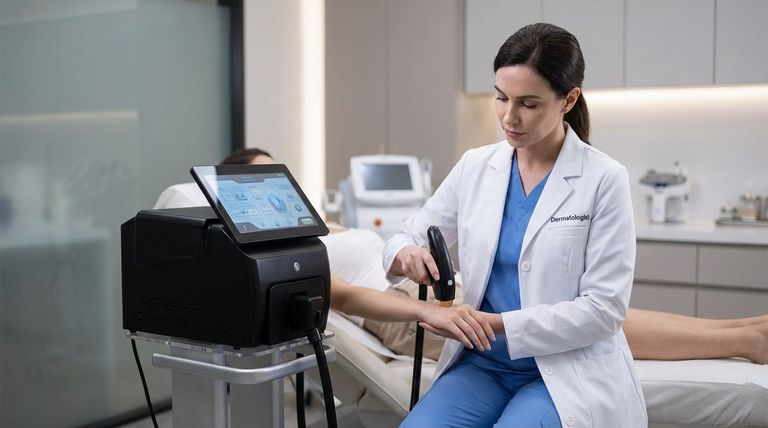
How Laser Hair Removal Actually Works
To understand why skin tightening isn't a primary benefit, you first need to grasp the precise mechanism of laser hair removal. The entire process is built on a specific scientific principle.
The Principle of Selective Photothermolysis
Laser hair removal operates on a principle called selective photothermolysis. This means it uses a specific wavelength of light (photo) that is absorbed by the melanin (pigment) in the hair follicle, which generates heat (thermo) to destroy (lysis) the follicle.
The Target is Melanin, Not Collagen
The laser's energy is calibrated to be absorbed by the dark pigment in the hair, not by the surrounding skin structures like collagen and elastin. This precision is what makes the treatment effective for removing hair without damaging the skin's surface.
The Connection Between Lasers, Heat, and Collagen
While the laser's main target is the hair follicle, the process does generate heat within the deeper layers of the skin, or dermis. This is where the misunderstanding about skin tightening originates.
Incidental Heat and Collagen Stimulation
The dermis is where your body's collagen is produced. When this layer is heated to a certain temperature, it can trigger a wound-healing response that stimulates the production of new collagen.
The heat generated during laser hair removal can sometimes be enough to create a very mild and modest collagen-stimulating effect. However, this is an inconsistent and secondary consequence of the procedure.
Hair Removal vs. Skin Tightening Lasers
This is the critical distinction. Lasers and energy devices specifically designed for skin tightening (such as fractional lasers or radiofrequency devices) work differently.
These dedicated devices deliver energy in a way that is optimized to heat the dermis to the precise temperature needed for significant collagen remodeling, without being absorbed by hair pigment. They use different wavelengths, energy levels, and delivery methods to achieve this goal.
Why You Shouldn't Rely on Hair Removal for Tighter Skin
Treating laser hair removal as a skin tightening procedure will lead to disappointment. It is fundamentally the wrong tool for the job.
Unpredictable and Modest Results
Any skin tightening that occurs is a side effect, not a guaranteed outcome. The effect is typically so subtle that it may not be noticeable at all, and it varies greatly between individuals and the type of laser used.
A Mismatch in Treatment Goals
The settings required for effective hair removal (targeting pigment) are different from those required for effective skin tightening (heating the dermis). A practitioner cannot optimize a single treatment for both goals simultaneously.
The Importance of a Targeted Plan
If your goal is to address skin laxity, you need a treatment plan specifically designed for that purpose. Relying on a secondary effect from a different procedure is inefficient and unlikely to produce the results you want.
Making the Right Choice for Your Goal
To achieve the best results, you must choose the correct technology for your specific aesthetic goal.
- If your primary focus is permanent hair reduction: Laser hair removal is the correct, effective, and scientifically proven choice.
- If your primary focus is improving skin firmness and laxity: You should seek dedicated skin tightening treatments like radiofrequency, ultrasound therapy, or specific resurfacing lasers.
Ultimately, choosing the right treatment begins with a clear understanding of what each technology is engineered to accomplish.
Summary Table:
| Goal | Recommended Treatment | Key Mechanism |
|---|---|---|
| Permanent Hair Reduction | Laser Hair Removal | Targets melanin in hair follicles |
| Improving Skin Firmness | Radiofrequency, Ultrasound, Fractional Lasers | Heats dermis to stimulate collagen |
Ready to achieve your specific aesthetic goals with the right technology?
At BELIS, we specialize in professional medical aesthetic equipment designed for precise results. Whether you run a medical aesthetics clinic or a premium beauty salon, our expert team can help you select the ideal device—for effective hair removal or dedicated skin tightening.
Contact our specialists today to discuss your needs and discover how our advanced equipment can enhance your service offerings and client satisfaction.
Visual Guide

Related Products
- Diode Tri Laser Hair Removal Machine for Clinic Use
- Diode Laser SHR Trilaser Hair Removal Machine for Clinic Use
- Clinic Diode Laser Hair Removal Machine with SHR and Trilaser Technology
- Clinic Use IPL SHR ND YAG Laser Hair Removal RF Skin Tightening Machine
- Trilaser Diode Hair Removal Machine for Beauty Clinic Use
People Also Ask
- What are the advantages of the Constant Motion Technique? Elevate Your Clinic's Laser Hair Removal Results
- How can aesthetic practitioners prevent side effects like paradoxical hair regrowth and thermal burns when performing diode laser hair removal on dark skin? Master safe protocols for Fitzpatrick IV–VI skin.
- How do broad-spectrum noncoherent light sources compare to single-wavelength diode lasers in aesthetic hair removal applications? Find the best fit for your clinic.
- Why can traditional high-energy pulse (HR) modes lead to adverse skin reactions? Understanding Thermal Injury Risks
- Why is a 40-ms pulse width critical for Fitzpatrick skin types III-V? The Key to Safe & Effective Laser Hair Removal

















