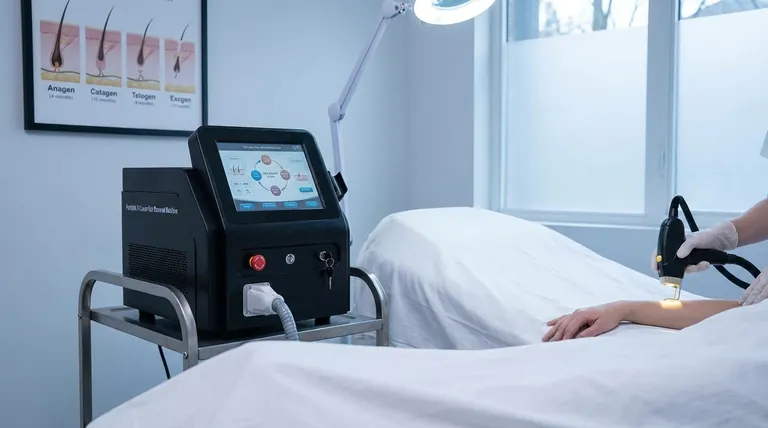
Laser hair removal has become a go-to solution for long-term hair reduction, but many patients wonder why multiple sessions are necessary. The answer lies in understanding hair growth cycles and how lasers target follicles at specific stages. This article breaks down the biological rationale behind treatment protocols, explains why spacing matters, and provides actionable insights for optimizing your laser hair removal journey with Belis professional equipment.
Why Laser Hair Removal Requires Multiple Sessions
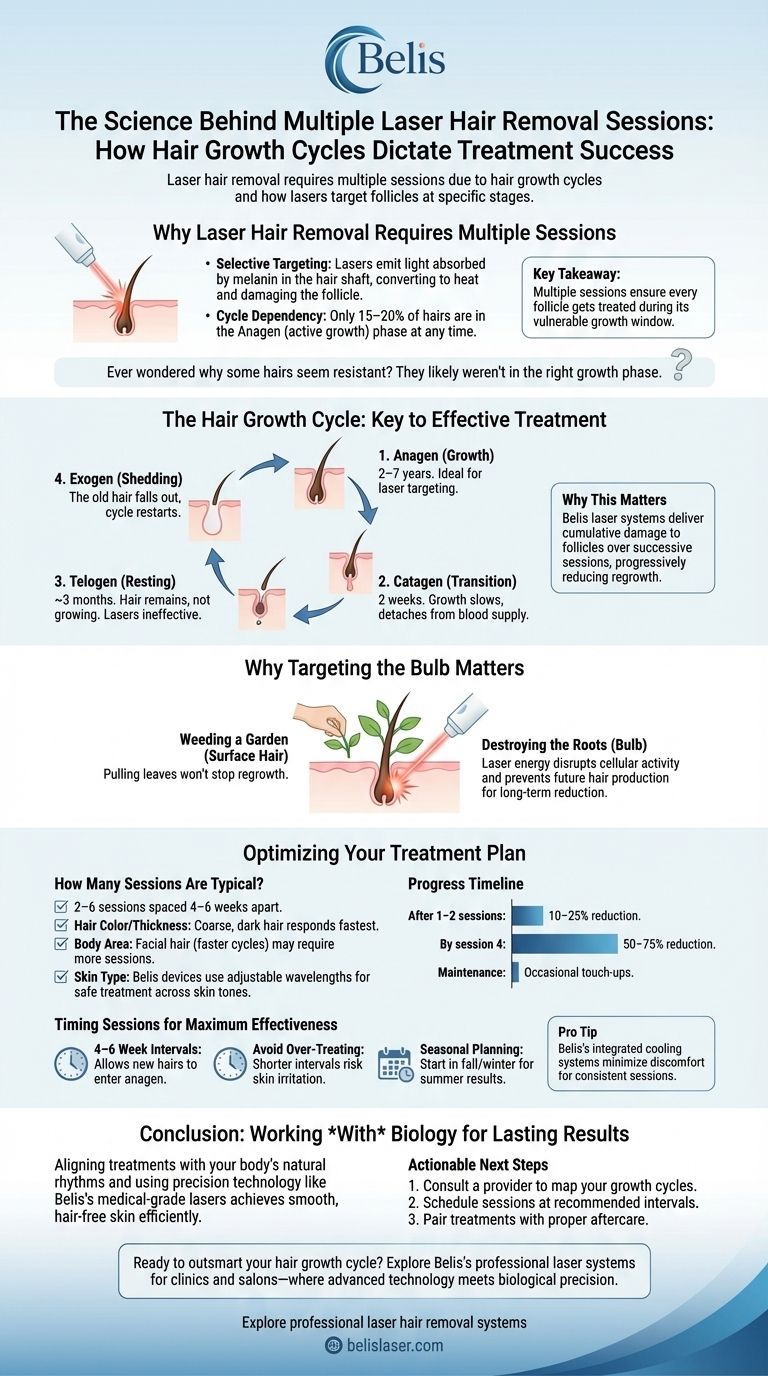
Laser hair removal isn’t a one-and-done procedure because hair grows in cycles—not all follicles are active simultaneously. Here’s what happens during treatment:
- Selective Targeting: Lasers emit concentrated light absorbed by melanin in the hair shaft. This energy converts to heat, damaging the follicle’s ability to regrow hair.
- Cycle Dependency: Only follicles in the anagen (active growth) phase contain enough melanin to absorb laser energy effectively. At any given time, 15–20% of your hairs are in this phase.
Key Takeaway: Multiple sessions ensure every follicle gets treated during its vulnerable growth window.
Ever wondered why some hairs seem resistant after your first session? It’s likely because they weren’t in the right growth phase.
The Hair Growth Cycle: Key to Effective Treatment
Hair follicles operate on a four-stage cycle:
- Anagen (Growth): Lasts 2–7 years. The follicle is actively producing hair, making it ideal for laser targeting.
- Catagen (Transition): A 2-week phase where growth slows and the follicle detaches from blood supply.
- Telogen (Resting): Lasts ~3 months. The hair remains but isn’t growing. Lasers can’t effectively disable these follicles.
- Exogen (Shedding): The old hair falls out, and the cycle restarts.
Why This Matters: Belis laser systems deliver cumulative damage to follicles over successive sessions, progressively reducing regrowth.
Why Targeting the Bulb Matters
The hair bulb (base of the follicle) contains stem cells responsible for regeneration. Laser energy must reach this area to:
- Disrupt cellular activity
- Prevent future hair production
- Achieve long-term reduction
Visual Metaphor: Think of it like weeding a garden—pulling leaves (surface hair) won’t stop regrowth, but destroying the roots (bulb) will.
Optimizing Your Treatment Plan
How Many Sessions Are Typical?
Most patients need 2–6 sessions spaced 4–6 weeks apart, depending on:
✔ Hair Color/Thickness: Coarse, dark hair responds fastest.
✔ Body Area: Facial hair (faster cycles) may require more sessions than legs.
✔ Skin Type: Belis devices use adjustable wavelengths for safe treatment across skin tones.
Progress Timeline:
- After 1–2 sessions: 10–25% reduction
- By session 4: 50–75% reduction
- Maintenance: Occasional touch-ups
Timing Sessions for Maximum Effectiveness
Synchronizing treatments with hair cycles boosts results:
- 4–6 Week Intervals: Allows new hairs to enter anagen.
- Avoid Over-Treating: Shorter intervals risk skin irritation without hitting new follicles.
- Seasonal Planning: Starting in fall/winter ensures optimal results by summer.
Pro Tip: Belis’s integrated cooling systems minimize discomfort, making consistent sessions manageable.
Conclusion: Working With Biology for Lasting Results
Laser hair removal leverages science—not magic. By aligning treatments with your body’s natural rhythms and using precision technology like Belis’s medical-grade lasers, you can achieve smooth, hair-free skin efficiently.
Actionable Next Steps:
- Consult a provider to map your growth cycles.
- Schedule sessions at recommended intervals.
- Pair treatments with proper aftercare (e.g., avoiding sun exposure).
Ready to outsmart your hair growth cycle? Explore Belis’s professional laser systems for clinics and salons—where advanced technology meets biological precision.
Products You Might Be Looking For:
Explore professional laser hair removal systems
Visual Guide
Related Products
- Diode Tri Laser Hair Removal Machine for Clinic Use
- Diode Laser SHR Trilaser Hair Removal Machine for Clinic Use
- Clinic Diode Laser Hair Removal Machine with SHR and Trilaser Technology
- Clinic Use IPL SHR ND YAG Laser Hair Removal RF Skin Tightening Machine
- Trilaser Diode Hair Removal Machine for Beauty Clinic Use
Related Articles
- The Specialist's Blade: The Unseen Advantage of Diode Lasers in Hair Removal
- Diode Laser vs. TRILASER-LED Hair Removal: Which Technology Delivers Better Results?
- A Dialogue of Light and Pigment: The Precise Science of Diode Laser Hair Removal
- Diode Laser vs. TRILASER-LED: Which Hair Removal Technology Fits Your Skin Type?
- Diode vs. IPL: How to Choose the Right Technology for Your Clinic’s Skin Diversity and Goals

















