The Moment After the Flash
The session ends. The targeted heat from the diode laser is gone, and the client sits up. In their mind, the most difficult part is over. They believe the technology has done its job.
But the reality is different.
The most crucial phase of hair removal has just begun. It's a phase governed not by advanced optics or cooling systems, but by a simple, human virtue: patience. The success of a technically perfect laser session is now entirely dependent on the quiet, disciplined work that happens at home.
The Immediate Aftermath: A Dialogue Between Light and Skin
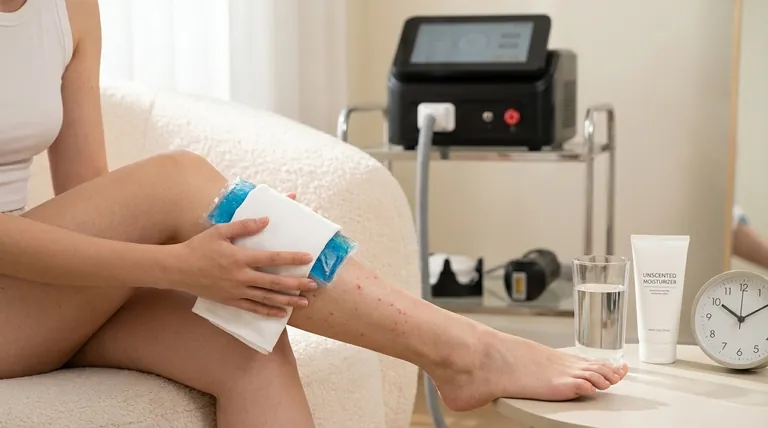
Immediately after treatment, the skin tells a story. The area may appear red, with small, raised bumps around the follicles. This isn't a side effect to fear; it's a sign of victory.
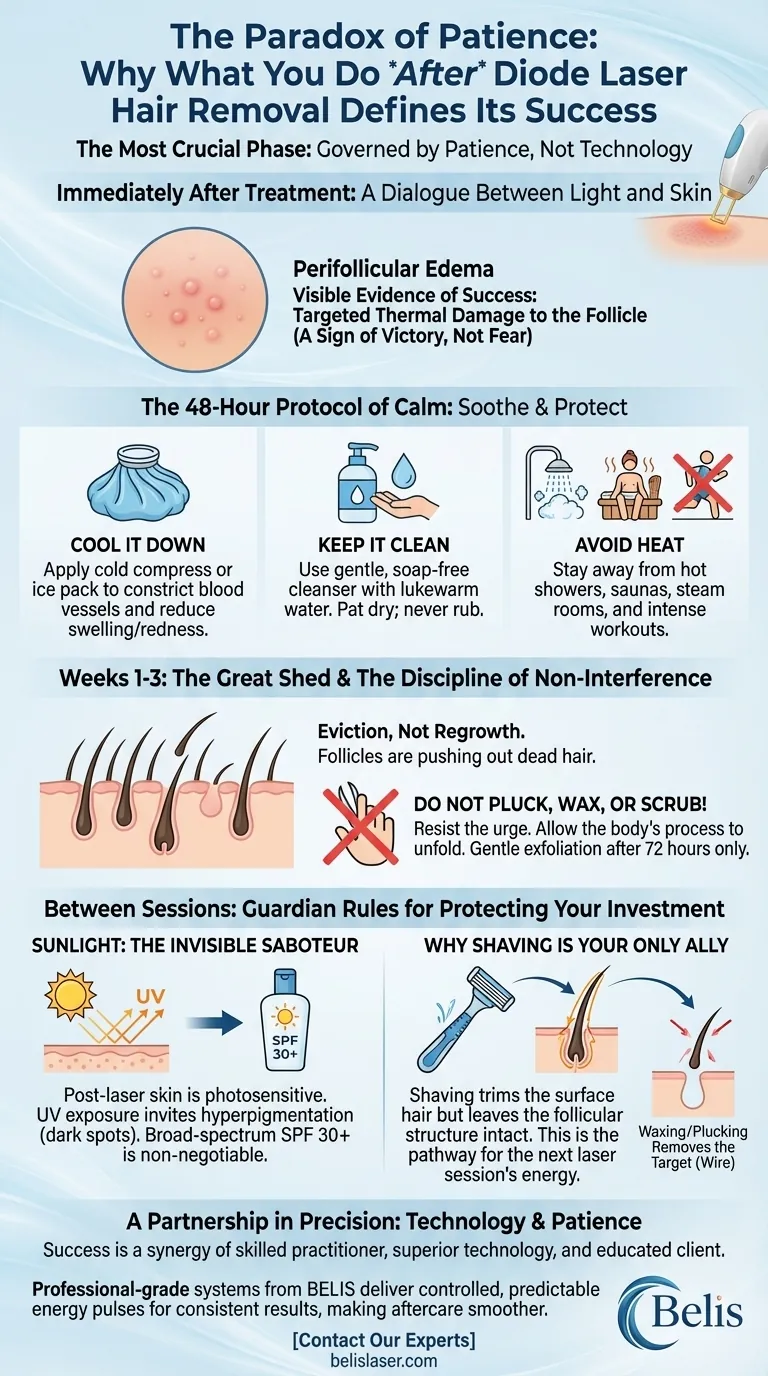
This reaction, known as perifollicular edema, is the visible evidence of a successful procedure. It confirms that the laser's energy was absorbed precisely by the hair follicle, creating the targeted thermal damage necessary to disable it. It’s the beautiful, microscopic aftermath of a well-executed plan.
The 48-Hour Protocol of Calm
The skin's primary need in the first two days is tranquility. The goal is to soothe the inflammation and protect the vulnerable tissue. This isn't complicated; it's a simple mandate for calm.
- Cool It Down: Apply a cold compress or a clean cloth-wrapped ice pack. This constricts blood vessels and gently reduces the swelling and redness.
- Keep It Clean: Use a gentle, soap-free cleanser with lukewarm water. Pat the skin dry; never rub. The tissue is healing.
- Avoid Heat: For at least 48 hours, stay away from hot showers, saunas, steam rooms, and intense workouts. Adding more heat to an already inflamed area is counterproductive.
The Great Shed: Misinterpreting Progress as Failure
About one to three weeks after the session, something deeply counterintuitive happens: hair appears to be growing back.
This is the moment of greatest psychological challenge. Clients may feel the treatment has failed. But what they are witnessing is not regrowth; it's an eviction. The laser has destroyed the follicle's ability to produce new hair, and the follicle is now pushing out the dead hair shaft.
This "shedding" phase is the delayed, tangible proof of success.
The Discipline of Non-Interference
The temptation to pluck, wax, or scrub these shedding hairs away can be immense. But this urge must be resisted. The body has a process, and our role is to allow it to unfold. After 72 hours, gentle exfoliation with a soft washcloth can assist the process, but the key is to let the body do the work.
Guardian Rules: Protecting Your Investment Between Sessions
The weeks between appointments are not just a waiting period. They are an active phase of care that protects the skin and prepares it for the next treatment.
Sunlight: The Invisible Saboteur
Post-laser skin is highly photosensitive. The laser treatment creates a controlled, healing-oriented inflammation. Exposing this vulnerable skin to UV radiation is like inviting chaos into an orderly system.
The risk is hyperpigmentation—the skin's panic response, where it overproduces melanin, creating dark spots that can be difficult to reverse. A broad-spectrum SPF 30+ is not a suggestion; it's a non-negotiable part of the protocol.
Why Shaving is Your Only Ally
Between sessions, clients must not wax, pluck, or use depilatory creams. The reason is beautifully simple.
Think of the hair as a wire. The laser sends a precise pulse of light energy down this wire to destroy the "power source" (the follicle). If you wax or pluck, you remove the wire. The next laser session will have no pathway to deliver its energy, rendering the treatment completely ineffective.
Shaving is the only acceptable method because it trims the hair at the surface while leaving the critical follicular structure—the target—intact and ready for the next session.
This entire sequence—from the initial thermal event to the final shedding—relies on the precision of the initial treatment. A professional-grade system from BELIS delivers a controlled, predictable energy pulse, ensuring each follicle receives the optimal therapeutic heat. This technological consistency makes the aftercare process smoother and the results more reliable, setting the stage for the client's success.
A Partnership in Precision
Ultimately, successful diode laser hair removal is not a simple transaction. It is a partnership between a skilled practitioner, superior technology, and an educated client. The machine provides the precision; the client provides the patience. One is incomplete without the other.
This synergy is the hallmark of a premier aesthetic practice. For clinics committed to building that foundation of trust and results, it starts with the right equipment. Contact Our Experts
Visual Guide
Related Products
- Clinic Diode Laser Hair Removal Machine with SHR and Trilaser Technology
- Diode Tri Laser Hair Removal Machine for Clinic Use
- Diode Laser SHR Trilaser Hair Removal Machine for Clinic Use
- Trilaser Diode Hair Removal Machine for Beauty Clinic Use
- Clinic Use IPL SHR ND YAG Laser Hair Removal RF Skin Tightening Machine
Related Articles
- Beyond 'Permanent': The Biological Rhythm of Diode Laser Hair Removal
- Diode Laser Hair Removal: A Personalized Guide for Your Skin & Hair Type
- Diode Laser vs. TRILASER-LED: Which Hair Removal Technology Fits Your Skin Type?
- Diode Laser vs. TRILASER-LED Hair Removal: Which Technology Delivers Better Results?
- The Specialist's Blade: The Unseen Advantage of Diode Lasers in Hair Removal












