
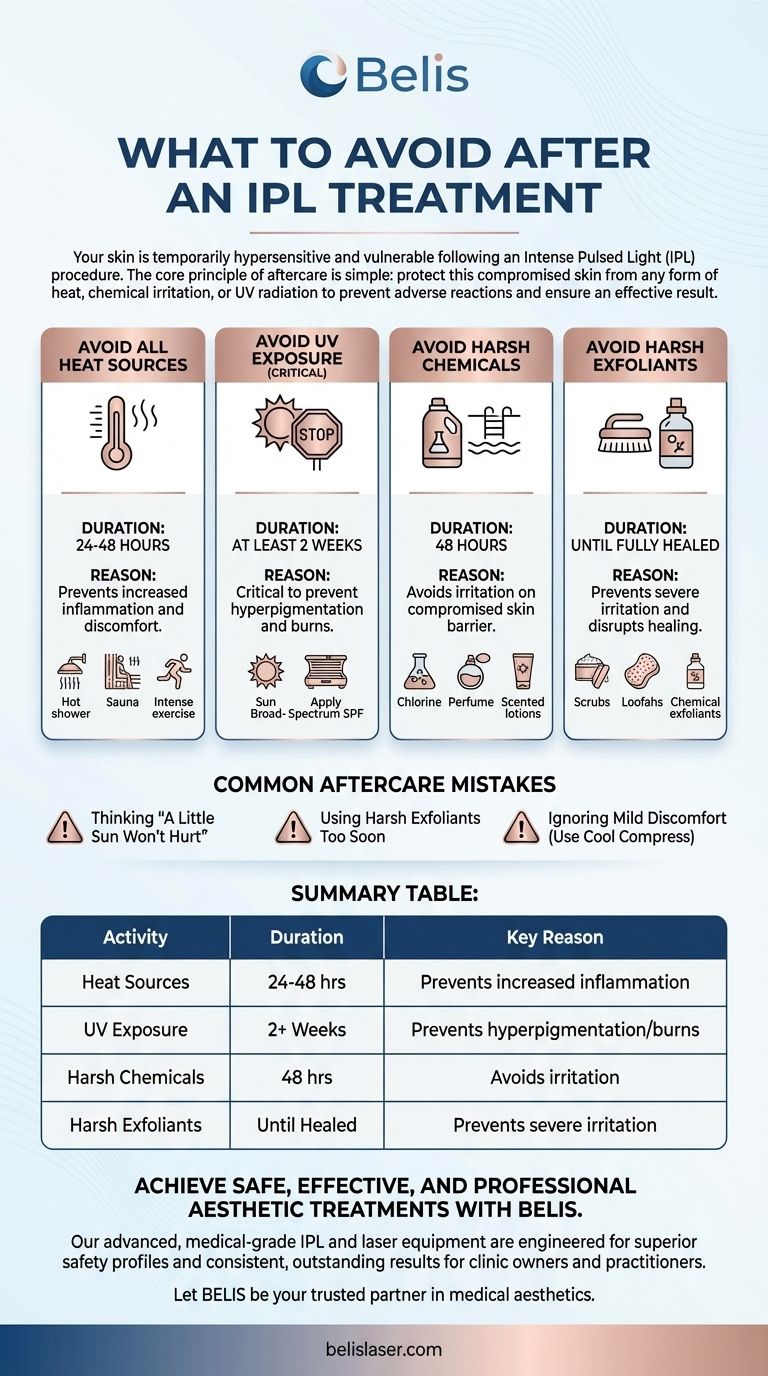
In short, you must avoid four key things after an IPL treatment. For the first 24-48 hours, avoid all forms of heat (like hot showers and saunas) and harsh chemicals, including chlorine and perfumed products. Most importantly, you must strictly avoid all UV exposure, from both the sun and tanning beds, for at least two weeks to prevent skin damage.
Your skin is temporarily hypersensitive and vulnerable following an Intense Pulsed Light (IPL) procedure. The core principle of aftercare is simple: protect this compromised skin from any form of heat, chemical irritation, or UV radiation to prevent adverse reactions and ensure an effective result.
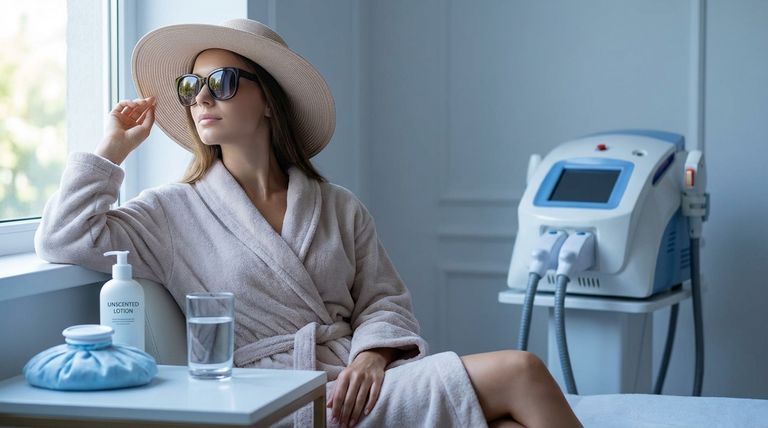
Why Your Skin Needs Special Care After IPL
To understand what to avoid, you must first understand what IPL does to your skin. The procedure uses broad-spectrum light to create heat in specific targets, such as pigment in a hair follicle or a sunspot.
The Impact of Light-Based Heat
The intense light energy is converted to heat energy within the skin. This controlled thermal process is what makes the treatment effective, but it leaves the surrounding tissue in a temporarily inflamed and sensitive state.
Your skin's natural protective barrier is compromised. It is more susceptible to irritation, damage, and changes in pigmentation than it normally would be.
The Goal: Calm and Protect
The entire goal of post-IPL aftercare is to allow the skin to heal from this controlled thermal process without interference. Avoiding certain triggers prevents you from adding more stress to an area that is already working to recover.
Key Activities and Substances to Avoid
Based on the principle of protecting sensitized skin, the following restrictions are critical. Adhering to the timelines is not optional if you want to avoid complications.
Avoid All Heat for at least 24 Hours
Your skin is already holding residual heat from the treatment. Adding more heat will only increase inflammation, redness, and discomfort.
This includes hot showers, long hot baths, saunas, steam rooms, and even intense exercise that significantly raises your body temperature. Opt for cool or lukewarm showers instead.
Avoid UV Exposure for at least 2 Weeks
This is the most critical rule. UV radiation from the sun or tanning beds stimulates your skin's pigment-producing cells (melanocytes).
Exposing treated, sensitized skin to UV light dramatically increases the risk of developing hyperpigmentation (dark spots) or even burns. This applies to incidental sun exposure, too, not just sunbathing.
Avoid Chlorine and Perfumes for 48 Hours
Chemicals found in swimming pools and scented products are common skin irritants. Applying them to skin with a compromised barrier can easily lead to contact dermatitis, itching, excessive redness, and discomfort.
This category includes perfumes, scented lotions, and chlorinated water in pools and hot tubs.
Common Aftercare Mistakes to Avoid
Many complications arise from underestimating the sensitivity of treated skin. Avoid these common mental traps.
Thinking "A Little Sun Won't Hurt"
Even brief, casual sun exposure—like walking to your car or sitting near a window—can be enough to trigger a negative reaction in highly sensitized skin. Always wear a broad-spectrum, high-SPF sunscreen, even on cloudy days, for at least two weeks post-treatment.
Using Harsh Exfoliants Too Soon
It can be tempting to scrub the skin to "help" the treated hairs or pigment fall out. Do not do this.
Abrasive scrubs, chemical exfoliants (like glycolic or salicylic acid), and tools like loofahs will severely irritate the skin. Let the natural shedding process occur on its own timeline.
Ignoring Mild Discomfort
While some redness and a mild sunburn-like sensation are normal, they are signals to treat your skin gently. Applying a cool compress can help, but do not apply irritating products or heat in an attempt to "treat" it.
Making the Right Choice for Your Goal
Proper aftercare is not just about avoiding problems; it is a fundamental part of the treatment itself.
- If your primary focus is preventing immediate irritation: Prioritize avoiding all heat sources and fragranced products for the first 48 hours.
- If your primary focus is avoiding long-term dark spots: Strict, absolute avoidance of UV exposure for at least two weeks is your most important task.
- If your primary focus is maximizing your results: Follow all guidelines diligently to allow your skin to heal perfectly, ensuring the treatment is as effective as possible.
Ultimately, protecting your skin after an IPL treatment is the best way to secure the results you invested in.
Summary Table:
| Activity to Avoid | Duration | Key Reason |
|---|---|---|
| Heat Sources (hot showers, saunas, intense exercise) | 24-48 hours | Prevents increased inflammation and discomfort |
| UV Exposure (sun, tanning beds) | At least 2 weeks | Critical to prevent hyperpigmentation and burns |
| Harsh Chemicals (chlorine, perfumed products) | 48 hours | Avoids irritation on compromised skin barrier |
| Harsh Exfoliants (scrubs, chemical exfoliants) | Until skin fully heals | Prevents severe irritation and disrupts healing |
Achieve safe, effective, and professional aesthetic treatments with BELIS.
Our advanced, medical-grade IPL and laser equipment are engineered for superior safety profiles and consistent, outstanding results. For clinic owners and practitioners, this means delivering exceptional treatments with confidence while minimizing client downtime and risks.
Let BELIS be your trusted partner in medical aesthetics. Contact our experts today to discover how our professional equipment can elevate your service offerings and grow your business.
Visual Guide
Related Products
- IPL SHR Hair Removal Machine for Permanent Hair Removal
- Clinic Use IPL SHR ND YAG Laser Hair Removal RF Skin Tightening Machine
- Multifunctional Laser Hair Growth Machine Device for Hair Growth
- Cryolipolysis Fat Freezing Machine Cavitation Lipo Laser Machine
- Clinic Use IPL and SHR Hair Removal Machine with Nd Yag Laser Tattoo Removal
People Also Ask
- Why combine microcurrent with IPL for dark skin types V-VI? Enhance Safety and Efficiency in Laser Treatments
- Can you overdo at home laser hair removal? Avoid Burns and Pigmentation Risks
- What is the primary function of filtered xenon lamps in IPL hair removal? The Key to Safe & Effective Treatments
- Why is large spot size technology critical for IPL? Boost Efficiency and Penetration for Large Area Hair Removal
- Why is the precise targeting of melanin essential for IPL hair removal? Understanding Selective Photothermolysis
















