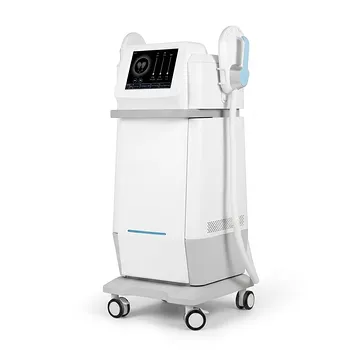
The three key energy modalities are radiofrequency (RF), infrared light, and micro-focused ultrasound (MFU/HIFU). RF produces broad volumetric heating within the dermis, infrared primarily stimulates the superficial-to-mid dermis, and MFU/HIFU concentrates energy at deeper structural layers, including the SMAS. Their main difference is where and how thermal energy is deposited: diffuse heating for RF, relatively superficial optical heating for infrared, and highly focused thermal coagulation points for MFU/HIFU.
The practical distinction is tissue depth and precision. RF is suited to broad dermal remodeling, infrared to controlled superficial-to-mid dermal stimulation, and MFU/HIFU to deeper, anatomically targeted lifting.
How the Modalities Differ in Tissue Targeting
Radiofrequency: Broad Dermal Volumetric Heating
RF devices use electromagnetic energy to generate bulk thermal heating throughout the dermis. The heat is distributed across a treatment volume rather than concentrated into isolated focal points.
This thermal effect contracts existing collagen fibers and stimulates longer-term collagen remodeling. The result is typically improved skin firmness and reduced mild-to-moderate laxity.
Infrared Light: Superficial-to-Mid Dermal Stimulation
Infrared devices use light energy to create controlled heating in the superficial-to-mid dermal region. Compared with MFU/HIFU, the energy is intended to act closer to the skin surface.
The resulting heat stimulates collagen contraction and remodeling within the treated dermal layers. Infrared therefore occupies a more superficial targeting position than technologies designed to affect deeper structural tissue.
MFU/HIFU: Deep, Focal Structural Targeting
Micro-focused ultrasound, often referred to as HIFU in aesthetic applications, delivers ultrasound energy to precisely selected depths beneath the skin. It creates small thermal coagulation points rather than heating the entire intervening tissue volume uniformly.
Treatment can reach deeper structural layers, including the superficial musculoaponeurotic system (SMAS). This allows practitioners to target tissue involved in facial support and lifting while preserving the epidermis when the device is correctly selected and applied.
Why Treatment Depth Matters
Skin Laxity Exists Across Multiple Layers
Facial and neck aging may involve changes in the skin, dermis, subcutaneous tissue, and deeper supporting structures. A device that primarily heats the dermis cannot address every form of deep structural laxity.
The correct modality therefore depends on whether the concern is mainly surface-level skin laxity, dermal collagen loss, or deeper tissue descent.
Energy Placement Determines the Intended Effect
RF and infrared rely primarily on thermal stimulation to encourage collagen contraction and remodeling. MFU/HIFU uses focused energy to create controlled thermal points at selected depths, including deeper support layers.
This does not mean that one modality is universally superior. It means each is designed to influence a different portion of the tissue architecture.
Anatomy Should Guide Device Selection
A practitioner should assess the patient’s skin thickness, degree of laxity, tissue distribution, and relevant anatomical structures before selecting a platform. The same treatment depth is unlikely to be appropriate for every face or neck.
For this reason, clinics may use complementary RF and MFU/HIFU systems to address different tissue layers rather than relying on a single technology for every patient.
What Collagen Remodeling Has in Common
Controlled Heat Triggers Tissue Response
All three modalities use controlled thermal energy to produce a tissue response. Heating can cause some immediate collagen fiber contraction and stimulate longer-term collagen regeneration and remodeling.
The clinical effect develops through both the initial thermal response and the body’s subsequent repair processes.
The Outcome Depends on More Than Energy Type
Results also depend on treatment depth, delivered energy, applicator design, treatment pattern, patient anatomy, and baseline skin elasticity. The name of the technology alone does not determine the outcome.
Appropriate patient selection and accurate energy placement are as important as the modality itself.
Understanding the Trade-offs
RF Offers Broad Coverage but Less Focal Depth Selectivity
Because RF heats a broader dermal volume, it can be useful for generalized skin tightening and collagen remodeling. However, it is not primarily designed to create the same precisely localized deep treatment points associated with MFU/HIFU.
Infrared Is More Superficial
Infrared can provide controlled heating in superficial-to-mid dermal layers, making it relevant to surface and dermal laxity. Its depth profile limits its ability to address pronounced laxity caused by deeper structural changes.
MFU/HIFU Requires Careful Depth and Anatomy Control
MFU/HIFU can reach deeper layers, but that capability increases the importance of correct treatment planning. Energy must be delivered at appropriate depths and locations to avoid ineffective targeting or unwanted tissue effects.
Non-Surgical Devices Have Clinical Limits
Energy-based treatments are generally most appropriate for mild-to-moderate laxity in patients who retain reasonable skin elasticity. They are less suited to marked platysmal banding, substantial deep fat accumulation, or major structural descent.
When aging is driven by deeper anatomical problems beyond the reach of dermal and subcutaneous remodeling, surgical procedures may be more appropriate than escalating device energy.
How to Apply This to Your Project
Choose the modality according to the tissue layer you need to influence and the clinical problem you are trying to solve.
- If your primary focus is broad dermal tightening: Select RF for volumetric dermal heating and collagen remodeling across a treatment area.
- If your primary focus is superficial-to-mid dermal stimulation: Consider infrared for controlled thermal treatment closer to the skin surface.
- If your primary focus is deeper structural lifting: Consider MFU/HIFU for precise thermal coagulation points at deeper layers, including the SMAS.
- If your primary focus is versatile clinic treatment: Combining RF and MFU/HIFU can provide access to complementary tissue depths when supported by appropriate patient assessment and practitioner training.
- If your primary focus is pronounced structural laxity: Recognize the limits of non-surgical energy devices and evaluate whether a surgical consultation is more suitable.
Understanding the target tissue—not merely the device label—is the foundation for selecting an effective and appropriately limited skin-tightening treatment.
Summary Table:
| Modality | Primary Target Depth | Mechanism | Clinical Use |
|---|---|---|---|
| Radiofrequency | Dermis (volumetric) | Broad heating | Generalized laxity, collagen remodeling |
| Infrared Light | Superficial-mid dermis | Light absorption | Surface laxity, fine lines |
| MFU/HIFU | Deeper layers (SMAS) | Focused thermal points | Deep structural lifting |
Ready to Enhance Your Aesthetic Practice?
BELIS offers a comprehensive range of professional-grade energy-based devices, including RF, MFU/HIFU, and more, to help you address diverse skin tightening needs. Our advanced technology, backed by clinical evidence, enables you to deliver safe and effective treatments for mild to moderate facial laxity. Partner with us to expand your service offerings and achieve superior patient outcomes. Contact our team today to learn how BELIS can support your clinic.
Related Products
- 22D HIFU Machine Device Facial Machine
- 4D 12D HIFU Machine Device for Skin Tightening and Lifting
- 12D HIFU Machine Device for Facial HIFU Treatment
- 4D 12D HIFU Machine Device for Skin Tightening
- 4D Vaginal HIFU and Face HIFU System
People Also Ask
- Is swelling a frequent side effect after a HIFU facial? Expert Insights on HIFU Recovery and Safety
- What is the mechanism of action of High-Intensity Focused Ultrasound (HIFU) devices in noninvasive body sculpting, and how is surrounding tissue protected?
- How do High-Intensity Focused Ultrasound (HIFU) devices function? Master Non-Invasive Face Lifting Technology
- Are home-use HIFU devices a recommended alternative? Why Clinical Safety Beats At-Home Risks
- What are the main functions of a High Intensity Focused Ultrasound (HIFU) machine? Advanced Skin Lifting and Sculpting