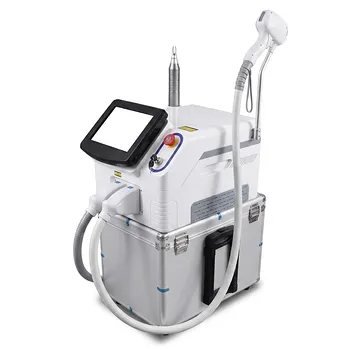
Microfocused ultrasound tightens and lifts skin by creating precisely controlled heat beneath the surface. Focused acoustic energy passes through the epidermis and deposits thermal energy at selected depths—commonly around 1.5, 3.0, and 4.5 mm—within the dermis and subcutaneous tissue. These localized zones, typically reaching approximately 60–70°C, cause immediate collagen contraction and initiate a wound-healing response that gradually remodels and strengthens the supporting tissue.
The key mechanism is controlled deep-tissue thermal injury without epidermal ablation. Immediate collagen shortening provides early tightening, while fibroblast activity, neocollagenesis, and tissue remodeling produce progressive lifting over the following months.
How the Ultrasound Energy Reaches the Target Tissue
Focused acoustic energy bypasses the skin surface
Unlike surface-heating technologies, microfocused ultrasound concentrates acoustic energy at predetermined focal points below the epidermis. The overlying skin is largely spared because the highest energy density occurs at the selected focus rather than throughout the ultrasound path.
The treatment is therefore non-ablative: it does not intentionally remove or vaporize the epidermis, which helps explain the limited surface injury and generally short recovery period.
Treatment depth determines the anatomical target
Different transducer depths can target different structural layers. More superficial settings reach the dermis, while deeper settings can affect the lower dermis, subcutaneous tissue, and, depending on the device and treatment area, the superficial musculoaponeurotic system (SMAS).
The SMAS is a connective-tissue layer associated with the mechanical support and movement of facial soft tissue. However, the exact depth reached and the tissue affected depend on the device, transducer, treatment settings, and individual anatomy.
What Happens at the Focal Point
Thermal coagulation creates a controlled micro-injury
At the focus, ultrasound energy is converted into localized heat. The resulting thermal coagulation points are small, discrete areas of protein denaturation and tissue contraction rather than a continuous zone of burned tissue.
This controlled micro-injury is central to the treatment’s safety and mechanism. It limits damage to defined points while stimulating a broader biological repair response.
Collagen contracts immediately
Collagen is a heat-sensitive structural protein. When exposed to the treatment’s thermal range, its organized molecular structure contracts and shortens.
This produces an early tightening effect, although the immediate change should not be confused with the full biological result. Early contraction is only the first stage of the process.
The inflammatory response activates repair
The treated points signal a controlled wound-healing response. Local inflammatory mediators and repair processes recruit and activate fibroblasts, the cells responsible for producing important extracellular-matrix components.
The response is intended to be measured rather than destructive. Excessive or poorly controlled heating can increase the risk of unwanted tissue injury, which is why treatment parameters and operator technique matter.
How Long-Term Lifting Develops
Fibroblasts produce new structural matrix
Following treatment, fibroblasts can increase production of new collagen, a process known as neocollagenesis. This gradually adds and reorganizes structural support within the dermis and deeper connective tissue.
Some references also describe stimulation of elastin-related remodeling. The most established and central mechanism, however, is collagen contraction followed by collagen synthesis and reorganization.
Tissue remodeling improves mechanical support
Over subsequent weeks and months, the treated tissue undergoes remodeling. Existing collagen fibers reorganize, and newly produced matrix can improve the skin’s structural integrity.
This process may make lax tissue appear tighter, firmer, and somewhat lifted. It is gradual because the visible result depends on biological repair and matrix turnover rather than an immediate surgical repositioning of tissue.
Lifting is not the same as surgical repositioning
HIFU does not remove excess skin or physically relocate tissue in the way a facelift does. Its effect is better understood as deep tissue contraction and remodeling, which can improve the appearance of selected areas with laxity.
The degree of visible lifting depends on baseline laxity, tissue thickness, age-related structural changes, treatment settings, and individual healing response.
Why the Surface of the Skin Can Remain Intact
Energy is concentrated below the epidermis
The ultrasound beam travels through superficial tissue but is designed to deposit its strongest effect at the focal depth. This allows treatment of deeper structures while minimizing intentional injury to the epidermal surface.
That distinction separates microfocused ultrasound from procedures that rely on controlled surface damage, such as many ablative laser treatments.
Intact skin reduces surface recovery demands
Because the epidermis is not deliberately removed, patients generally do not require the type of wound care associated with resurfacing procedures. Temporary effects such as tenderness, swelling, redness, or altered sensation can still occur, depending on treatment intensity and individual response.
“Non-invasive” or “non-surgical” does not mean biologically inactive. The desired result depends on creating a controlled injury beneath the surface.
Understanding the Trade-offs
Results are gradual and variable
The early tightening effect may appear soon after treatment, but collagen remodeling develops progressively over several months. Some patients experience a noticeable improvement, while others see more modest change.
HIFU is generally more suitable for mild to moderate laxity than for substantial excess skin or advanced tissue descent.
Greater energy is not automatically better
Increasing energy or treating too aggressively does not guarantee a stronger lift. It can increase discomfort and the risk of unintended thermal injury, including prolonged tenderness, nerve-related symptoms, burns, or changes in subcutaneous tissue.
Safe treatment requires appropriate depth selection, energy settings, spacing, and knowledge of facial anatomy.
The SMAS claim requires precise interpretation
The SMAS is an important anatomical support layer, but not every ultrasound device or cartridge reaches it in the same way. Treatment descriptions should therefore identify the actual device and transducer depths rather than assume that every HIFU procedure produces the same SMAS effect.
The mechanism should be described as targeted thermal treatment of selected dermal and deeper connective-tissue layers, with SMAS involvement dependent on the specific system and application.
Treatment cannot stop future aging
Collagen remodeling can improve existing laxity, but it does not permanently prevent aging, gravity, sun-related damage, or changes in facial volume. Maintenance treatments may be considered, but their timing and benefit vary by patient and device.
How to Apply This to Your Treatment Goal
The physiological mechanism is clear, but expectations should be based on the tissue problem being treated and the capabilities of the specific device.
- If your primary focus is mild facial or neck laxity: HIFU may provide gradual tightening through deep collagen contraction and remodeling rather than an immediate surgical-style lift.
- If your primary focus is surface texture or pigmentation: HIFU is not primarily a resurfacing treatment because it targets deeper tissue while largely sparing the epidermis.
- If your primary focus is significant excess skin or advanced sagging: A surgical consultation may be more appropriate because ultrasound does not remove excess tissue or reposition it mechanically.
- If your primary focus is treatment safety: Confirm the device, focal depths, energy settings, operator training, and anatomical precautions before treatment.
HIFU works by converting focused acoustic energy into controlled deep thermal injury that initiates immediate collagen contraction and longer-term tissue remodeling, allowing informed expectations without confusing it with surgical lifting.
Summary Table:
| Mechanism | Description |
|---|---|
| Focused Ultrasound Energy | Acoustic energy is concentrated at specific depths (1.5, 3.0, 4.5 mm) below the epidermis, sparing the surface. |
| Thermal Coagulation | Localized heating to 60-70°C creates discrete coagulation points in the dermis and deeper layers, causing immediate tissue contraction. |
| Collagen Contraction | Heat-shocked collagen molecules shrink, producing an immediate tightening effect. |
| Inflammatory Response | Controlled micro-injury triggers an inflammatory cascade, attracting fibroblasts to the treated site. |
| Neocollagenesis | Fibroblasts produce new collagen over months, adding structural support and volume. |
| Tissue Remodeling | Gradual reorganization of collagen and elastin fibers leads to continued skin tightening and lifting. |
| SMAS Involvement | Deeper transducers may reach the SMAS layer, providing more structural support and lift. |
| Non-Ablative Nature | Epidermis remains intact, reducing downtime and side effects. |
Unlock the full potential of HIFU for your clinic. At BELIS, we provide cutting-edge micro-focused ultrasound systems designed for safe, effective skin lifting. Our advanced technology ensures precise energy delivery and patient satisfaction. Partner with us to expand your aesthetic offerings and attract more patients. Contact us today for a personalized consultation and discover how BELIS can elevate your practice.
Related Products
- 4D 12D HIFU Machine Device for Skin Tightening and Lifting
- 9D 7D HIFU Vaginal RF Lifting Treatment
- 7D 12D 4D HIFU Machine Device
- 12D HIFU Machine Device for Facial HIFU Treatment
- 4D 12D HIFU Machine Device for Skin Tightening
People Also Ask
- What is the mechanism of HIFU devices for facial lifting? Unlock Non-Surgical SMAS Tightening Secrets
- How do non-invasive skin tightening devices such as HIFU and microneedle RF compare to surgical rhytidectomy for facial lifting? Discover the key differences in results, longevity, and recovery.
- What are the technical principles behind HIFU for facial tightening? Master Deep SMAS Lifting Technology
- What is the primary anatomical mechanism of micro-focused ultrasound (HIFU) skin lifting devices compared to traditional superficial thermal treatments? Deep tissue tightening explained
- Is HIFU skin tightening safe? Ensure Your Safety with a Qualified Professional