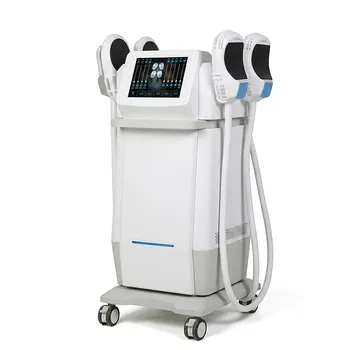
HIFU reduces localized fat by concentrating ultrasound energy beneath the skin rather than heating the skin surface. The ultrasound travels through the epidermis and superficial dermis at relatively low energy density, then converges at a preset depth, commonly around 10–15 mm in body-sculpting applications. At that focal point, the energy produces localized thermal coagulation and mechanical stress that injure or destroy adipocytes, while the overlying epidermis remains largely unaffected.
The key principle is spatial selectivity: HIFU is low-intensity while it passes through superficial tissue but highly concentrated at the subcutaneous focal point. This creates a controlled treatment zone in fat without exposing the epidermis to the same damaging temperature or energy density.
How HIFU Targets Subcutaneous Fat
Ultrasound Passes Through the Skin
A HIFU applicator delivers acoustic energy through the skin surface. The epidermis and superficial dermal layers act as transmission paths rather than the primary treatment targets.
Because the energy is distributed across these superficial layers, their local energy density is substantially lower than at the focal point.
Energy Converges at a Preset Depth
The device focuses the ultrasound waves at a selected depth within the subcutaneous adipose layer. Body-contouring treatments may target depths such as 10 mm or 15 mm, depending on the device, applicator, and treatment area.
This focal control allows the practitioner to place the strongest effect inside the fat layer while limiting exposure to adjacent structures.
The Focal Point Produces Thermal Injury
At the focus, acoustic energy is converted into heat and causes a rapid, localized temperature increase. The resulting thermal coagulation damages the targeted adipocytes and can lead to adipocyte necrosis.
The effect is confined to small treatment zones rather than broadly heating the entire tissue layer.
Mechanical Effects May Contribute
In addition to heating, focused ultrasound can create mechanical stress within the target tissue. These effects may contribute to adipocyte disruption and lipolysis, although the precise balance between thermal and mechanical effects depends on the device’s operating parameters.
The damaged cellular material is subsequently cleared through the body’s normal metabolic and lymphatic processes over time.
Why the Epidermis Is Protected
Energy Density Is Low Above the Target
The epidermis is protected primarily because the ultrasound is not tightly concentrated while it travels through the skin. The energy becomes intense only after the waves converge at the selected subcutaneous focal point.
This is comparable to directing many low-intensity paths through a surface so that they become powerful only at a specific point beneath it.
The Focus Is Beneath the Surface
The treatment zone is positioned below the epidermis, so the greatest thermal effect occurs in the fat layer rather than at the skin surface. The intervening epidermis and superficial dermis are therefore exposed to less concentrated energy.
This reduces the likelihood of direct epidermal thermal injury compared with procedures that heat or remove tissue at the surface.
Surrounding Structures Are Largely Spared
When correctly selected and applied, HIFU limits the strongest effect to the intended focal region. The treatment is designed to reduce unnecessary injury to the epidermis, superficial blood vessels, and peripheral nerves.
Protection is based on accurate focusing, appropriate treatment depth, and controlled energy delivery. It is not an absolute guarantee against adverse effects.
Active Surface Cooling Is Often Unnecessary
Because the principal thermal effect is generated beneath the surface, some HIFU systems do not require active epidermal cooling. The absence of a cooling step does not mean the skin is exposed to the treatment’s maximum temperature; the device’s focal geometry is what creates the depth-specific effect.
Additional Tissue Effects
Collagen Remodeling Can Improve Tightness
Thermal effects in deeper tissue may cause contraction of existing collagen fibers and stimulate longer-term collagen remodeling. This can contribute to modest skin tightening after fat-reduction treatment.
The degree of tightening varies by treatment area, tissue laxity, device settings, and individual healing response.
Body Sculpting Differs From SMAS-Focused Lifting
Some HIFU systems are designed for deeper facial or neck treatments involving the deep dermis or superficial musculoaponeurotic system, commonly called the SMAS. Those applications primarily target lifting and tissue tightening rather than subcutaneous fat reduction.
For non-invasive body sculpting, the relevant target is generally the subcutaneous adipose layer at a selected depth.
Understanding the Trade-offs
Fat Reduction Is Localized, Not Weight Loss
HIFU is intended to reduce localized fat deposits and improve body contour. It should not be treated as a substitute for overall weight management or as a method for removing large volumes of fat.
Results Develop Gradually
The treatment does not remove all targeted fat immediately. Cellular injury and subsequent clearance occur over time, so visible circumference or contour changes generally develop progressively.
Precision Depends on Treatment Parameters
Focal depth, acoustic power, pulse duration, spacing, applicator design, and tissue thickness all affect the result. Incorrect settings or poor positioning can reduce effectiveness or increase the risk of unwanted tissue injury.
“Non-Invasive” Does Not Mean Risk-Free
Although the epidermis is designed to remain intact, patients may still experience discomfort, temporary redness, swelling, tenderness, or sensory changes. Rare complications can occur, particularly if treatment is performed improperly or on unsuitable tissue.
A qualified provider must assess the treatment area, select an appropriate depth, and follow the specific device’s safety requirements.
How to Apply This to Your Goal
HIFU is best understood as a depth-controlled treatment whose benefits depend on matching the focal zone to the intended tissue.
- If your primary focus is localized fat reduction: Choose a treatment approach that targets the subcutaneous adipose layer at an appropriate preset depth, such as 10–15 mm where clinically suitable.
- If your primary focus is skin tightening: Confirm that the device and treatment plan are intended to create deeper thermal coagulation and collagen remodeling rather than primarily treating fat.
- If your primary focus is epidermal safety: Prioritize accurate focusing, conservative device settings, correct applicator selection, and treatment by a properly trained professional.
- If your primary focus is predictable results: Use a realistic treatment plan that accounts for gradual fat clearance, individual anatomy, and the distinction between contour improvement and general weight loss.
HIFU protects the epidermis by concentrating its highest energy and thermal effect at a controlled depth beneath the skin, where it can affect fat and deeper connective tissue while minimizing exposure to the surface.
Summary Table:
| Mechanism | Description |
|---|---|
| Ultrasound Transmission | Energy passes through skin at low density, without damaging superficial layers. |
| Focal Point | Acoustic waves converge at preset depth (e.g., 10–15 mm) in subcutaneous fat. |
| Thermal Effect | Localized heat causes adipocyte necrosis and tissue coagulation. |
| Epidermal Protection | Skin surface is not heated, as high energy is only at the focus. |
| Mechanical Stress | Additional disruption of fat cells enhances lipolysis. |
Elevate your clinic's aesthetic offerings with BELIS' advanced HIFU systems, designed for safe and effective non-invasive body sculpting. Our professional-grade devices combine precision and patient comfort, helping you achieve superior contouring results. Contact us today to discover how our technology can enhance your practice and satisfy your clients.
Related Products
- 4D 12D HIFU Machine Device for Skin Tightening
- 12D HIFU Machine Device for Facial HIFU Treatment
- 7D 12D 4D HIFU Machine Device
- 4D 12D HIFU Machine Device for Skin Tightening and Lifting
- 22D HIFU Machine Device Facial Machine
People Also Ask
- How do non-invasive skin tightening devices such as HIFU and microneedle RF compare to surgical rhytidectomy for facial lifting? Discover the key differences in results, longevity, and recovery.
- What is the mechanism of action of High-Intensity Focused Ultrasound (HIFU) devices in noninvasive body sculpting, and how is surrounding tissue protected?
- What key clinical safety guidelines and contraindications must aesthetic practitioners observe when operating ultrasound skin tightening devices? Essential Safety Protocols for Clinics
- Why is it necessary to fill the transducer chamber with deionized water and PE film in HIFU devices? Key Safety Insights
- Why is a HIFU device essential for non-invasive facial lifting? Discover the Power of Deep SMAS Layer Targeting