The expected endpoint in laser hair removal is mild, perifollicular inflammation—not frosting or blistering. Clinicians should see uniform perifollicular erythema and small, hivelike perifollicular edema shortly after treatment. These findings indicate that sufficient thermal energy reached the follicle while the epidermis remains intact; whitening, blistering, or epidermal separation signals excessive injury.
The target endpoint is mild perifollicular erythema with edema. To reduce post-treatment hyperpigmentation, reassess skin color before every session, avoid treating recently tanned skin, adjust fluence conservatively, and use appropriate cooling and sun protection. If hyperpigmentation develops, it often resolves over several weeks to months and may be treated under clinical supervision with a topical agent such as 4% hydroquinone.
Recognizing an Effective Treatment Endpoint
Perifollicular erythema and edema
The desired response is transient redness and swelling centered around individual hair follicles. The edema may appear as small, hivelike elevations and is often most apparent within several minutes of treatment.
This localized inflammatory response indicates effective selective photothermolysis: the follicle has absorbed sufficient energy for thermal injury without unacceptable epidermal damage.
What should not be mistaken for the endpoint
Immediate whitening or frosting is not the standard endpoint for laser hair removal. Frosting may be relevant to some resurfacing or lesion-treatment procedures, but it should not be used as the target response for routine hair reduction.
Blistering, vesiculation, epidermal separation, marked whitening, or severe pain indicates excessive epidermal injury. Treatment should stop, and the clinician should reassess fluence, pulse duration, wavelength, spot size, and cooling.
Why Post-Treatment Hyperpigmentation Develops
Excessive thermal injury
Postinflammatory hyperpigmentation can follow excessive heat, especially when fluence is too high for the patient’s current skin pigmentation. Epidermal injury, blistering, or inflammation increases the risk of longer-lasting dyschromia.
The risk is greater in darker or recently tanned skin, where epidermal melanin absorbs more laser energy and the contrast between hair and skin is reduced.
Tanning changes treatment risk
A patient’s skin type is not static across treatment sessions. Recent ultraviolet exposure can increase epidermal melanin even when the patient’s baseline Fitzpatrick skin type is unchanged.
For this reason, clinicians should reassess skin color at every visit. If tanning has occurred, treatment should be postponed when appropriate or performed with a reduced fluence and carefully adjusted parameters.
Preventing Hyperpigmentation During Treatment
Select conservative, individualized settings
Fluence must be titrated to produce the desired perifollicular endpoint without epidermal blanching, blistering, or severe pain. Higher energy is not automatically better; excessive fluence increases the risk of burns, scarring, and dyschromia.
Depending on the device and patient, risk reduction may involve a longer wavelength, longer pulse duration, larger spot size, or lower fluence. These choices must be based on the specific laser, skin type, hair characteristics, and manufacturer parameters.
Use effective epidermal cooling
Continuous or appropriately timed cooling protects the epidermis while allowing heat to accumulate in the follicle. Cooling is particularly important for darker phototypes and recently sun-exposed skin.
Cooling should complement—not compensate for—an unsuitable fluence. If the clinical endpoint suggests epidermal injury, the clinician should stop and modify the treatment parameters.
Enforce sun avoidance
Patients should avoid tanning before treatment and use broad-spectrum sunscreen after treatment once the epidermal barrier is intact. Sun exposure during the inflammatory period can intensify postinflammatory pigmentation.
A practical protocol should include explicit instructions about outdoor exposure, tanning beds, sunscreen use, and when treatment should be delayed after significant sun exposure.
Consider test spots
For higher-risk patients or uncertain skin conditions, a test spot can provide useful information before treating a larger area. The response should be assessed both immediately and during follow-up, because pigmentary complications may not be apparent at the time of treatment.
Managing Hyperpigmentation After Treatment
First assess the severity of injury
The clinician should determine whether the patient has uncomplicated transient darkening or evidence of a more significant burn. Mild, uniform darkening without blistering often improves spontaneously over several weeks.
Blistering, crusting, epidermal loss, severe pain, or expanding discoloration requires prompt clinical review. These findings may represent deeper epidermal injury and carry a greater risk of persistent dyschromia or scarring.
Stop further injury
Additional laser treatment should be deferred until the skin has normalized. The priority is to prevent continued inflammation, ultraviolet exposure, or irritation that could prolong pigment production.
Patients should avoid tanning and unnecessary friction or irritating topical products while the area is recovering.
Use hydroquinone selectively
A clinician may prescribe 4% hydroquinone to accelerate resolution of postinflammatory hyperpigmentation when appropriate. It should be used under professional guidance because prolonged, excessive, or unsupervised use can cause irritation and other pigmentary complications.
Treatment should be individualized based on the patient’s skin type, pregnancy status, history of irritation, and the condition of the epidermal barrier.
Allow adequate recovery time
Transient laser-associated darkening may resolve over approximately three to four weeks, while more substantial postinflammatory hyperpigmentation can take several weeks to months.
Superficial exfoliation or resurfacing should not be introduced while the skin is acutely inflamed or damaged. If considered, it should be delayed until the epidermis has recovered and performed conservatively.
Understanding the Trade-offs
More energy is not always more effective
Increasing fluence can improve follicular heating, but excessive energy raises the likelihood of epidermal burns, blistering, scarring, and persistent pigmentation. The correct setting is the lowest energy that reliably produces the desired follicular response for that patient and device.
Suboptimal energy also has disadvantages
Reducing energy too aggressively may fail to damage the follicle adequately. In some dense-hair areas, subtherapeutic heating may also contribute to paradoxical hair-growth responses.
The solution is not simply to use high fluence. Clinicians should optimize the full parameter set, confirm the clinical endpoint, and reassess the response at subsequent sessions.
Skin tone and hair contrast affect safety
Lower contrast between hair and surrounding skin makes it more difficult to target the follicle while sparing the epidermis. Darker or tanned skin therefore demands more conservative treatment planning, stronger cooling, and careful follow-up.
Common Pitfalls to Avoid
Treating tanned skin as if it were unchanged
Using the previous session’s settings without reassessing pigmentation is unsafe. A patient who has tanned may require postponement, lower fluence, or a different treatment strategy.
Treating redness as evidence of severe damage
Mild perifollicular erythema and edema are expected. The concern is not all redness, but excessive or diffuse injury, particularly when accompanied by whitening, blistering, severe pain, or epidermal separation.
Applying irritating products too early
Aggressive exfoliation, resurfacing, or irritating lightening products can worsen inflammation if used before the epidermal barrier has recovered. Post-treatment care should remain gentle until healing is complete.
Making the Right Choice for Your Goal
The safest approach is to match the treatment endpoint and follow-up plan to the patient’s current skin condition, not merely to their baseline skin type.
- If your primary focus is effective hair reduction: Use individualized fluence and cooling to produce mild, uniform perifollicular erythema and edema without frosting, blistering, or epidermal separation.
- If your primary focus is preventing hyperpigmentation: Reassess tanning and skin color before every session, delay treatment when necessary, use conservative settings, and enforce strict sun avoidance.
- If your primary focus is managing established darkening: Defer further laser treatment, protect the area from ultraviolet exposure, monitor for epidermal injury, and consider clinician-supervised 4% hydroquinone when appropriate.
- If your primary focus is treating darker phototypes safely: Use careful test spots, conservative parameter adjustments, effective epidermal cooling, and longer follow-up for delayed pigmentary changes.
A successful treatment balances follicular injury against epidermal safety, with mild perifollicular inflammation as the guide.
Summary Table:
| Aspect | Key Points |
|---|---|
| Target Endpoint | Mild perifollicular erythema and edema; no frosting or blistering |
| Signs of Excessive Injury | Whitening, blistering, epidermal separation, severe pain |
| Risk Factors for Hyperpigmentation | Darker skin types, recent tanning, high fluence, inadequate cooling |
| Prevention Strategies | Reassess skin color, conservative fluence, effective cooling, sun avoidance |
| Management of Hyperpigmentation | Defer laser, sun protection, clinician-supervised 4% hydroquinone |
| Recovery Time | Transient darkening: 3-4 weeks; more significant: several weeks to months |
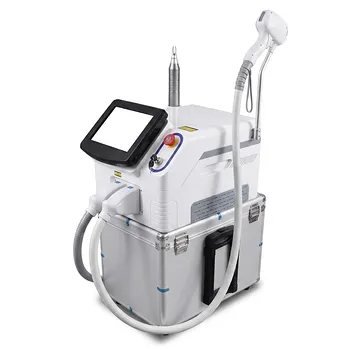
Elevate your clinic's laser hair removal outcomes with BELIS's advanced aesthetic devices. Our professional-grade systems, including diode and Alexandrite lasers, are designed to optimize treatment endpoints while minimizing pigmentation risks. For distributors and clinics, we offer OEM/ODM support, certifications, and reliable supply. Partner with BELIS to enhance patient satisfaction and expand your business. Contact us today to discuss your needs and discover how our technology can benefit you.
Related Products
- 808nm Diode Laser Hair Removal Machine 755+808+1064nm Mixed Wavelength Professional Equipment
- 808nm Diode Laser Hair Removal Machine and Equipment with Picolaser Arm
- Diode Tri Laser Hair Removal Machine for Clinic Use
- Diode Laser SHR Trilaser Hair Removal Machine for Clinic Use
- Tri Laser Diode Hair Removal Machine Professional Beauty Equipment
People Also Ask
- How can aesthetic practitioners prevent side effects like paradoxical hair regrowth and thermal burns when performing diode laser hair removal on dark skin? Master safe protocols for Fitzpatrick IV–VI skin.
- Why is monitoring the revenue rate per hour per physician essential when deciding to invest in high-throughput aesthetic technology like diode hair removal lasers or multi-applicator body sculpting machines? Optimize your practice's profitability
- What are the primary differences in mechanism and pigment dependency between standard laser hair removal devices (Alexandrite, Diode, Nd:YAG) and photosensitizer-assisted light therapies? Discover expert insights and tailored solutions
- How do practitioners select between 755nm Alexandrite, 810nm Diode, and 1064nm Nd:YAG laser wavelengths based on Fitzpatrick skin typing and hair characteristics? Achieve Safe, Effective Hair Removal for Every Skin Type
- Why is the Anagen phase the primary target for laser hair removal machines? Unlock the science for optimal results