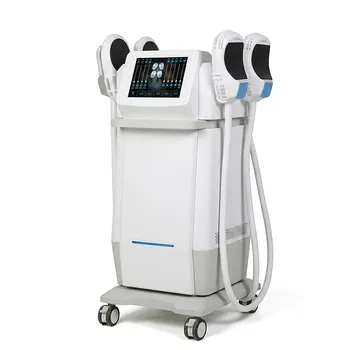
Before a non-ablative RF facial skin-tightening treatment, practitioners should confirm that the patient is an appropriate candidate, explain that improvement is gradual and temporary, and document informed consent covering contraindications, expected reactions, and material risks. Patients should understand that RF is best suited to mild-to-moderate laxity, usually requires multiple sessions, and does not produce facelift-level correction. Results develop over time and require maintenance.
The central consent issue is expectation management: patients must understand what non-ablative RF can realistically achieve, how long improvement may take, how many treatments may be needed, and what complications may occur before treatment begins.
Establish Whether RF Is Clinically Appropriate
Assess the degree of laxity
Non-ablative RF is generally most appropriate for mild-to-moderate facial laxity and wrinkles. Patients with severe sagging, substantial tissue redundancy, or advanced structural ptosis should be told that improvement may be modest compared with surgical lifting.
Evaluate skin quality and facial anatomy
The assessment should consider skin texture, elasticity, laxity, solar damage, facial fat distribution, and the underlying soft-tissue structure. These factors influence both the likely benefit and whether another treatment would better address the patient’s concern.
RF tightening may improve dermal firmness, but it is not a comprehensive treatment for deep pigmentation, major volume loss, severe ptosis, or every cause of facial contour change.
Identify the patient’s treatment objective
The practitioner should clarify whether the patient wants improved firmness, modest wrinkle reduction, contour refinement, or a surgical-level lift. The proposed treatment is appropriate only when its expected effect matches the patient’s objective.
Photographs, baseline assessment, and a documented treatment plan can help distinguish realistic improvement from expectations of a dramatic transformation.
Explain the Expected Results
Set expectations about the number of sessions
Patients should be told that multiple treatment sessions are generally required before noticeable tightening or wrinkle reduction occurs. A single treatment should not be presented as a guaranteed or definitive correction.
The exact number and interval should follow the device manufacturer’s protocol, clinical assessment, and the patient’s response.
Describe the time course
RF may produce a short-term sensation of firmness, but meaningful improvement depends on gradual dermal remodeling and collagen formation. Results commonly mature over several months rather than appearing immediately.
Patients should understand that early changes can be temporary and should not be mistaken for the final outcome.
Explain that results are not permanent
Non-ablative RF does not stop normal aging or permanently reposition facial tissues. Improvement will gradually diminish, and maintenance treatments may be needed according to the patient’s clinical response and the device protocol.
Clarify the limits of treatment
RF tightening does not replace a facelift or correct severe skin redundancy. It should also not be represented as a treatment for problems that are primarily caused by deep structural changes, major fat excess, or epidermal pigmentation.
Complete the Safety Screening
Exclude pregnancy
Pregnancy should be treated as a contraindication for facial RF treatment. The practitioner should verify pregnancy status as part of the pre-treatment assessment and record the outcome.
Screen for implanted electronic devices
Patients with cardiac pacemakers, implanted defibrillators, or other electronic medical devices should not undergo RF treatment unless the device manufacturer and an appropriately qualified clinician expressly establish that it is safe. Electrical interference is a material concern.
Identify metal in or near the treatment area
The treatment area should be screened for metallic implants, metallic tattoos, plates, screws, and other conductive materials. Direct treatment over relevant metal may concentrate heat and increase the risk of localized thermal injury.
The device’s instructions for use should determine whether treatment near a particular implant is permitted. Practitioners should not assume that every implant or filler is safe simply because it is subcutaneous or non-conductive.
Check skin integrity and active disease
Treatment should not be performed over open wounds, active lesions, or compromised skin. The practitioner should also consider active inflammatory or infectious conditions in the treatment area.
Patients with systemic collagen-vascular disease, active autoimmune skin disease, or prior radiation in the target area may require additional caution or specialist assessment because healing and collagen remodeling may be impaired.
Assess herpes history and other relevant risks
Patients with a history of recurrent herpes outbreaks around the treatment area may require antiviral prophylaxis. The treatment plan should also account for medications, prior procedures, abnormal scarring, altered sensation, and any condition that could affect heat tolerance or healing.
Document the Consent Discussion
Describe expected short-term reactions
Consent should explain that patients may experience:
- Mild discomfort or warmth during treatment
- Temporary erythema, or redness
- Localized irritation or sensitivity
- Mild swelling or a transient feeling of firmness
These reactions commonly resolve within minutes to several days, although the duration can vary by patient, treatment area, and device settings.
Explain rare but material risks
The consent form should explicitly include the possibility of superficial thermal burns, even when the risk is uncommon. Other potential adverse effects should be described in language appropriate to the device and treatment technique, including prolonged redness, irritation, pigmentary change, pain, swelling, and unintended tissue injury where clinically relevant.
The practitioner should explain what symptoms require prompt review, such as blistering, worsening pain, marked swelling, skin breakdown, or persistent discoloration.
Record alternatives and the option to decline
Valid consent requires more than a signed form. Patients should be told about reasonable alternatives, including observation, topical or other non-surgical treatments, and surgical consultation where laxity is advanced.
They should also understand that they may postpone or decline treatment without pressure or penalty.
Confirm understanding
The practitioner should allow time for questions and confirm that the patient understands the expected outcome, treatment course, limitations, risks, aftercare, and likely need for maintenance. Consent should be obtained before treatment and documented in the clinical record.
Understanding the Trade-offs
More energy is not automatically better
A higher-energy approach may increase the risk of excessive heating, burns, or unintended deeper-tissue injury without guaranteeing a better aesthetic result. Device-specific protocols, temperature monitoring, adequate coupling, and controlled treatment passes are important safety measures.
Gradual improvement can be misinterpreted
Because remodeling takes time, patients may judge the treatment too early or expect an immediate lift. Clear baseline photographs and a planned review can help set an appropriate point for evaluating the final result.
Candidate selection limits satisfaction
Patients with severe laxity may be dissatisfied if RF is presented as an alternative to surgery. The practitioner should recommend a different treatment pathway when the patient’s anatomy or expectations exceed the likely effect of non-ablative RF.
Device-specific rules still apply
Contraindications, treatment parameters, and post-treatment instructions vary among RF systems. General clinical principles do not replace the manufacturer’s instructions for use, local professional standards, or applicable regulations.
How to Apply This Before Treatment
The pre-treatment consultation should result in a documented decision that the patient is suitable, informed, and willing to proceed.
- If your primary focus is patient safety: Screen for pregnancy, implanted electronic devices, relevant metal, compromised skin, active disease, and other device-specific contraindications before scheduling treatment.
- If your primary focus is patient satisfaction: Explain that mild-to-moderate laxity responds best, several sessions may be required, improvement is gradual, and results are temporary.
- If your primary focus is legally and ethically sound consent: Document expected reactions, rare burns and other material risks, alternatives, aftercare, and the patient’s opportunity to ask questions and decline.
- If your primary focus is treatment planning: Record baseline findings, photographs, treatment goals, planned protocol, and the follow-up point at which results and adverse effects will be assessed.
A properly prepared patient understands both the potential benefit and the limits of RF, allowing treatment to proceed on the basis of informed, realistic consent.
Summary Table:
| Aspect | Key Points |
|---|---|
| Candidate Selection | Assess laxity, skin quality, and treatment objectives; suitable for mild-to-moderate laxity. |
| Expected Results | Multiple sessions required; gradual improvement; results temporary; maintenance needed. |
| Safety Screening | Exclude pregnancy; check for electronic implants, metal, skin integrity; consider herpes history. |
| Consent | Document expected reactions (redness, swelling), material risks (burns, pigmentary changes), alternatives, and patient understanding. |
| Trade-offs | Higher energy not always better; gradual results may be misinterpreted; candidacy affects satisfaction. |
Ensure your practice meets the highest standards of safety and consent for RF treatments. BELIS offers a comprehensive range of professional-grade aesthetic devices, including advanced RF systems, exclusively for clinics and premium salons. Our equipment adheres to stringent safety standards, and our expert team can provide guidance on protocols and patient management. Contact us today to elevate your practice – Get in touch!
Related Products
- 22D HIFU Machine Device Facial Machine
- 12D HIFU Machine Device for Facial HIFU Treatment
- Ultrasonic Cavitation Machine Lipo Laser Device
- Ultrasonic Cavitation Radiofrecuency Machine for Body Slimming
- 4D 12D HIFU Machine Device for Skin Tightening
People Also Ask
- Is swelling a frequent side effect after a HIFU facial? Expert Insights on HIFU Recovery and Safety
- What is the mechanism of action of High-Intensity Focused Ultrasound (HIFU) devices in noninvasive body sculpting, and how is surrounding tissue protected?
- How do High-Intensity Focused Ultrasound (HIFU) devices function? Master Non-Invasive Face Lifting Technology
- Are home-use HIFU devices a recommended alternative? Why Clinical Safety Beats At-Home Risks
- What are the main functions of a High Intensity Focused Ultrasound (HIFU) machine? Advanced Skin Lifting and Sculpting