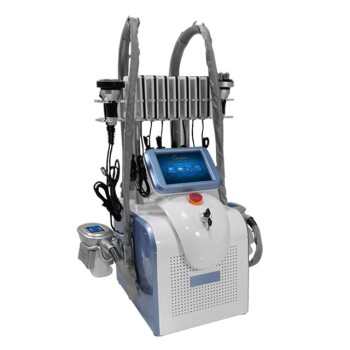
Photodynamic Therapy (PDT) equipment offers a tissue-sparing, cosmetically favorable alternative to surgery or laser ablation for appropriately selected superficial lesions. By activating a photosensitizer with a defined wavelength, PDT can destroy abnormal cells while preserving surrounding tissue and often producing less scarring and dyspigmentation. Its main limitation is that it does not remove a physical specimen for histopathological confirmation, and light penetration limits its effectiveness in thick, deep, or nodular disease.
PDT is strongest when cosmetic preservation, field treatment, and minimal tissue trauma are priorities. Surgery or ablative lasers remain preferable when clinicians need immediate tissue removal, precise depth control, or pathological confirmation.
How PDT Works Compared With Ablation
PDT Uses a Biochemical Mechanism
PDT typically involves applying a photosensitizer, such as aminolevulinic acid (ALA), allowing it to accumulate in target cells, and then illuminating the area with an appropriate wavelength. The activated photosensitizer generates reactive oxygen species that damage cellular structures and local blood supply.
The equipment therefore functions as part of a treatment system that includes the light source, photosensitizer, incubation period, lesion preparation, and post-treatment light precautions.
Surgery Removes Tissue Directly
Surgical excision physically removes the lesion, usually with a margin of clinically normal tissue. The excised material can be sent for histopathological examination to assess diagnosis, margins, and treatment completeness.
This provides a level of diagnostic and procedural control that PDT cannot provide on its own.
Ablative Lasers Vaporize or Resurface Tissue
CO2 and Er:YAG lasers use thermal energy to ablate tissue layer by layer. They can offer highly controlled removal of superficial or selected thicker tissue, depending on wavelength, pulse settings, spot size, and operator technique.
Laser ablation is therefore more mechanically direct than PDT, although it also creates an open wound and can produce erythema, pigmentary change, scarring, and healing-related complications.
Therapeutic Advantages of PDT
Lower Scarring Risk
PDT selectively targets photosensitizer-containing cells rather than broadly removing the entire treated tissue volume. For superficial non-melanoma skin lesions, this can preserve more normal tissue and produce favorable long-term cosmetic results.
Compared with cryosurgery, standard excision, and aggressive CO2 laser ablation, PDT is often associated with less visible scarring and less distortion of surrounding structures.
Treatment of Broad or Multiple Areas
PDT can treat several lesions or a larger “field” of damaged skin during one treatment session. This is valuable when clinically abnormal cells are distributed across an area rather than concentrated in a single, clearly defined mass.
Surgery is less practical for numerous lesions because each excision creates a separate wound and may require reconstruction. Ablative lasers can cover broad areas, but they still remove or injure the treated surface.
Preservation of Surrounding Tissue
PDT can be useful where tissue conservation matters, such as cosmetically sensitive facial areas. Because the treatment does not require a surgical incision or wholesale vaporization of the treated surface, it may reduce structural alteration.
This tissue selectivity is particularly relevant for superficial basal cell carcinoma, actinic keratoses, and Bowen’s disease when the lesion characteristics are appropriate.
Limited Dependence on Skin Pigment
PDT efficacy is based on photosensitizer activation rather than the concentration of melanin in the skin. Its mechanism is therefore less dependent on skin phototype or hair color than many conventional pigment-targeting laser systems.
This advantage should not be confused with universal suitability: photosensitivity, lesion depth, diagnosis, and treatment-area characteristics remain important constraints.
Potential Adjunctive Skin Benefits
Some PDT protocols can improve aspects of photodamaged skin and may provide a degree of photorejuvenation. In acne treatment, selected light systems may also combine photosensitizer activation with effects on erythema and sebaceous activity.
These additional benefits can make PDT attractive in aesthetic and dermatologic practices, although they do not replace the need to select treatment parameters according to the medical indication.
Operational Limitations of PDT Equipment
No Specimen for Histopathology
The most important limitation is that PDT destroys tissue in place. Unlike surgical excision, it does not automatically produce a specimen that can be examined to confirm the diagnosis or establish whether the entire tumor has been removed.
This creates a significant difference in procedural certainty. PDT may be clinically appropriate for selected superficial lesions, but it is not equivalent to margin-controlled excision when pathological confirmation is essential.
Limited Penetration Into Thick Lesions
Light penetration and photosensitizer distribution are not unlimited. Hyperkeratotic, thick, elevated, or nodular lesions may prevent sufficient light and drug exposure from reaching the full depth of abnormal tissue.
Ablative lasers can physically remove obstructive layers, while surgery can excise the lesion in its entirety. PDT may require lesion preparation, debulking, or laser pretreatment when deeper penetration is needed, and even then the approach must be selected carefully.
Not Appropriate for Every Tumor Type
Topical ALA-PDT is not an appropriate stand-alone treatment for large nodular basal cell carcinomas, squamous cell carcinomas, or malignant melanomas. These conditions may require excision, staged surgery, or another treatment with stronger control of tumor depth and margins.
The diagnosis and lesion risk category must be established before choosing the equipment or protocol.
More Complex Treatment Workflow
A PDT session commonly requires lesion preparation, photosensitizer application, an incubation period, controlled illumination, and post-treatment instructions. Occlusive dressings or extended incubation may be needed to improve photosensitizer uptake.
By comparison, surgery or laser ablation can provide a more direct treatment sequence. PDT equipment may also require calibrated light delivery, wavelength-specific accessories, eye protection, and protocols for managing photosensitivity.
Treatment Discomfort and Skin Reactions
PDT can cause localized burning, stinging, heat, erythema, edema, crusting, or temporary inflammation during and after illumination. Some patients require topical or local anesthesia, particularly when treating larger areas or sensitive lesions.
Although PDT is less invasive than surgery, “non-invasive” does not mean symptom-free. The intensity of discomfort depends on the photosensitizer, wavelength, fluence, treatment area, and patient sensitivity.
Possible Need for Repeat Treatment
Because PDT does not remove tissue in one physical specimen, clearance may require clinical monitoring and, in some cases, repeat treatment. This is especially relevant for lesions with uncertain depth or incomplete response.
Surgical excision often provides a more immediate removal event, while ablative lasers can provide immediate physical reduction of the treated tissue, although neither eliminates the need for follow-up.
Comparing PDT With Surgical Excision
Where PDT Has the Advantage
PDT generally has the strongest advantage when lesions are superficial, tissue preservation is important, and cosmetic outcome is a major concern. It can also be efficient for multiple lesions or broad areas of actinic damage.
The absence of an incision and the potential for reduced scarring can simplify treatment of visible or cosmetically sensitive sites.
Where Surgery Has the Advantage
Surgery provides direct control over the tissue being removed and allows histopathological evaluation. It is usually better suited to lesions that are invasive, nodular, poorly defined, recurrent, or clinically suspicious for a diagnosis requiring definitive margin assessment.
The trade-off is a wound that may require sutures, reconstruction, wound care, and management of possible scarring or anatomic distortion.
Comparing PDT With Ablative Laser Treatment
Where PDT Has the Advantage
PDT can destroy selected abnormal cells without broadly vaporizing the skin surface. This may result in less tissue disruption, shorter visible healing effects, and better cosmetic preservation for suitable superficial disease.
It can also complement laser treatment when laser debulking is used first to improve photosensitizer penetration into a thicker lesion.
Where Ablative Lasers Have the Advantage
CO2 and Er:YAG lasers provide immediate physical removal with adjustable depth and highly localized treatment. They may be more effective when the clinical objective is to resurface or debulk thick tissue rather than selectively activate a photosensitizer.
However, greater physical control comes with greater tissue injury. Healing time, wound care, infection risk, pigmentary change, and scarring must be considered.
Understanding the Trade-offs
Cosmetic Preservation Versus Diagnostic Certainty
PDT often favors cosmetic preservation, while surgery favors diagnostic and margin certainty. These are not interchangeable outcomes, and the correct choice depends on whether the primary problem is superficial field damage or a discrete lesion requiring definitive removal.
A favorable cosmetic result does not compensate for inadequate tumor control.
Selectivity Versus Depth Control
PDT is selective but dependent on photosensitizer distribution and light penetration. Ablative methods are less biologically selective, but they provide more direct control over how much tissue is removed.
For thick or deep lesions, the physical removal offered by surgery or ablation may be more reliable than attempting to extend PDT penetration.
Lower Invasiveness Versus Workflow Burden
PDT avoids many surgical steps, but it introduces its own operational requirements. Photosensitizer handling, incubation, illumination, pain control, light avoidance, and follow-up must all be incorporated into the clinic’s workflow.
The equipment should therefore be evaluated as part of a complete treatment pathway, not as a light source alone.
Broad Applicability Versus Indication-Specific Use
PDT can be versatile across selected dermatologic and aesthetic indications, but it is not a general replacement for surgery or laser ablation. Its value depends on matching the protocol to lesion type, thickness, location, and treatment objective.
Overextending PDT to unsuitable tumors is a clinical limitation, not merely an equipment limitation.
Making the Right Choice for Your Goal
The most defensible choice follows the lesion biology and the clinical outcome that matters most.
- If your primary focus is cosmetic preservation: Choose PDT for appropriately selected superficial lesions where minimizing scarring and dyspigmentation is more important than obtaining an excision specimen.
- If your primary focus is diagnostic and margin certainty: Choose surgical excision, particularly when the lesion is suspicious, invasive, recurrent, poorly defined, or requires histopathological confirmation.
- If your primary focus is immediate physical removal: Consider an ablative laser when controlled tissue vaporization or resurfacing is clinically appropriate and the resulting wound can be managed.
- If your primary focus is treating multiple superficial lesions or a damaged skin field: PDT can be operationally attractive because it can cover broader areas while preserving more surrounding tissue.
- If your primary focus is treating thick or nodular disease: Favor surgery or an appropriate ablative strategy unless PDT is being used within a carefully selected and validated combination protocol.
- If your primary focus is clinic workflow efficiency: Compare total procedure time, preparation, incubation, anesthesia, aftercare, repeat-treatment rates, and follow-up rather than comparing device treatment time alone.
PDT is most valuable when its selectivity and cosmetic benefits align with a superficial, well-characterized treatment target, while surgery and ablative lasers remain essential when depth, immediacy, or pathological certainty governs the decision.
Summary Table:
| Aspect | PDT | Surgery | Laser Ablation |
|---|---|---|---|
| Mechanism | Biochemical (photosensitizer + light) | Physical excision | Thermal vaporization |
| Cosmetic outcome | Excellent (minimal scarring) | Variable (scarring possible) | Moderate (scarring risk) |
| Tissue preservation | High | Low | Low |
| Specimen for histopathology | No | Yes | No |
| Penetration depth | Limited | Deep | Adjustable |
| Suitability for thick lesions | Poor | Good | Good |
| Treatment of multiple lesions | Efficient (field treatment) | Impractical | Possible |
| Workflow complexity | High (incubation, light precautions) | Moderate | Moderate |
| Discomfort | Mild to moderate | Moderate to severe | Moderate |
| Need for repeat treatment | Possible | Usually immediate | Usually immediate |
| Situation | Preferred Method |
|---|---|
| Superficial lesions, cosmesis priority | PDT |
| Suspicious lesion needing histopathology | Surgery |
| Thick, nodular lesion | Surgery or laser ablation |
| Broad field of actinic damage | PDT |
| Immediate physical removal required | Laser ablation |
Elevate your practice with BELIS's advanced PDT systems and comprehensive aesthetic technology. Our professional-grade equipment is designed exclusively for clinics and premium salons, offering superior cosmetic outcomes and patient satisfaction. Whether you're expanding into PDT or integrating multiple modalities like laser and body sculpting, we provide reliable, certified devices with OEM/ODM support. Contact our specialists today to enhance your treatment offerings and grow your business. Get in touch with us to schedule a consultation and discover how BELIS can empower your clinic.
Related Products
- 12D HIFU Machine Device for Facial HIFU Treatment
- 7D 12D 4D HIFU Machine Device
- 4D 12D HIFU Machine Device for Skin Tightening
- 22D HIFU Machine Device Facial Machine
- 4D 12D HIFU Machine Device for Skin Tightening and Lifting
People Also Ask
- What roles do ultrasound coupling gel and polyethylene film play in HIFU? Key to Safe and Precise Energy Delivery
- What is the mechanism of HIFU devices for facial lifting? Unlock Non-Surgical SMAS Tightening Secrets
- Is swelling a frequent side effect after a HIFU facial? Expert Insights on HIFU Recovery and Safety
- What is the mechanism of action of High-Intensity Focused Ultrasound (HIFU) devices in noninvasive body sculpting, and how is surrounding tissue protected?
- How do High-Intensity Focused Ultrasound (HIFU) devices function? Master Non-Invasive Face Lifting Technology