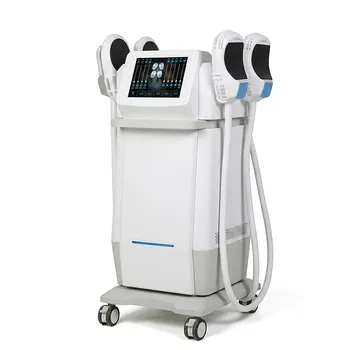
The clinical rationale is simple: combining RF or HIFU with complementary modalities allows clinicians to distribute treatment across different tissue targets and depths instead of forcing one technology to deliver excessive energy. RF and HIFU can provide controlled deep tissue heating, collagen contraction, and remodeling, while fillers, cryolipolysis, light-based treatments, or other modalities address volume loss, localized fat, superficial pigmentation, vascular lesions, or surface texture.
Multimodal treatment can improve the balance between efficacy and safety. Rather than increasing the energy of a single device until it produces a visible effect, clinicians can use lower or more controlled energy levels across complementary technologies, with each modality performing the task it is best suited to address.
Why High-Energy Monotherapy Creates Clinical Risk
Tissue heating is not infinitely selective
RF and HIFU depend on delivering thermal energy to tissue. When fluence or energy density is increased excessively, heat may spread beyond the intended target or remain elevated for too long.
Potential consequences include prolonged erythema, pain, burns, fat necrosis, scarring, and post-inflammatory hyperpigmentation or hypopigmentation.
More energy does not guarantee better remodeling
The desired response depends on controlled tissue heating, not simply on maximum energy delivery. Excessive heating can damage collagen structures, adipose tissue, or the skin rather than producing a more predictable tightening response.
Low-energy or staged protocols can stimulate gradual collagen remodeling while preserving surrounding tissue. This is particularly important when treatment is repeated or applied to areas with thin skin or limited soft-tissue coverage.
Monotherapy may not address the whole problem
Skin laxity, facial aging, and body contour concerns are usually caused by several factors. These may include dermal laxity, subdermal structural changes, volume loss, localized adipose deposits, vascular or pigmentary changes, and surface texture abnormalities.
A single RF or HIFU treatment may improve tissue contraction but cannot necessarily restore lost volume or remove localized fat. Increasing energy to compensate for those limitations exposes the patient to greater risk without addressing the underlying problem.
How Complementary Modalities Improve the Treatment Logic
RF and HIFU target deeper structural laxity
RF produces volumetric thermal heating in the dermis and, depending on the system and applicator, deeper tissue layers. HIFU delivers focused ultrasound energy to selected depths, creating controlled thermal zones that can support tissue contraction and remodeling.
Both approaches are primarily useful for tightening and structural stimulation. Their role is different from that of a filler, a pigment-targeting light source, or a fat-reduction technology.
Biostimulatory fillers address volume loss
A patient may appear lax partly because of reduced structural volume. In that situation, tightening alone may produce an incomplete or less natural result.
Biostimulatory volume fillers can address volume deficiency while RF or HIFU supports dermal or subdermal tightening. The combined approach treats both the supporting framework and the overlying tissue laxity, rather than asking one energy device to solve both problems.
Body-contouring modalities address localized fat
Energy-based tightening does not automatically remove clinically significant localized adipose tissue. Cryolipolysis and other body-contouring modalities may be used when focal fat is a major contributor to the patient’s contour concern.
This division of labor allows the energy-based tightening treatment to focus on skin and soft-tissue contraction. It also reduces the temptation to increase RF or HIFU energy in an attempt to achieve an effect the technology was not designed to provide.
Light-based treatments address superficial targets
Laser and intense pulsed light treatments selectively target superficial chromophores, such as pigment, blood vessels, or hair structures. RF can add deeper dermal heating that is largely independent of epidermal melanin absorption.
This combination can address surface irregularities and deeper laxity within one treatment strategy. It may also permit a reduction in the optical fluence required for the superficial component, potentially lowering risks such as blistering, discomfort, and post-inflammatory pigmentary change.
Why Lower Energy Can Still Produce Strong Results
Thermal synergy can improve energy efficiency
In combined RF and light-based systems, optical energy can preheat selected tissue structures. Warmer tissue has lower electrical impedance, so RF current may preferentially flow through those regions.
This interaction can create a useful thermal effect with lower fluences from one or both energy sources. The goal is not to maximize each energy independently, but to use their interaction to achieve the intended tissue response more efficiently.
Different modalities reach different depths
Optical energy is generally strongest at superficial chromophore targets, while RF can deliver volumetric heating deeper in the dermis. Ultrasound technologies can create focused treatment zones at selected depths.
Using these modalities together can provide a multilayer treatment effect: superficial correction, dermal remodeling, and subdermal tightening. This is more comprehensive than repeatedly increasing the output of a device that primarily affects one tissue compartment.
Gradual remodeling supports durability
Thermal contraction may provide an early tightening effect, while controlled injury and healing stimulate longer-term collagen remodeling. Complementary treatments can improve the visible result without requiring more aggressive heating during the initial session.
The resulting strategy is often better suited to staged, non-surgical rejuvenation. It can improve the appearance of aging while helping patients delay or avoid more invasive procedures when their clinical goals remain within the scope of non-surgical treatment.
How the Approach Improves Patient Safety
Lower peak energy can reduce thermal injury
The most direct safety benefit is the ability to avoid unnecessarily high fluences or energy densities. Controlled, lower-energy RF protocols are intended to heat tissue gradually and preserve surrounding structures.
This can reduce the likelihood of fat necrosis, unwanted pigmentary changes, severe inflammation, and scar formation, although no energy-based treatment is risk-free.
RF offers useful treatment redundancies
Compared with some laser-assisted or ultrasound-assisted approaches, RF systems may include safety features such as temperature monitoring, impedance feedback, controlled energy delivery, and contact or motion safeguards, depending on the device.
These features can help clinicians maintain treatment within a therapeutic range. Their value depends on the specific device, correct calibration, appropriate settings, and operator training.
Reduced optical exposure can benefit diverse skin types
Because RF absorption is not dependent on epidermal melanin in the same way as many optical treatments, adding RF may allow lower optical fluences in electro-optical protocols. This can be particularly useful when treating patients with higher melanin content, for whom excessive superficial optical heating may increase pigmentary risk.
The combination does not eliminate skin-type-related risk. It changes the energy balance and may provide a wider safety margin when appropriate parameters and cooling strategies are used.
Understanding the Trade-offs
Combination treatment is not automatically safer
Using more than one modality introduces additional variables. Each technology has its own contraindications, tissue effects, timing requirements, and potential adverse events.
A poorly designed combination protocol can increase cumulative thermal exposure rather than reduce it. Safety comes from appropriate modality selection, conservative parameters, treatment spacing, monitoring, and clinical expertise, not from the number of devices used.
Evidence varies by device and protocol
Results from one RF, HIFU, IPL, or filler system cannot automatically be generalized to every product in the same category. Electrode configuration, frequency, focal depth, pulse duration, cooling, treatment area, and energy settings materially affect both efficacy and risk.
Claims of “synergy” should therefore be evaluated against the specific device combination and clinical protocol. Comparative evidence may be limited, and multimodal treatment should not be presented as universally superior to well-selected monotherapy.
Patient selection remains decisive
Patients with substantial skin excess, significant volume loss, marked localized fat, active skin disease, impaired healing, or unrealistic expectations may not be appropriate candidates for a non-surgical combination approach.
A clinical assessment should determine whether the dominant problem is laxity, volume deficiency, fat excess, superficial dyschromia, textural change, or a combination of these. Treatment should then be matched to that diagnosis.
How to Apply This to the Patient’s Goal
A multimodal plan is most defensible when each component has a clearly defined clinical purpose.
- If your primary focus is skin tightening: Use RF or HIFU to target dermal or subdermal laxity with controlled parameters, rather than escalating energy beyond the device’s therapeutic range.
- If your primary focus is facial volume loss: Pair a tightening modality with an appropriately selected biostimulatory or volume-restoring treatment so structural deficiency is addressed directly.
- If your primary focus is localized body fat: Use a fat-reduction modality such as cryolipolysis when clinically appropriate, with RF or another technology reserved for residual laxity and contour refinement.
- If your primary focus is pigment, vascular change, or surface texture: Combine a superficial light-based treatment with RF when indicated, using the lowest effective optical fluence and careful monitoring for pigmentary or thermal reactions.
- If your primary focus is safety across repeated treatments: Favor staged protocols, conservative energy settings, documented endpoints, and sufficient recovery time instead of pursuing a single aggressive session.
The most reliable results come from matching each modality to the tissue problem it can treat effectively while keeping total thermal exposure controlled.
Summary Table:
| Aspect | High-Energy Monotherapy | Combined Modalities |
|---|---|---|
| Tissue Targets | Single target depth | Multiple depths (superficial to deep) |
| Energy Levels | High fluence/energy density | Lower, controlled energy per modality |
| Risks | Higher risk of burns, scarring, pigmentation changes | Lower risk due to reduced peak energy |
| Efficacy | May miss volume loss or fat | Comprehensive: tightening + volume + fat reduction |
| Patient Suitability | Limited by skin type and tolerance | Suitable for broader range |
Discover how BELIS's advanced RF and HIFU systems can enhance your clinic's treatment outcomes with safer, multimodal protocols. Our professional-grade equipment is designed exclusively for clinics and premium salons, covering every category in aesthetic technology. Contact us today to learn more about our solutions and how we can support your practice. Contact us now to schedule a consultation!
Related Products
- 22D HIFU Machine Device Facial Machine
- 9D 7D HIFU Vaginal RF Lifting Treatment
- 4D 12D HIFU Machine Device for Skin Tightening
- 7D 12D 4D HIFU Machine Device
- 12D HIFU Machine Device for Facial HIFU Treatment
People Also Ask
- Is swelling a frequent side effect after a HIFU facial? Expert Insights on HIFU Recovery and Safety
- What is the mechanism of action of High-Intensity Focused Ultrasound (HIFU) devices in noninvasive body sculpting, and how is surrounding tissue protected?
- How do High-Intensity Focused Ultrasound (HIFU) devices function? Master Non-Invasive Face Lifting Technology
- Are home-use HIFU devices a recommended alternative? Why Clinical Safety Beats At-Home Risks
- What are the main functions of a High Intensity Focused Ultrasound (HIFU) machine? Advanced Skin Lifting and Sculpting