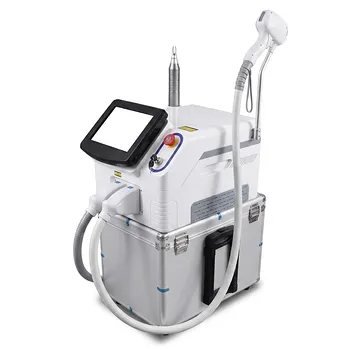
In darker or recently tanned skin, start with a longer pulse width and lower fluence. Epidermal melanin absorbs more of the delivered light and competes with the intended chromophore, increasing the risk of burns, blistering, and post-inflammatory pigment alteration. A longer pulse spreads energy over more time, while reduced fluence limits peak thermal stress; both adjustments should be validated with conservative test spots and device-specific protocols.
Core takeaway: For darker or tanned phototypes, generally increase pulse duration and decrease fluence relative to settings used for lighter, untanned skin. These changes reduce epidermal heating, but they must be coordinated with wavelength, cooling, treatment endpoint, and the target’s thermal characteristics.
Why Darker or Tanned Skin Requires Conservative Parameters
Epidermal melanin is a competing absorber
Darker or tanned skin contains more epidermal melanin. This melanin can absorb part of the laser energy before it reaches the intended target, such as a hair follicle, vascular lesion, or dermal pigment.
The result is a narrower safety margin between effective treatment and epidermal injury.
The main risks are thermal and pigmentary
Excessive epidermal heating can produce burns, crusting, blistering, or delayed healing. Even when the initial injury appears limited, inflammation may trigger post-inflammatory hyperpigmentation or hypopigmentation.
Recent tanning further increases epidermal melanin activity, so a patient’s baseline skin color alone is not sufficient to determine treatment risk.
How to Adjust Pulse Width and Fluence
Increase the pulse width
Use a longer pulse duration than would typically be selected for comparable treatment in lighter skin, provided the device and treatment target allow it.
Delivering energy over a longer interval slows the rate of heat accumulation in the epidermis. This gives heat more opportunity to dissipate and reduces the likelihood that superficial melanin will reach an injurious temperature.
Decrease the fluence
Select a lower fluence, measured in J/cm², than for lighter or untanned skin. Higher epidermal melanin levels mean that clinically relevant epidermal reactions can occur at lower energy densities.
The appropriate reduction is device-, wavelength-, target-, and indication-dependent. There is no single safe percentage reduction that applies to every laser system.
Do not compensate automatically by stacking pulses
Repeated pulses in the same area can cause cumulative heat buildup even when each individual pulse uses a conservative fluence.
Avoid pulse stacking unless it is specifically supported by the device protocol and the operator has a clear method for controlling cumulative thermal exposure.
Match the Settings to the Treatment Target
Consider longer wavelengths when appropriate
For targets located deeper in the skin, longer wavelengths—such as 1,064 nm Nd:YAG systems—generally offer greater penetration and lower superficial melanin absorption than shorter wavelengths.
This does not make a wavelength universally safe. The selected wavelength must match the lesion, chromophore, indication, and device design.
Respect the target’s thermal relaxation behavior
Pulse duration should be selected in relation to the thermal relaxation characteristics of both the target and surrounding tissue.
A longer pulse can protect the epidermis, but if it is poorly matched to the target, it may reduce treatment selectivity or allow unwanted heat diffusion. Therefore, pulse width should not be changed in isolation from fluence, wavelength, spot size, and cooling.
Use appropriate spot size and treatment geometry
Where clinically appropriate, a larger spot size and deeper-penetrating wavelength can reduce excessive superficial energy concentration.
These choices remain device-specific. Operators should follow validated manufacturer protocols rather than assuming that a larger spot or longer wavelength is always preferable.
Use Cooling and Clinical Feedback
Maintain active epidermal cooling
Cooling before, during, and after treatment helps limit epidermal temperature rise. It is especially important when treating skin with high epidermal melanin content.
Cooling should complement—not replace—conservative fluence and pulse-width selection.
Use test spots and observe the endpoint
Perform test spots when the patient’s response, tan status, or treatment risk is uncertain. Allow sufficient time to assess the immediate response and, where relevant, delayed pigmentary effects before treating a larger area.
The endpoint should be appropriate for the specific indication. A stronger visible reaction is not automatically a more effective or safer treatment.
Stop when the tissue response becomes unsafe
Excessive pain, gray or white epidermal change, blistering, marked swelling, or other signs of thermal injury require immediate reassessment.
Do not continue increasing fluence simply because the initial endpoint is subtle. Darker skin may require multiple conservative sessions rather than a single aggressive treatment.
Understanding the Trade-offs
Lower fluence may require more sessions
Reducing fluence can decrease the energy delivered to the intended target during each session. The practical consequence may be slower clearance or the need for additional treatments.
This is an acceptable trade-off when it substantially lowers the risk of burns and long-lasting pigmentary complications.
Longer pulses are not universally better
A longer pulse is generally useful for reducing rapid epidermal heating, but it can be inappropriate for some targets or device modes.
For highly selective treatments, pulse duration must remain compatible with the target chromophore and the system’s intended mechanism. “Longer” should therefore mean appropriately longer, not simply the maximum available setting.
Active tanning may justify postponement
If the skin is recently tanned or has had substantial sun exposure, even conservative settings may carry increased risk.
Deferring treatment until the tan has subsided, reinforcing sun avoidance, and using broad-spectrum sunscreen are often safer than attempting to compensate with parameter changes alone.
Pigment changes can occur despite careful technique
Lower fluence, longer pulse width, cooling, and appropriate wavelength selection reduce risk but do not eliminate it.
Patients should understand that transient darkening, lightening, or peeling may occur depending on the indication, and that pigmentary changes can be prolonged in darker phototypes.
How to Apply This to Your Treatment Planning
Begin with the device manufacturer’s protocol and adjust conservatively for the patient’s phototype, tan status, indication, and treatment area.
- If your primary focus is epidermal safety: Increase pulse width appropriately, reduce fluence, use effective cooling, and avoid pulse stacking.
- If your primary focus is treating a deeper target: Consider a clinically appropriate longer wavelength and pulse duration while preserving conservative fluence and careful endpoint monitoring.
- If your primary focus is treating recently tanned skin: Defer treatment when feasible rather than relying only on lower fluence to offset elevated epidermal melanin.
- If your primary focus is treatment efficacy: Use test spots and plan multiple controlled sessions instead of compensating for lower fluence with aggressive repeat passes.
Safe treatment in darker or tanned skin depends on controlling the rate and amount of epidermal heating while preserving enough energy and selectivity to treat the intended target.
Summary Table:
| Parameter | Adjustment for Darker/Tanned Skin | Purpose |
|---|---|---|
| Pulse Width | Increase | Slows heat accumulation in epidermis, reducing burn risk |
| Fluence | Decrease | Limits peak thermal stress, prevents overheating of melanin |
| Wavelength | Prefer longer (e.g., 1064 nm) | Deeper penetration, less superficial melanin absorption |
| Spot Size | Consider larger | Reduces superficial energy concentration |
| Cooling | Use active cooling | Protects epidermis from excessive temperature rise |
| Pulse Stacking | Avoid | Prevents cumulative heat buildup |
| Test Spots | Always perform | Assess individual response before full treatment |
Ensure safe and effective laser treatments for all skin types. At BELIS, we specialize in professional-grade medical aesthetic devices designed with advanced safety features and customizable parameters. Our portfolio includes diode lasers, Nd:YAG, and more, ideal for clinics and premium salons. Contact us today to learn how our technology can enhance your practice and patient satisfaction.
Related Products
- Tri Laser Diode Hair Removal Machine Professional Beauty Equipment
- Cryolipolysis Fat Freezing Machine and Ultrasonic Cavitation Device
- Trilaser Diode Hair Removal Machine for Beauty Clinic Use
- Pico Laser Tattoo Removal Machine Picosure Picosecond Laser Machine
- EMSlim RG Laser Body Sculpting and Slimming Machine
People Also Ask
- How can aesthetic practitioners prevent side effects like paradoxical hair regrowth and thermal burns when performing diode laser hair removal on dark skin? Master safe protocols for Fitzpatrick IV–VI skin.
- How do broad-spectrum noncoherent light sources compare to single-wavelength diode lasers in aesthetic hair removal applications? Find the best fit for your clinic.
- How do demographic trends in non-surgical procedures like laser hair removal compare to surgical aesthetics, and how should clinics leverage professional diode laser hair removal equipment to meet this demand?
- Why is monitoring the revenue rate per hour per physician essential when deciding to invest in high-throughput aesthetic technology like diode hair removal lasers or multi-applicator body sculpting machines? Optimize your practice's profitability
- What are the primary differences in mechanism and pigment dependency between standard laser hair removal devices (Alexandrite, Diode, Nd:YAG) and photosensitizer-assisted light therapies? Discover expert insights and tailored solutions