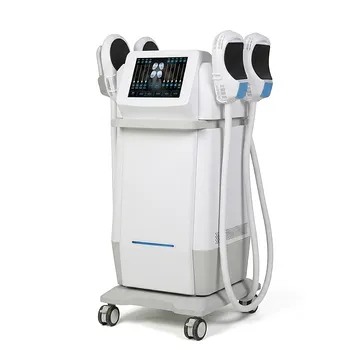
In HIFU equipment, lower transducer frequencies generally penetrate deeper and create larger treatment volumes, while higher frequencies concentrate energy more superficially and produce smaller, more precise coagulation zones. In facial skin tightening, higher-frequency probes are commonly paired with focal depths around 1.5–4.5 mm. Body-sculpting systems typically use lower frequencies, often roughly 0.5–2.5 MHz, to reach subcutaneous fat at approximately 10–20 mm, depending on the device and applicator design.
Frequency sets the broad relationship between penetration and lesion size, but it does not determine either one alone. Focal depth, beam geometry, acoustic power, pulse duration, transducer aperture, and tissue properties all influence the final thermal or cavitation lesion.
Why Frequency Changes Penetration Depth
Higher frequencies attenuate more rapidly
As ultrasound frequency increases, soft tissue absorbs and scatters more acoustic energy. This attenuation reduces the amount of energy available at deeper layers, so high-frequency waves are generally better suited to superficial targets.
That is why frequencies in the approximate 4–7 MHz range are used for tightly controlled facial tightening treatments. They can deliver energy to shallow focal planes without requiring the beam to travel deeply through tissue.
Lower frequencies reach deeper tissue
Lower-frequency waves have longer wavelengths and typically experience less attenuation over a given path through tissue. More acoustic energy can therefore reach deeper targets, making lower frequencies more suitable for subcutaneous fat and deeper body-contouring applications.
In practical terms, a lower-frequency transducer can be designed to focus energy at depths beyond the dermis, whereas a higher-frequency transducer is more naturally suited to dermal or near-subdermal treatment planes.
Frequency is not the same as focal depth
A common mistake is to assume that frequency alone specifies the treatment depth. It does not.
The manufacturer establishes focal depth through the combined design of the transducer, acoustic lens, aperture, beam geometry, and applicator. Two probes with similar frequencies may produce different focal depths or lesion dimensions.
How Frequency Influences Lesion Volume
Lower frequencies tend to create larger treatment volumes
Lower-frequency HIFU systems are generally used with acoustic configurations capable of affecting a broader volume of tissue. In body sculpting, this can support treatment of larger subcutaneous fat deposits through wider thermal coagulation or cavitation effects.
The resulting lesion volume may be desirable when the goal is body contouring rather than highly localized collagen remodeling. However, larger volume does not automatically mean better treatment; it must remain compatible with tissue depth and safety margins.
Higher frequencies create smaller, more precise lesions
Higher-frequency probes tend to produce tightly focused thermal coagulation points. These smaller lesions are useful when the target is a specific tissue layer, such as the deep dermis, reticular dermis, or superficial musculoaponeurotic system.
Facial lifting platforms often use focal depths such as 1.5 mm, 3.0 mm, and 4.5 mm. The objective is to create controlled thermal points at the selected layer while limiting unnecessary heating of the epidermis and surrounding structures.
Lesion size also depends on beam and pulse parameters
Frequency affects wavelength, attenuation, and the achievable focal geometry, but lesion volume is also strongly influenced by:
- Acoustic intensity and total delivered energy
- Pulse duration and duty cycle
- Focal spot dimensions
- Transducer aperture and focusing design
- Spacing between treatment lines or shots
- Tissue composition and local perfusion
Therefore, a lower frequency does not guarantee a large lesion, and a higher frequency does not guarantee a small one. Those are typical design tendencies, not absolute rules.
How This Applies to Skin Tightening
Superficial facial tightening favors higher frequencies
When the target is superficial laxity, higher-frequency probes allow energy to be concentrated at relatively shallow focal depths. This supports controlled heating of selected dermal or subdermal layers for collagen denaturation and subsequent remodeling.
The main advantage is layer selectivity. Energy can be focused near the intended treatment plane rather than distributed broadly through deeper tissue.
Different facial areas may require different probes
Skin thickness varies across the face and neck. A thinner region may be treated with a more superficial focal plane, while a thicker cheek or lower-face region may require a deeper one.
This is why professional HIFU platforms commonly provide multiple cartridges or transducers. The correct choice depends on anatomy, skin thickness, target layer, and the system’s validated treatment protocol, not simply on choosing the highest available frequency.
Higher frequency does not mean stronger tightening
A higher frequency primarily improves superficial targeting and limits penetration. It does not inherently produce a stronger clinical result.
Treatment effectiveness depends on placing adequate energy at the correct tissue layer while maintaining safe spacing and avoiding excessive thermal accumulation.
How This Applies to Body Sculpting
Lower frequencies are used for deeper fat targets
Body-contouring applications generally require energy to reach subcutaneous adipose tissue rather than remain in the dermis. Lower-frequency systems are therefore commonly selected, often with larger treatment surfaces and acoustic configurations designed for deeper penetration.
Typical target depths may be around 10–20 mm, but the actual depth depends on the applicator, body region, adipose thickness, and device settings.
Larger treatment volumes improve coverage
For body sculpting, the clinical objective is usually to treat a broader fat compartment rather than create isolated superficial coagulation points. Lower-frequency designs can support a broader acoustic effect, reducing the number of separate focal placements needed to cover a region.
This is a device-design characteristic, not a universal property of every low-frequency transducer.
Frequency must match the tissue thickness
Using a frequency or focal configuration that is too superficial may fail to reach the intended fat layer. Using one that is too deep or too energetic can increase exposure of non-target tissues.
The correct system therefore combines frequency selection with focal-depth cartridges, anatomical mapping, energy controls, and treatment spacing.
Frequency, Resolution, and Treatment Precision
Higher frequency improves spatial precision
Higher frequencies have shorter wavelengths, which can support tighter beam dimensions and finer spatial resolution. This is especially relevant to ultrasound imaging, where high-frequency probes can distinguish superficial skin layers in considerable detail.
In therapeutic HIFU, the practical benefit is more accurately described as tighter focal control, although the final focal spot still depends on transducer geometry and focusing.
Diagnostic imaging and therapeutic HIFU are different
High-frequency diagnostic ultrasound may operate at frequencies substantially higher than those used for therapeutic HIFU. Imaging systems prioritize visualization and resolution, while HIFU systems prioritize controlled energy deposition.
Data about 20–75 MHz diagnostic imaging should not be directly applied to HIFU treatment frequency selection. A high-frequency imaging probe is not automatically suitable for producing therapeutic coagulation.
Understanding the Trade-offs
Deeper penetration increases targeting demands
Lower-frequency energy can reach deeper tissue, but that also means the operator must carefully control focal depth and exposure. The treatment must avoid unintended heating of deeper neurovascular or muscular structures.
Depth alone is not a treatment advantage unless the focus is correctly positioned.
Larger lesions can reduce precision
A broader lesion volume may improve coverage in body contouring, but it can reduce the margin for error near anatomical boundaries. Larger thermal or cavitation effects require careful control of energy, spacing, and treatment location.
Higher frequencies have limited penetration
High-frequency probes are precise for superficial targets, but their energy attenuates more quickly. They are therefore poorly suited to treating thick or deeply located fat deposits when the focal energy cannot reach the target effectively.
Frequency cannot compensate for an unsuitable applicator
A system may list an appropriate frequency but still be unsuitable for a particular application if its focal depth, aperture, output power, or treatment footprint is mismatched.
Procurement and clinical evaluation should examine the complete transducer specification rather than frequency alone.
Excessive energy is not a substitute for correct frequency
Increasing power may not solve a penetration problem. It can instead increase superficial heating or collateral exposure without delivering a safe, effective dose to the intended depth.
The correct approach is to select the appropriate frequency and focal configuration first, then use the manufacturer’s validated energy and spacing parameters.
Making the Right Choice for Your Goal
Frequency should be selected together with focal depth, lesion geometry, output controls, and the anatomy being treated.
- If your primary focus is superficial facial tightening: Choose a higher-frequency transducer with validated focal depths in the approximate 1.5–4.5 mm range, matched to the local skin layer and thickness.
- If your primary focus is deeper body sculpting: Choose a lower-frequency system designed to reach subcutaneous fat, commonly in the approximate 0.5–2.5 MHz range, with an applicator and focal depth appropriate for the treatment area.
- If your primary focus is precise layer targeting: Prioritize systems offering multiple focal-depth cartridges, clear beam specifications, and controlled treatment spacing rather than relying on frequency alone.
- If your primary focus is broad treatment coverage: Evaluate lesion dimensions, treatment footprint, pulse parameters, and energy distribution in addition to the nominal transducer frequency.
The best HIFU configuration is the one that delivers the required energy to the intended tissue layer while keeping lesion size and collateral exposure under control.
Summary Table:
| Frequency Range | Typical Depth | Lesion Volume | Primary Application |
|---|---|---|---|
| 4–7 MHz | 1.5–4.5 mm (face) | Small, precise | Facial skin tightening |
| 0.5–2.5 MHz | 10–20 mm (body) | Larger, broader | Body sculpting and fat reduction |
Elevate Your Aesthetic Practice with BELIS HIFU Solutions
At BELIS, we offer a comprehensive range of professional HIFU systems engineered for precision and efficacy. Whether you're targeting facial tightening with high-frequency probes or body sculpting with lower-frequency transducers, our devices deliver consistent, safe results. Partner with us to access cutting-edge technology, OEM/ODM support, and full certification compliance. Contact our experts today to find the perfect HIFU solution for your clinic or premium salon — contact us now!
Related Products
- 4D 12D HIFU Machine Device for Skin Tightening
- 7D 12D 4D HIFU Machine Device
- 4D 12D HIFU Machine Device for Skin Tightening and Lifting
- 12D HIFU Machine Device for Facial HIFU Treatment
- 22D HIFU Machine Device Facial Machine
People Also Ask
- How do non-invasive skin tightening devices such as HIFU and microneedle RF compare to surgical rhytidectomy for facial lifting? Discover the key differences in results, longevity, and recovery.
- How does intense ultrasound (HIFU) skin tightening act on facial soft tissues? Discover its key clinical contraindications.
- What is the Difference Between Superficial and Deep Facial Fat? Deep Dive Guide
- What is the mechanism of action of High-Intensity Focused Ultrasound (HIFU) devices in noninvasive body sculpting, and how is surrounding tissue protected?
- How do non-invasive lifting devices like high-intensity focused ultrasound (HIFU) complement soft tissue fillers in treating lower face aging and pre-jowl sulcus depression? Discover the synergistic approach.