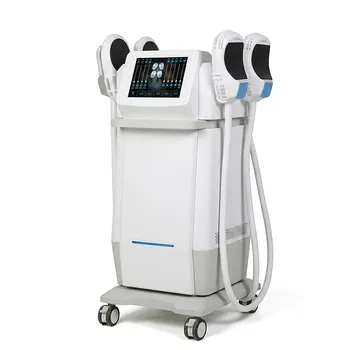
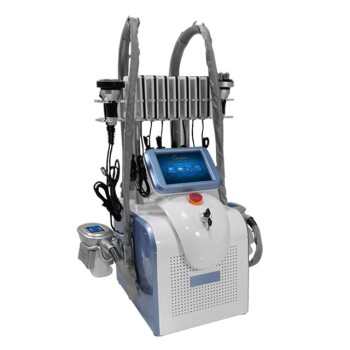
First impressions are formed quickly, and facial skin and structure contribute to the visual information people use to assess appearance, vitality, and age. A clinic’s investment in advanced skin diagnostic systems and non-invasive facial tightening equipment is therefore justified when it helps practitioners measure relevant skin conditions, select appropriate treatments, and improve visible features such as firmness and facial contour. The business case is strongest when technology supports clinically appropriate personalization rather than promising to control how every observer will respond.
The biological value of these technologies is indirect but important: diagnostic systems help identify the conditions affecting visible skin quality, while treatments such as HIFU and microneedle RF can improve selected aspects of laxity, texture, and firmness. Together, they help a clinic translate the science of visual perception into a more objective and tailored patient-care process.
Why First Impressions Matter in Aesthetic Care
The brain processes facial information rapidly
Human vision evaluates faces through multiple signals, including symmetry, contour, skin texture, and apparent tissue firmness. These judgments can occur quickly, often before a person has consciously analyzed the individual features involved.
This does not mean that first impressions are perfectly accurate or biologically predetermined. It means that visible facial characteristics influence the initial information people receive and interpret during social interaction.
Skin and contour communicate visible cues
Evenness of pigmentation, surface texture, facial definition, and the apparent tightness of soft tissue can affect how a face is perceived. These cues may contribute to impressions associated with vitality, health, age, and confidence, although the interpretation depends on context and individual observers.
For a patient, the concern is usually practical rather than theoretical: they want to look more refreshed, balanced, or aligned with how they feel. The clinic’s role is to address appropriate visible features while maintaining realistic expectations.
The goal is enhancement, not manipulation
First-impression science does not justify treating appearance as a measure of personal value. It explains why patients may seek subtle changes that improve their confidence in professional, social, or personal settings.
The most defensible clinical objective is natural-looking improvement. A treatment should support the patient’s goals without implying that a particular face or age-related feature is inherently unacceptable.
How Diagnostic Systems Turn Perception Into Clinical Information
Visual impressions need measurable context
A basic visual assessment can identify obvious concerns, but it may not fully reveal pigmentation patterns, hydration issues, texture irregularities, or other underlying conditions. Advanced skin diagnostic systems can add structured information to the consultation.
Depending on the system, this may include standardized imaging or measurements related to surface condition and pigmentation. These outputs should be treated as clinical decision support, not as an infallible diagnosis.
Objective analysis improves personalization
A professional skin tester can help practitioners distinguish between concerns that may look similar to the patient but require different approaches. This supports treatment planning based on observed skin characteristics rather than a generic protocol.
More precise assessment can also help a clinic document a baseline, explain the proposed plan, and compare changes over time. That makes the treatment journey easier for both the practitioner and the patient to understand.
Better consultations can improve trust
Patients are more likely to trust a treatment plan when the practitioner explains what is being observed, what can realistically be changed, and why a particular modality is being recommended. Diagnostic imaging gives the consultation a clearer evidentiary foundation.
The technology is valuable not because it replaces practitioner judgment, but because it can make that judgment more transparent, consistent, and personalized.
How Non-Invasive Tightening Equipment Addresses Visible Signals
HIFU targets laxity and contour concerns
High-Intensity Focused Ultrasound, or HIFU, is used in aesthetic practice to deliver focused ultrasound energy at selected tissue depths. Treatment aims and results depend on the device, settings, treatment area, and patient characteristics.
In appropriate cases, HIFU may support improvement in the appearance of lax tissue and facial definition. It should not be presented as equivalent to surgery or as a guaranteed method of producing a specific facial contour.
Microneedle RF addresses firmness and texture
Microneedle radiofrequency systems combine controlled microneedling with radiofrequency energy. They are commonly used to address concerns involving skin texture, firmness, and remodeling, subject to the device’s intended use and the practitioner’s assessment.
Because treatment involves needles and energy delivery, correct patient selection, sterile technique, settings, and aftercare are essential. The expected result is generally progressive improvement rather than an instant transformation.
Treatment should connect to the diagnosed concern
The biological rationale is strongest when the clinic first identifies a relevant concern and then selects the modality that plausibly addresses it. A patient concerned primarily about pigmentation may not benefit from being directed automatically toward a tightening procedure.
This diagnostic-to-treatment connection helps optimize the facial signals that matter to the patient while avoiding unnecessary or poorly matched interventions.
Why the Combined System Creates More Value
Assessment and treatment form a clinical feedback loop
A diagnostic system identifies and documents the starting condition. Treatment equipment then provides a targeted intervention, after which follow-up assessment can help evaluate whether the intended change is occurring.
This creates a repeatable process: assess, plan, treat, review, and refine. The value lies in the workflow, not in any single machine operating in isolation.
Documentation supports realistic communication
Before-and-after imaging can help patients understand gradual changes that may be difficult to notice day to day. Standardized documentation also helps practitioners discuss progress without relying solely on memory or subjective impressions.
Images must be captured under consistent conditions. Differences in lighting, camera angle, facial expression, or makeup can create misleading comparisons.
Technology can strengthen the clinic’s differentiation
A clinic that combines structured skin analysis with appropriately selected non-invasive treatments can present a more professional and individualized service. This may support patient confidence, treatment adherence, and repeat consultations.
However, technology is not a substitute for qualified practitioners, sound protocols, or patient-centered communication. Its commercial value depends on whether it improves the actual care experience and outcomes.
Understanding the Trade-Offs
First impressions are influential but not deterministic
The science supports the importance of facial visual cues, but it does not prove that improving one feature will reliably produce a specific social or professional outcome. Confidence, behavior, culture, context, and interpersonal communication also shape how people are perceived.
Clinics should avoid claims that equate tighter skin with guaranteed success, attractiveness, or social advantage. Evidence-based language protects both the patient and the credibility of the practice.
Diagnostic readings have technical limits
Skin analysis devices may be affected by lighting, calibration, skin preparation, operator technique, and the capabilities of the specific system. A measurement can be useful without being equivalent to a medical diagnosis.
Practitioners should interpret results alongside medical history, physical examination, contraindications, and the patient’s stated goals.
Non-invasive does not mean risk-free
HIFU and microneedle RF are less invasive than surgery, but they still involve energy delivery and, in the case of microneedle RF, needle penetration. Possible adverse effects and contraindications vary by modality, device, treatment settings, and patient.
Proper training, informed consent, device-specific protocols, infection control, and appropriate follow-up are necessary parts of the investment.
Equipment does not guarantee return on investment
The purchase price is only one component of the business case. A clinic must also account for training, maintenance, consumables, compliance, treatment time, insurance, marketing, and the number of suitable patients in its market.
The investment is easier to justify when the system fills a clear clinical demand, integrates into existing workflows, and produces outcomes that patients value and can understand.
Making the Right Choice for Your Goal
The investment should be evaluated as a complete patient pathway rather than as a purchase of isolated devices.
- If your primary focus is personalized care: Use diagnostic analysis to establish a documented baseline and match treatment selection to the patient’s actual skin and contour concerns.
- If your primary focus is natural-looking facial refinement: Use HIFU or microneedle RF only when the assessed concern and patient expectations align with the modality’s capabilities.
- If your primary focus is patient trust: Standardize imaging, explain findings clearly, and use progress documentation to support transparent conversations.
- If your primary focus is clinic profitability: Model utilization, consumables, training, maintenance, and achievable patient demand before purchasing equipment.
- If your primary focus is clinical quality: Prioritize qualified operators, device-specific protocols, contraindication screening, informed consent, and structured follow-up.
A well-designed technology investment helps a clinic convert rapid visual concerns into measured assessment, appropriate treatment, and realistic improvement.
Summary Table:
| Key Point | Explanation |
|---|---|
| First Impressions | Facial skin and contour influence perception; enhancing them can boost confidence and professional image. |
| Diagnostic Systems | Objective skin analysis enables personalized treatment plans and better consultation transparency. |
| Non-Invasive Tightening | HIFU and microneedle RF improve firmness and contour, addressing visible signs of laxity. |
| Combined Value | Assessment + treatment creates a repeatable feedback loop, improving outcomes and patient satisfaction. |
| Trade-offs | First impressions are not deterministic; diagnostics have limits; non-invasive still requires training and proper aftercare. |
| Business Case | ROI depends on integrating technology into a complete patient pathway and realistic demand modeling. |
Ready to elevate your clinic’s capabilities with advanced skin diagnostics and non-invasive tightening equipment? At BELIS, we specialize in professional-grade aesthetic devices exclusively for clinics and premium salons. Our portfolio includes HIFU systems, Microneedle RF, skin testers, and more—covering virtually every category in aesthetic technology. Empower your practice with personalized care and measurable results. Contact us today to discuss your unique needs and see how BELIS can support your success. [#ContactForm]
Related Products
- 22D HIFU Machine Device Facial Machine
- 4D 12D HIFU Machine Device for Skin Tightening
- 12D HIFU Machine Device for Facial HIFU Treatment
- 4D 12D HIFU Machine Device for Skin Tightening and Lifting
- 4D Vaginal HIFU and Face HIFU System
People Also Ask
- Is swelling a frequent side effect after a HIFU facial? Expert Insights on HIFU Recovery and Safety
- What is the mechanism of action of High-Intensity Focused Ultrasound (HIFU) devices in noninvasive body sculpting, and how is surrounding tissue protected?
- How do High-Intensity Focused Ultrasound (HIFU) devices function? Master Non-Invasive Face Lifting Technology
- Are home-use HIFU devices a recommended alternative? Why Clinical Safety Beats At-Home Risks
- What are the main functions of a High Intensity Focused Ultrasound (HIFU) machine? Advanced Skin Lifting and Sculpting