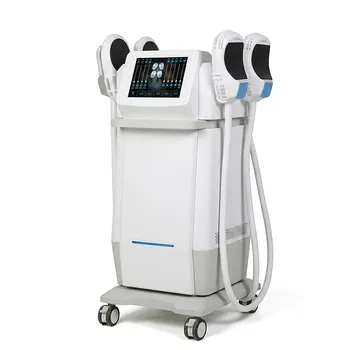
Focused ultrasound tightens tissue by concentrating acoustic energy at selected deep focal depths, such as 4.5 mm, while largely sparing the skin surface. The absorbed energy converts into localized heat, creating microscopic thermal coagulation zones in the deep dermis or, when appropriately targeted, the superficial muscular aponeurotic system (SMAS). Immediate tissue contraction is followed by a wound-healing response that stimulates collagen production and remodeling over time.
The key mechanism is controlled, depth-specific thermal injury—not surface burning. Focused ultrasound creates precisely positioned micro-thermal lesions that contract existing collagen and trigger delayed neocollagenesis, producing gradual tightening and lifting with minimal epidermal disruption.
How Focused Ultrasound Reaches Deep Tissue
Acoustic energy passes through the surface
Ultrasound energy can travel through superficial tissue layers without producing the same concentrated heating that occurs at the focal point.
The device’s transducer directs and converges acoustic waves at a predetermined depth. Energy is therefore concentrated below the surface rather than broadly heating the epidermis.
Focal depth determines the treatment layer
Different cartridges or transducers may target different depths, including the deep dermis and deeper structural tissue. A focal depth of 4.5 mm is commonly associated with targeting deeper connective-tissue layers, but the actual target depends on the device, anatomy, and treatment protocol.
The SMAS may be targeted by some systems because it contributes to facial structural support. However, not every focused-ultrasound device reaches or treats the SMAS, so this should not be assumed universally.
How Heat Produces Tightening
Focused absorption creates micro-thermal lesions
At the focal point, tissue absorbs the acoustic energy and converts it into heat. This produces small, controlled areas of thermal coagulation rather than a continuous region of surface damage.
The treatment effect is designed to remain localized. Tissue outside the focal zones receives substantially less concentrated energy, which helps preserve the surrounding skin.
Existing collagen contracts initially
Thermal exposure causes collagen fibers to contract and change their structure. This can create an early tightening effect, although the visible result may be subtle immediately after treatment.
The immediate contraction is only one part of the mechanism. It provides an initial structural response while the body begins a longer remodeling process.
The body initiates a repair response
The micro-thermal lesions act as controlled stimuli for the body’s wound-healing pathways. Inflammatory mediators and cytokines are recruited to the treated areas without requiring a surgical incision.
This response signals fibroblasts and other repair-related cells to reorganize the local extracellular matrix.
Why Results Develop Gradually
New collagen is produced
Over the following weeks and months, the repair response promotes neocollagenesis, meaning the formation of new collagen. Existing collagen fibers may also undergo remodeling and reorganization.
As the matrix becomes denser and more organized, the treated tissue can become firmer and more structurally supported.
Tissue remodeling supports lifting
Deep tissue tightening can improve the appearance of lax areas such as the brow, jawline, submental region, and neck. The result is better understood as gradual structural tightening and contour improvement, not the same mechanical repositioning achieved by surgery.
Clinical outcomes vary according to tissue laxity, anatomy, device settings, and the depth selected.
Why the Procedure Is Considered Non-Invasive
The epidermis is not the primary target
Because the ultrasound energy is focused below the surface, the epidermis is not intentionally removed or incised. This distinguishes focused ultrasound from procedures that rely on surface ablation or surgical access.
“Non-invasive” does not mean that no tissue response occurs. It means the treatment produces its effect without cutting the skin or deliberately disrupting the surface barrier.
Treatment is spatially selective
The device can place thermal coagulation points at selected depths and locations. This depth control allows practitioners to treat supporting tissue while limiting widespread heating of superficial layers.
Accurate coupling, correct cartridge selection, and appropriate energy settings are essential for maintaining this selectivity.
Understanding the Trade-offs
The result is not equivalent to a facelift
Focused ultrasound can stimulate contraction and remodeling, but it does not remove excess skin or surgically reposition facial tissues. It is therefore more suitable for selected degrees of laxity than for substantial tissue excess.
Expectations should be based on tightening and contour refinement rather than a surgical-level correction in every patient.
Outcomes are gradual and variable
Some contraction may occur early, but collagen remodeling develops over time. The magnitude and duration of improvement depend on age, collagen quality, baseline laxity, anatomy, and treatment parameters.
A single technical depth, such as 4.5 mm, is not appropriate for every region or patient.
Excessive or inaccurate energy can be problematic
The same thermal mechanism that produces tightening can cause unwanted pain, inflammation, or injury if energy is excessive or delivered at an inappropriate depth. Protecting the surface depends on accurate treatment planning—not merely on the label “ultrasound.”
Device-specific training, anatomical assessment, and controlled energy delivery are therefore central to safe use.
How to Apply This to Your Goal
Focused ultrasound is most useful when the objective is controlled tightening rather than removal or surgical repositioning.
- If your primary focus is mechanism: Understand the sequence as focused acoustic delivery, localized heating, collagen contraction, and delayed collagen remodeling.
- If your primary focus is treatment planning: Match the focal depth and energy to the patient’s anatomy and the intended tissue layer rather than assuming every device targets the SMAS.
- If your primary focus is expected results: Anticipate gradual tightening and contour improvement, with outcomes varying by laxity, treatment settings, and biological response.
- If your primary focus is safety: Treat “non-invasive” as a description of access, not a guarantee of zero risk; precision, calibration, and operator expertise remain essential.
Focused ultrasound produces non-invasive tightening by converting precisely focused acoustic energy into controlled deep-tissue thermal stimulation that activates both immediate collagen contraction and longer-term tissue remodeling.
Summary Table:
| Aspect | Key Points |
|---|---|
| Mechanism | Focused acoustic energy creates micro-thermal lesions at depth. |
| Primary Targets | Deep dermis (e.g., 4.5 mm depth); SMAS in select devices. |
| Tissue Response | Immediate collagen contraction, then long-term neocollagenesis. |
| Results | Gradual tightening and lifting over weeks to months. |
| Non-Invasive Nature | No surface ablation or incisions; epidermis largely spared. |
| Limitations | Not a substitute for surgical facelift; outcomes vary. |
| Safety Considerations | Precision and operator expertise are critical to avoid injury. |
Looking to enhance your practice with professional-grade focused ultrasound technology? BELIS offers advanced HIFU systems designed for clinics and premium salons. Our devices deliver precise, customizable treatments that improve patient satisfaction and expand your service offerings. As a leading medical aesthetic equipment supplier, BELIS provides comprehensive training, certified quality, and reliable support. Partner with us to elevate your cosmetic practice and attract more clients. Contact our experts today to learn about pricing and availability: Get in touch with BELIS.
Related Products
- 4D Vaginal HIFU and Face HIFU System
- Professional Face and Vaginal 7D HIFU System for HIFU Clinic Treatments
- 9D 7D HIFU Vaginal RF Lifting Treatment
- 4D 12D HIFU Machine Device for Skin Tightening
- 12D HIFU Machine Device for Facial HIFU Treatment
People Also Ask
- What is the mechanism of action of High-Intensity Focused Ultrasound (HIFU) devices in noninvasive body sculpting, and how is surrounding tissue protected?
- How do non-invasive skin tightening devices such as HIFU and microneedle RF compare to surgical rhytidectomy for facial lifting? Discover the key differences in results, longevity, and recovery.
- How does non-invasive submental tightening with HIFU align with conservative volume preservation to avoid contour deformities?
- What is the mechanism of action of High-Intensity Focused Ultrasound (HIFU) in non-invasive body sculpting, and how does it protect the epidermis?
- How do HIFU and microfocused ultrasound differ in depth and mechanism?