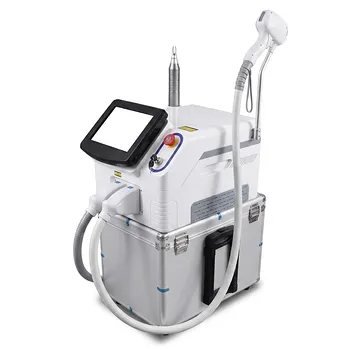
Focused ultrasound achieves non-ablative tightening by concentrating acoustic energy beneath the skin surface. HIFU devices deliver short, microsecond-domain pulses in the megahertz range to create precisely located thermal coagulation zones in the deep dermis and, with appropriate systems, deeper structural layers such as the SMAS. The epidermis and papillary dermis remain largely unaffected because the energy is focused below them, and ultrasound does not depend on melanin absorption, making the mechanism suitable across diverse skin phototypes.
The central principle is depth-selective heating: HIFU creates controlled thermal injury at a chosen subsurface focal point while avoiding meaningful energy deposition in the epidermis. Because acoustic energy is not selectively absorbed by melanin, the treatment does not carry the same phototype-dependent epidermal risk associated with light-based procedures.
How HIFU Targets Tissue Beneath the Surface
Acoustic energy reaches the treatment depth
HIFU uses ultrasound waves to transmit energy through the superficial skin layers. The device concentrates those waves at a defined focal depth, such as the deep dermis or a deeper structural plane.
Before and after the focal point, the energy density is insufficient to create the same localized thermal effect. This allows the treatment to affect a subsurface target while bypassing much of the tissue above it.
The focal point creates controlled thermal zones
At the selected focus, acoustic energy is absorbed and converted into heat. A brief, localized temperature increase produces small areas of thermal coagulation rather than removing or vaporizing the tissue.
These zones are deliberately distributed according to the device’s treatment pattern. The result is a controlled stimulus within deeper tissue, with limited disruption at the surface.
Treatment depth depends on the device and applicator
Some systems are designed to treat deep dermal layers, while others can target deeper connective tissue, including the SMAS. The SMAS is a structural layer involved in facial support and is also addressed during surgical facelift procedures.
However, not every HIFU device treats the SMAS, and treatment depth should not be assumed from the HIFU label alone. The applicator, frequency, focal depth, energy settings, and treatment protocol determine which tissue is actually affected.
Why the Epidermis Remains Intact
The energy is concentrated below the epidermis
The epidermis is protected primarily by the spatial selectivity of the focused beam. The ultrasound energy passes through the surface layers but produces its strongest thermal effect at the predetermined focal point.
This differs from an ablative procedure, which intentionally removes or vaporizes portions of the epidermis. HIFU instead creates subsurface coagulation points while preserving the outer barrier.
It does not rely on melanin as a target
Many light-based technologies interact with chromophores such as melanin. Because melanin concentration varies between skin phototypes, those treatments can require phototype-specific precautions to reduce epidermal heating and pigmentary complications.
HIFU relies on acoustic mechanics and tissue absorption, not selective absorption by melanin. This makes the fundamental energy-delivery mechanism substantially less dependent on skin color.
“Color-blind” does not mean risk-free
The absence of melanin targeting reduces phototype-related epidermal risk, but it does not eliminate all treatment risks. Excessive energy, incorrect depth selection, poor coupling, or inaccurate placement can still injure tissue.
Phototype-independent treatment therefore depends on both the physics of ultrasound and competent clinical execution.
How Deep Heating Produces Tightening
Thermal injury initiates a repair response
The controlled coagulation zones act as a localized wound-healing stimulus. The body responds through inflammatory and reparative pathways that can involve mediators and cytokines associated with thermal tissue repair.
This response helps initiate structural remodeling in the treated tissue without requiring an open wound at the skin surface.
Existing collagen contracts
Heat can cause immediate contraction of collagen fibers within the targeted tissue. This may produce an early tightening or lifting effect, although the visible result varies with tissue laxity, treatment depth, and individual anatomy.
Immediate contraction is only one part of the mechanism. It does not represent the full extent of the longer-term remodeling process.
New collagen develops over time
The repair response stimulates neocollagenesis and collagen reorganization. As the treated tissue remodels, the skin and supporting structures may become firmer and more compact.
Because collagen remodeling is gradual, results typically develop over time rather than appearing entirely at the moment of treatment.
Why the Approach Can Work Across Skin Phototypes
The target is tissue depth, not surface pigment
The treatment is selected according to anatomy and focal depth rather than the amount of melanin in the epidermis. The intended target is the deep dermis or a deeper connective-tissue plane, not the pigmented surface layer.
This is the key reason HIFU can be used across a broad range of skin tones without the same mechanism of melanin-mediated epidermal injury.
The surface barrier remains available for inspection
Because HIFU is non-ablative, it does not intentionally strip away the epidermal barrier. The treated area can therefore avoid the prolonged surface healing process associated with procedures that remove epidermal tissue.
Preserving the surface does not guarantee that every patient will have no redness, tenderness, swelling, or other transient effects. It means the primary treatment effect is designed to occur below the surface.
Patient selection still matters
Skin phototype is only one part of treatment safety. The practitioner must also consider facial anatomy, skin thickness, laxity, prior procedures, pain sensitivity, contraindications, and the intended treatment depth.
A device that is appropriate for one region or patient may be inappropriate for another. “Suitable for all skin types” should be understood as a statement about the energy mechanism, not as a substitute for individualized assessment.
Understanding the Trade-offs
Non-ablative does not mean completely non-traumatic
HIFU intentionally creates controlled thermal lesions beneath the skin. Although there is no planned epidermal removal, the treated tissue has still experienced a therapeutic injury.
Temporary discomfort, tenderness, swelling, redness, or altered sensation can occur. The degree and duration depend on the device, settings, treatment area, and individual response.
More energy is not automatically better
Increasing energy or treating too aggressively can increase discomfort and the risk of unwanted tissue effects without guaranteeing a proportionally better result. Precision is more important than simply maximizing intensity.
Treatment parameters should match the target depth and local anatomy. Areas with thin tissue or important nerves require particular care.
Results are limited by the condition being treated
HIFU can improve laxity through contraction and collagen remodeling, but it does not replicate the repositioning and tissue removal achieved by surgery. It is therefore better suited to selected degrees of laxity than to every stage of facial aging.
Expectations should reflect the patient’s anatomy, the device’s capabilities, and the gradual nature of collagen remodeling.
Device claims require careful interpretation
Marketing language may use terms such as “SMAS lifting,” “deep facelift,” or “permanent tightening” broadly. In practice, actual treatment depth, acoustic output, pulse pattern, and clinical evidence vary among devices.
A technically credible assessment identifies the specific device and applicator, not merely the general category of HIFU.
Making the Right Choice for Your Goal
The most useful way to evaluate HIFU is to separate its physical advantages from the clinical judgment required to apply them.
- If your primary focus is epidermal preservation: Choose a protocol that concentrates energy at the intended subsurface depth and maintains careful control of energy delivery and anatomical placement.
- If your primary focus is suitability across skin phototypes: Recognize that ultrasound is fundamentally less dependent on melanin than light-based energy, while still requiring individualized clinical assessment.
- If your primary focus is collagen remodeling: Expect tightening to result from both immediate collagen contraction and slower neocollagenesis, with outcomes developing progressively.
- If your primary focus is structural lifting: Confirm the device’s actual focal depths and whether it is designed to treat the deep dermis, subcutaneous tissue, or SMAS rather than assuming all HIFU systems reach the same layer.
- If your primary focus is minimizing complications: Prioritize qualified treatment, conservative parameter selection, accurate coupling, and appropriate patient selection over maximum energy delivery.
HIFU achieves non-ablative tightening by placing controlled thermal injury where it is needed while preserving the epidermis and avoiding melanin-dependent energy absorption.
Summary Table:
| Mechanism | Description |
|---|---|
| Focused Acoustic Energy | Delivers energy to a subsurface focal point, creating thermal coagulation zones without harming the epidermis. |
| Depth-Selective Heating | Targets deep dermis or SMAS, bypassing superficial layers, ensuring epidermal preservation. |
| Melanin-Independent | Unlike light-based methods, HIFU does not rely on melanin absorption, making it suitable for all skin phototypes. |
| Tissue Repair Response | Thermal injury stimulates collagen contraction and neocollagenesis, leading to gradual skin tightening. |
| Non-Ablative Nature | No epidermal removal, reducing downtime and surface risks, but still requires clinical expertise to avoid complications. |
Ready to enhance your clinic with cutting-edge HIFU technology? At BELIS, we specialize in professional-grade medical aesthetic devices, including advanced HIFU systems designed for diverse skin types and non-ablative tightening. Our equipment is trusted by clinics and premium salons worldwide, offering precision, safety, and outstanding results. Contact us today to learn how our HIFU solutions can elevate your practice and keep your patients satisfied. Get expert guidance and take the first step toward superior outcomes.
Related Products
- 4D 12D HIFU Machine Device for Skin Tightening and Lifting
- 9D 7D HIFU Vaginal RF Lifting Treatment
- 7D 12D 4D HIFU Machine Device
- 12D HIFU Machine Device for Facial HIFU Treatment
- 4D 12D HIFU Machine Device for Skin Tightening
People Also Ask
- What is the mechanism of HIFU devices for facial lifting? Unlock Non-Surgical SMAS Tightening Secrets
- How do non-invasive skin tightening devices such as HIFU and microneedle RF compare to surgical rhytidectomy for facial lifting? Discover the key differences in results, longevity, and recovery.
- What are the technical principles behind HIFU for facial tightening? Master Deep SMAS Lifting Technology
- What is the primary anatomical mechanism of micro-focused ultrasound (HIFU) skin lifting devices compared to traditional superficial thermal treatments? Deep tissue tightening explained
- Is HIFU skin tightening safe? Ensure Your Safety with a Qualified Professional