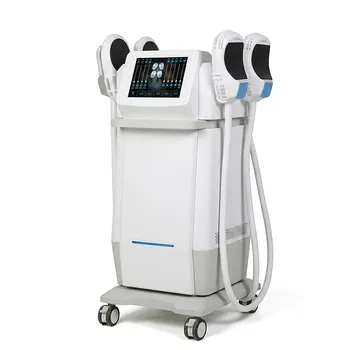
Acoustic ultrasound equipment facilitates transdermal delivery through phonophoresis, also called sonophoresis. A rapidly oscillating transducer emits high-frequency sound waves that create mechanical effects, including microcavitation, and can temporarily disrupt the lipid structure of the stratum corneum, increasing skin permeability and helping active medicinal or cosmetic ingredients move into deeper dermal layers.
The key mechanism is phonophoresis: ultrasound energy temporarily makes the skin more permeable so topical active ingredients can penetrate more effectively than they would through passive application alone.
How Ultrasound Enhances Product Delivery
Mechanical disruption of the skin barrier
The outermost skin layer, the stratum corneum, contains tightly organized lipid structures that limit the penetration of many substances.
Ultrasound produces mechanical vibrations that can temporarily disturb this lipid arrangement, creating a more receptive pathway for suitable active ingredients.
Microcavitation and acoustic energy
The oscillating probe generates pressure changes within the tissue and topical medium. These changes can produce microcavitation, involving the formation and movement of microscopic bubbles that contribute to increased skin permeability.
This acoustic activity helps drive active formulations toward and into the dermal layers.
Localized thermal effects
Ultrasound may also produce controlled, localized tissue heating. At approximately 40–45°C (104–113°F), thermal stimulation may support collagen-related skin-rejuvenation effects.
However, this thermal effect is distinct from the primary product-delivery mechanism: phonophoresis refers specifically to ultrasound-assisted penetration of active ingredients.
Why the Mechanism Matters
It improves delivery beyond passive application
Without an enhancement method, topical products must passively overcome the stratum corneum. Ultrasound can temporarily increase permeability, potentially improving the delivery of compatible medicinal or cosmetic compounds.
It combines mechanical and thermal influences
The delivery effect is primarily associated with acoustic and mechanical energy, particularly microcavitation and barrier disruption. Depending on the equipment and treatment settings, localized heating may provide an additional therapeutic effect.
It is formulation- and setting-dependent
The outcome depends on factors such as the active ingredient, formulation, ultrasound frequency and intensity, treatment duration, coupling medium, and the condition of the skin.
Ultrasound does not make every topical product suitable for transdermal delivery, and greater penetration is not automatically better.
Understanding the Trade-offs
Increased penetration requires control
Because ultrasound can enhance skin permeability, inappropriate settings or unsuitable products may increase the risk of irritation or unintended tissue exposure.
Treatment parameters should therefore be selected according to the device’s intended use and the formulation being applied.
Phonophoresis is not the same as collagen heating
Ultrasound-based skin treatments may be promoted for both product penetration and tissue warming. These are related applications of ultrasound but should not be conflated: phonophoresis concerns active-ingredient delivery, while thermal stimulation concerns tissue response.
“Deep delivery” should be interpreted carefully
Phonophoresis enhances penetration into the skin, but it does not guarantee delivery to a particular depth, systemic absorption, or a specific clinical outcome.
The actual result depends on the product, tissue characteristics, and treatment protocol.
How to Apply This to Your Goal
Ultrasound-assisted delivery is best understood as a controlled method for temporarily increasing skin permeability rather than as a universal way to force any product deeply into tissue.
- If your primary focus is active-product penetration: Look for the mechanism known as phonophoresis or sonophoresis, in which acoustic energy and microcavitation enhance skin permeability.
- If your primary focus is skin rejuvenation: Distinguish phonophoresis from ultrasound’s localized thermal effects, which may support collagen-related treatment goals.
- If your primary focus is treatment safety: Match the ultrasound settings and topical formulation to the device’s validated use and avoid assuming that deeper penetration is always beneficial.
In short, ultrasound facilitates transdermal active delivery by mechanically increasing skin permeability, and this process is called phonophoresis.
Summary Table:
| Aspect | Description |
|---|---|
| Mechanism | Phonophoresis (sonophoresis) uses ultrasound to enhance skin permeability. |
| Key Effects | Mechanical disruption, microcavitation, localized thermal effects. |
| Benefits | Improved delivery of active ingredients, potential collagen stimulation. |
| Caveats | Results vary with formulation and settings; not all products are suitable. |
Elevate your professional treatments with BELIS's advanced ultrasound technology, designed for clinics and premium salons. Our devices ensure optimal phonophoresis delivery for superior client outcomes. Contact us today to explore our range of medical aesthetic equipment and unlock the full potential of your practice.
Related Products
- 4D 12D HIFU Machine Device for Skin Tightening
- 7D 12D 4D HIFU Machine Device
- 4D 12D HIFU Machine Device for Skin Tightening and Lifting
- Ultrasonic Cavitation Radiofrecuency Machine for Body Slimming
- 22D HIFU Machine Device Facial Machine
People Also Ask
- How do non-invasive skin tightening devices such as HIFU and microneedle RF compare to surgical rhytidectomy for facial lifting? Discover the key differences in results, longevity, and recovery.
- What is the mechanism of action of High-Intensity Focused Ultrasound (HIFU) devices in noninvasive body sculpting, and how is surrounding tissue protected?
- What key clinical safety guidelines and contraindications must aesthetic practitioners observe when operating ultrasound skin tightening devices? Essential Safety Protocols for Clinics
- Why is it necessary to fill the transducer chamber with deionized water and PE film in HIFU devices? Key Safety Insights
- Why is a HIFU device essential for non-invasive facial lifting? Discover the Power of Deep SMAS Layer Targeting