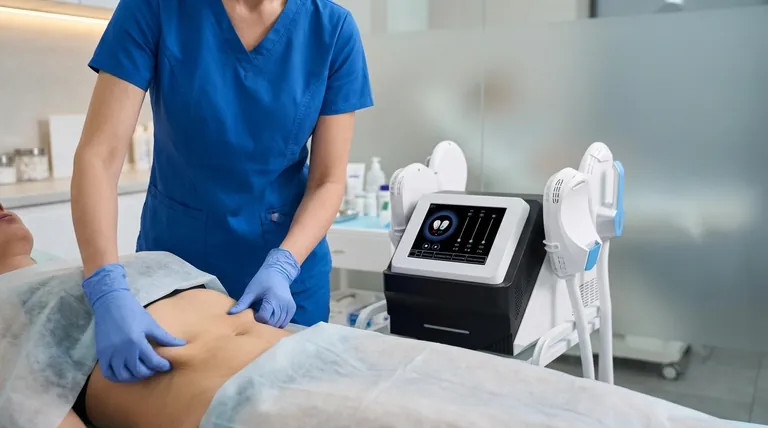
The Anatomy of Disappointment
Imagine a client who undergoes laser liposuction. The technology performs flawlessly—fat cells are eliminated, volume is reduced. Yet, weeks later, the client is unhappy. The target area is smaller, but the skin is now loose, wrinkled, or dimpled.
This isn't a failure of the machine. It's a failure of selection.
Success in medical aesthetics, particularly in body contouring, is less about the power of the tool and more about the wisdom of its application. It is a discipline that sits at the intersection of technology, biology, and human psychology. Understanding who not to treat is more important than knowing how to operate the device.
The Foundational Misunderstanding: Contouring vs. Weight Loss
The most common source of patient dissatisfaction stems from a single, fundamental misunderstanding.
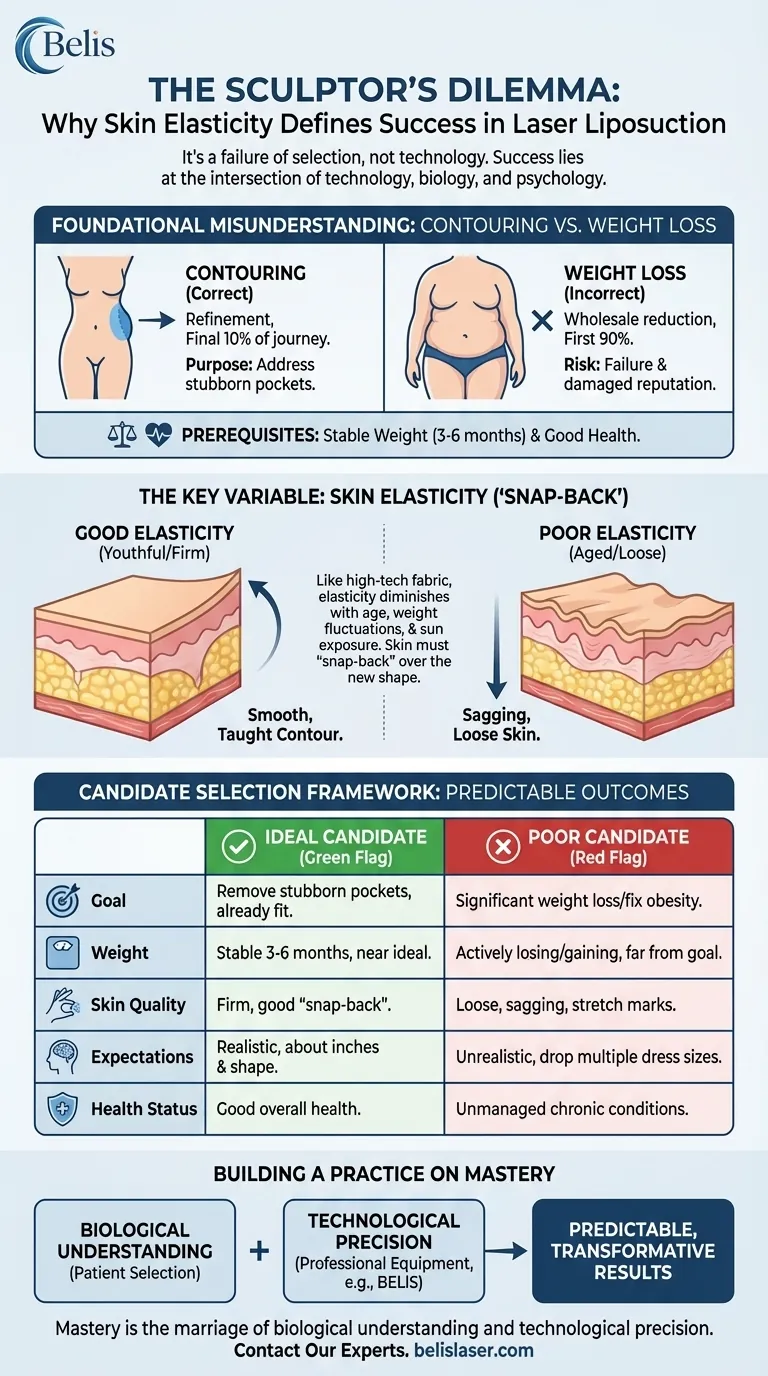
Laser liposuction is a body contouring tool, not a weight loss method.
Its purpose is refinement, not wholesale reduction. It is designed to address the stubborn, localized pockets of fat that remain after a person has already achieved a healthy, stable weight through lifestyle. It’s the final 10% of the journey, not the first 90%.
A practitioner's first job is to re-calibrate this expectation. To treat a patient seeking significant weight loss is to set them up for failure and damage the clinic's reputation.
The Peril of an Unstable Baseline
Before any cosmetic factor is considered, two conditions are non-negotiable: good health and a stable body weight.
Treating a client whose weight is fluctuating is like trying to sculpt a statue from melting ice. The procedure permanently removes fat cells from one area, but if the client gains weight later, the remaining fat cells in other parts of the body will expand.
This leads to disproportionate, unnatural-looking results, destroying the very contours you worked to create.
Skin Elasticity: The Single Most Important Variable
If weight stability is the foundation, skin quality is the critical factor that determines the aesthetic outcome.
Laser liposuction removes the "stuffing" (fat) from under the "cover" (skin). The final result depends entirely on how well that cover retracts over the new, smaller shape.
This quality is called skin elasticity.
The Physics of "Snap-Back"
Think of skin as a high-tech elastic fabric. In youth, it has a powerful "snap-back." As we age, or after significant weight changes and sun exposure, that elasticity diminishes.
If you remove volume from beneath skin with poor elasticity, it will not shrink to fit the new contour. It will sag.
This is not a risk; it is a predictable outcome based on the laws of biophysics. The most advanced laser can remove fat with incredible precision, but it cannot defy the physical properties of the patient's own tissue. A practitioner’s reputation is built on creating smooth results, not just smaller ones.
A Framework for Ideal Candidate Selection
Therefore, the consultation process is less a sales pitch and more a diagnostic assessment. The goal is to identify individuals whose biology and psychology are aligned for success.
| Candidate Attribute | Green Flag (Ideal Candidate) | Red Flag (Poor Candidate) |
|---|---|---|
| Primary Goal | Remove stubborn fat pockets on an already fit body. | Achieve significant weight loss or fix obesity. |
| Body Weight | Stable for 3-6 months; near their ideal weight. | Actively losing or gaining weight; far from goal. |
| Skin Quality | Firm, good "snap-back" when pinched. | Loose, sagging, or significant stretch marks. |
| Expectations | Realistic; understands it's about inches and shape. | Unrealistic; expects to drop multiple dress sizes. |
| Health Status | Good overall health. | Unmanaged chronic conditions (e.g., diabetes, heart disease). |
Building a Practice on Predictable Outcomes
The most successful medical aesthetic clinics are not built on having the latest machine. They are built on delivering consistent, predictable, and beautiful results.
This consistency is born from a deep understanding of patient selection. It requires the discipline to say "no" to unsuitable candidates, protecting both the patient from a poor outcome and the clinic from a negative review.
This is where the right technology becomes an extension of the practitioner's expertise. A precise, reliable, and safe device is essential to execute your vision flawlessly on the right candidate. Professional equipment, like that developed by BELIS, is designed to provide that control and predictability. It empowers skilled clinicians to translate a correct diagnosis into a masterful result.
Mastery in this field is the marriage of biological understanding and technological precision. When you align the right patient with the right procedure and the right equipment, the results are transformative.
If your practice is built on this principle of delivering exceptional outcomes, we can help you choose the tools to do it. Contact Our Experts
Visual Guide
Related Products
- Cryolipolysis Fat Freezing Machine Cavitation Lipo Laser Machine
- Cryolipolysis Fat Freezing Cavitation Lipo Laser Machine
- Cryolipolysis Fat Freezing Machine with Cavitation and Laser Lipolysis
- EMSlim RG Laser Body Sculpting and Slimming Machine
- Cryolipolysis Fat Freezing Machine and Ultrasonic Cavitation Device
Related Articles
- From Crystal to Clearance: The Biological Journey of a Fat Cell After Cryolipolysis
- Beyond the Freeze: The Science and Psychology of Cryolipolysis
- The Elegant Delay: Why Cryolipolysis Works on Biological Time, Not Human Time
- The -11°C Difference: Why Cryolipolysis Isn't Just Freezing Fat
- The Physics of Stubborn Fat: A Cold, Hard Look at Abdominal Contouring


















