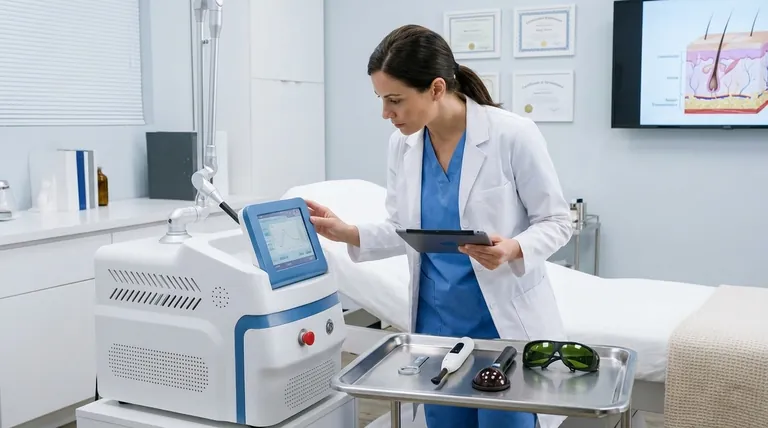
Pico laser treatments promise dramatic skin rejuvenation—but only when performed by qualified professionals using properly calibrated devices. Every year, thousands experience adverse effects from poorly executed procedures, ranging from hyperpigmentation to permanent scarring. This guide translates clinical safety protocols into actionable steps for choosing practitioners and devices, helping you achieve optimal results without compromising skin health.
Understanding Pico Laser Risks
Why Practitioner Expertise Matters More Than You Think
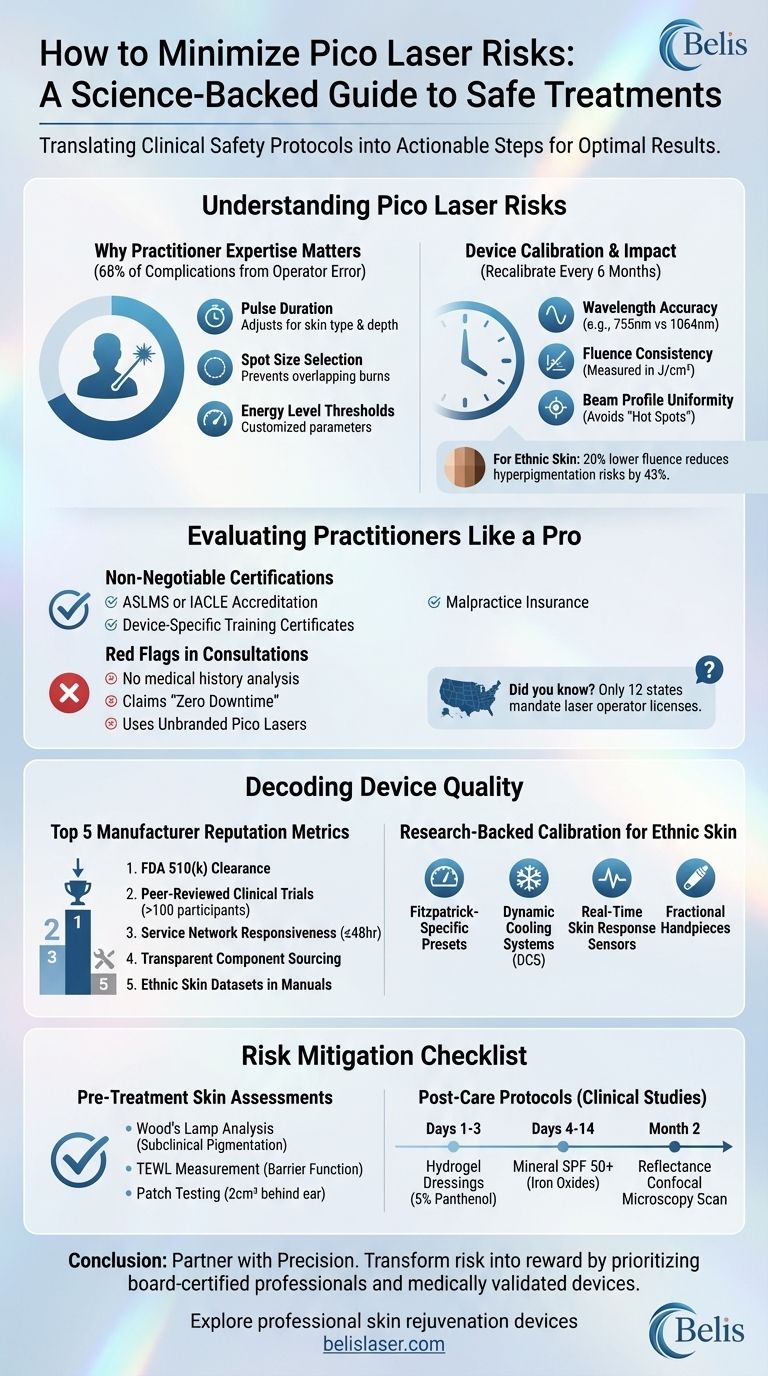
A 2022 study in Dermatologic Surgery revealed that 68% of laser complications stem from operator error, not device malfunction. Unlike traditional lasers, Pico technology delivers ultra-short pulses measured in picoseconds (trillionths of a second). This precision demands advanced knowledge of:
- Pulse duration adjustments for melanin-rich vs. fair skin
- Spot size selection to prevent overlapping burns
- Energy level thresholds per skin layer depth
Ever wondered why two clinics using the same device yield different results? The difference lies in the specialist’s ability to customize parameters—a skill honed through 300+ supervised treatments, according to the American Society for Laser Medicine and Surgery (ASLMS).
How Device Calibration Impacts Different Skin Types
Pico lasers must be recalibrated every 6 months to maintain FDA-cleared efficacy. Key calibration benchmarks include:
- Wavelength accuracy (e.g., 755nm for pigmentation vs. 1064nm for deep collagen stimulation)
- Fluence consistency (measured in J/cm²) across 10 test pulses
- Beam profile uniformity to avoid "hot spots"
For ethnic skin (Fitzpatrick IV-VI), studies show 20% lower fluence reduces post-inflammatory hyperpigmentation risks by 43%.
Evaluating Practitioners Like a Pro
Non-Negotiable Certifications for Laser Specialists
Legitimate providers should present:
- ASLMS or IACLE accreditation (verifiable via online databases)
- Device-specific training certificates from manufacturers
- Malpractice insurance covering laser procedures
Did you know? Only 12 states mandate laser operator licenses, making third-party certifications critical.
Red Flags in Treatment Consultations
Walk away if a practitioner:
☐ Fails to analyze your medical history (e.g., herpes simplex risks)
☐ Claims "zero downtime" for deep resurfacing
☐ Uses unbranded or "generic" Pico lasers
Decoding Device Quality
Top 5 Manufacturer Reputation Metrics
- FDA 510(k) clearance (not just "FDA-registered")
- Peer-reviewed clinical trials with >100 participants
- Service network responsiveness (≤48hr repair guarantees)
- Transparent component sourcing (e.g., German optics)
- Ethnic skin datasets in training manuals
Research-Backed Calibration for Ethnic Skin Needs
Devices should store Fitzpatrick-specific presets with:
- Dynamic cooling systems (DCS) to protect melanocytes
- Real-time skin response sensors that auto-adjust pulses
- Fractional handpieces for safer high-density treatments
Risk Mitigation Checklist
Pre-Treatment Skin Assessments to Demand
✔ Wood’s lamp analysis to identify subclinical pigmentation
✔ TEWL (transepidermal water loss) measurement for barrier function
✔ Patch testing on a 2cm² area behind the ear
Post-Care Protocols Backed by Clinical Studies
- Days 1-3: Apply hydrogel dressings with 5% panthenol (reduces erythema by 60%)
- Days 4-14: Use mineral SPF 50+ with iron oxides (blocks visible light-induced pigmentation)
- Month 2: Schedule a reflectance confocal microscopy scan to monitor collagen remodeling
Conclusion: Partner with Precision
Pico lasers are scalpels, not magic wands. By prioritizing board-certified professionals and medically validated devices—like those from Belis’ dermatology-grade lineup—you transform risk into reward. Your next step? Request practitioner training logs and device maintenance records before committing.
Remember: When lasers are concerned, the right questions are your best insurance policy.
Products You Might Be Looking For:
Explore professional skin rejuvenation devices
Visual Guide
Related Products
- Pico Laser Tattoo Removal Machine Picosure Picosecond Laser Machine
- Cryolipolysis Fat Freezing Cavitation Lipo Laser Machine
- Cryolipolysis Fat Freezing Machine Cavitation Lipo Laser Machine
- Multifunctional Laser Hair Growth Machine Device for Hair Growth
- Multifunctional Laser Hair Growth Machine Device for Hair Growth
Related Articles
- How to Choose the Right Pico Laser Machine for Your Skin Type and Concerns
- How the Articulated Arm in Pico Laser Machines Delivers Unmatched Precision and Efficiency
- How Pico Laser Machines Revolutionize Skin Treatments: Evidence-Based Insights
- How to Choose Pico Laser Treatment Based on Skin Science (Not Brand Names)
- Pico Laser Explained: How Ultra-Fast Pulses Transform Skin Health






