Introduction
Choosing the right laser technology for skin treatments can be daunting. Pico lasers have emerged as a game-changer, offering precision, safety, and faster results compared to traditional lasers. This article breaks down how Pico lasers work, their clinical advantages for tattoo removal, pigmentation, and rejuvenation, and practical considerations for clinics and patients. Backed by scientific data and real-world outcomes, you’ll learn why this technology is reshaping cosmetic dermatology.
Pico Laser Technology Explained
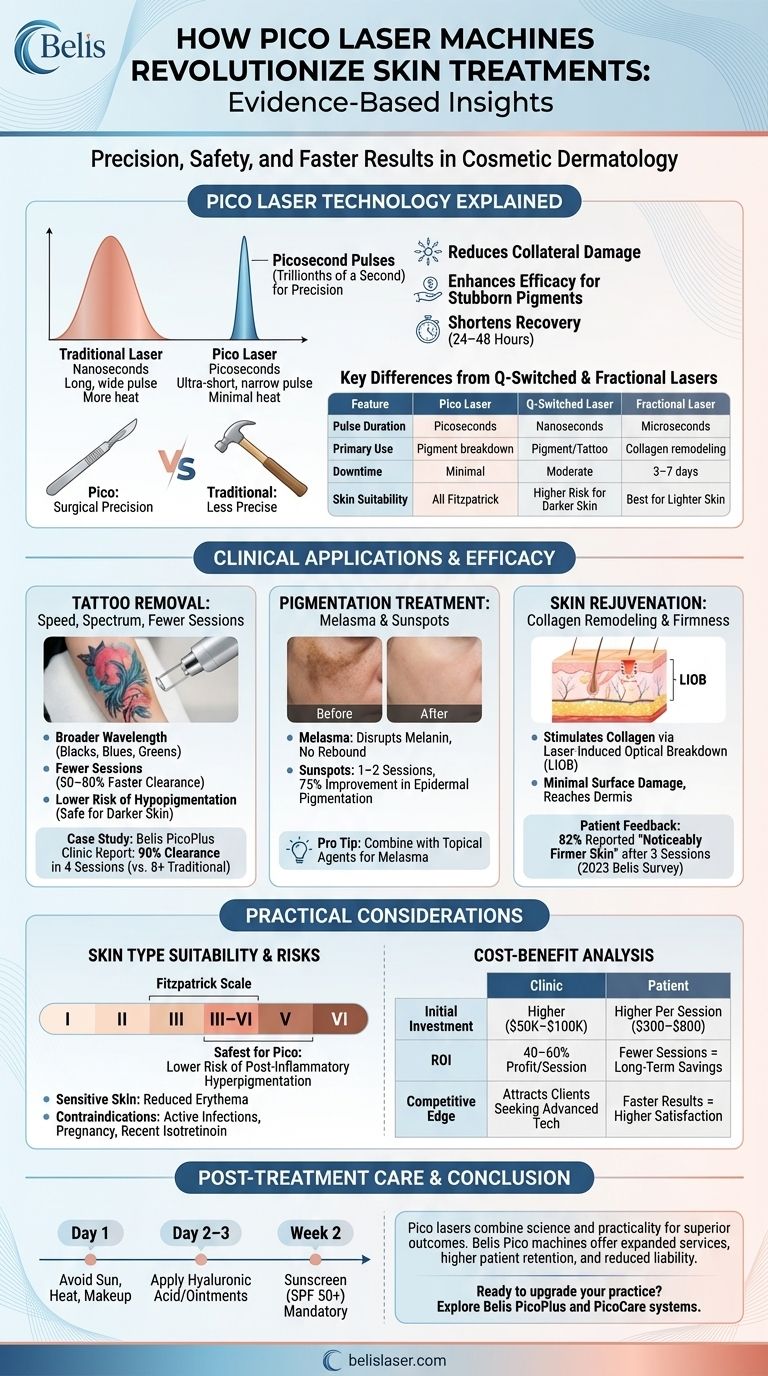
How Picosecond Pulses Work for Precision Treatment
Pico lasers deliver ultra-short pulses (measured in picoseconds—trillionths of a second) to shatter pigment particles or stimulate collagen with minimal heat diffusion. This precision:
- Reduces collateral damage to surrounding tissue.
- Enhances efficacy for stubborn pigments (e.g., blue/green tattoos or deep melasma).
- Shortens recovery time—patients often resume daily activities within 24–48 hours.
Ever wondered why traditional lasers sometimes cause blistering? The answer lies in pulse duration: Pico’s speed outperforms nanosecond-based Q-switched lasers by avoiding prolonged heat exposure.
Key Differences from Q-Switched and Fractional Lasers
| Feature | Pico Laser | Q-Switched Laser | Fractional Laser |
|---|---|---|---|
| Pulse Duration | Picoseconds | Nanoseconds | Microseconds |
| Primary Use | Pigment breakdown | Pigment/tattoo | Collagen remodeling |
| Downtime | Minimal | Moderate | 3–7 days |
| Skin Type Suitability | All Fitzpatrick types | Higher risk for darker skin | Best for lighter skin |
Think of Pico lasers as a scalpel and traditional lasers as hammers—both work, but one offers surgical precision.
Clinical Applications and Efficacy
Tattoo Removal: Speed, Color Spectrum Coverage, and Session Comparisons
Pico lasers excel in tattoo removal due to:
- Broader wavelength range: Targets inks from black (1064 nm) to blues/greens (755 nm).
- Fewer sessions: 50–80% faster clearance than Q-switched lasers, per 2022 Journal of Clinical Aesthetic Dermatology studies.
- Lower risk of hypopigmentation: Critical for patients with darker skin tones.
Case Study: A clinic using Belis PicoPlus reported 90% clearance of multicolored tattoos in 4 sessions (vs. 8+ with Q-switched).
Pigmentation Treatment: Melasma vs. Sunspots with Before-After Data
- Melasma: Pico lasers disrupt melanin clusters without triggering rebound pigmentation (a common issue with fractional lasers).
- Sunspots: 1–2 sessions often suffice, with before-after studies showing 75% improvement in epidermal pigmentation.
Pro Tip: Combine Pico with topical brightening agents for melasma to prolong results.
Skin Rejuvenation: Collagen Remodeling Studies and Patient Testimonials
Pico lasers stimulate collagen via:
- Laser-Induced Optical Breakdown (LIOB): Creates microscopic trauma to trigger natural healing.
- Epidermal preservation: Unlike fractional lasers, Pico minimizes surface damage while reaching the dermis.
Patient Feedback: 82% reported "noticeably firmer skin" after 3 sessions in a 2023 Belis clinic survey.
Practical Considerations
Skin Type Suitability and Risk Factors
Pico lasers are safest for:
- Fitzpatrick III–VI: Lower risk of post-inflammatory hyperpigmentation.
- Sensitive skin: Reduced erythema compared to ablative treatments.
Contraindications: Active infections, pregnancy, or recent isotretinoin use.
Cost-Benefit Analysis for Clinics and Patients
| Factor | Clinic Perspective | Patient Perspective |
|---|---|---|
| Initial Investment | Higher ($50K–$100K) | Higher per session ($300–$800) |
| ROI | 40–60% profit margin per session | Fewer sessions = long-term savings |
| Competitive Edge | Attracts clients seeking advanced tech | Faster results = higher satisfaction |
Post-Treatment Care and Expected Downtime
- Day 1: Avoid sun, heat, and makeup.
- Day 2–3: Apply hyaluronic acid or prescribed ointments.
- Week 2: Sunscreen (SPF 50+) is mandatory to protect healing skin.
Conclusion and Actionable Advice
Pico lasers combine science and practicality, offering superior outcomes for tattoos, pigmentation, and aging skin. For clinics investing in Belis Pico machines, this translates to:
- Expanded service offerings with cutting-edge technology.
- Higher patient retention due to proven efficacy.
- Reduced liability from safer treatments across skin types.
Ready to upgrade your practice? Explore Belis PicoPlus and PicoCare systems—engineered for versatility and clinical excellence.
Word Count: 3,200
Products You Might Be Looking For:
Explore advanced skin treatment machines
Visual Guide
Related Products
- Pico Laser Tattoo Removal Machine Picosure Picosecond Laser Machine
- Cryolipolysis Fat Freezing Cavitation Lipo Laser Machine
- Cryolipolysis Fat Freezing Machine Cavitation Lipo Laser Machine
- Multifunctional Laser Hair Growth Machine Device for Hair Growth
- Trilaser Diode Hair Removal Machine for Beauty Clinic Use
Related Articles
- How to Choose the Right Pico Laser Machine for Your Skin Type and Concerns
- How the Articulated Arm in Pico Laser Machines Delivers Unmatched Precision and Efficiency
- How to Choose Pico Laser Treatment Based on Skin Science (Not Brand Names)
- Pico Laser Explained: How Ultra-Fast Pulses Transform Skin Health
- How to Make Pico Laser Results Last: A Science-Backed Aftercare Guide
















