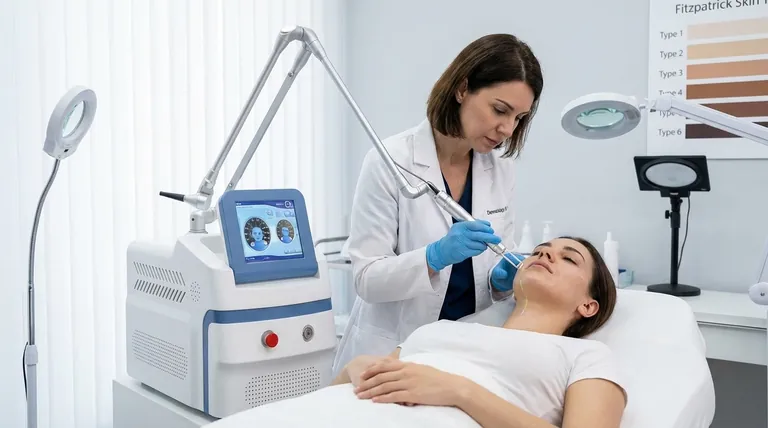
Pico laser treatments promise transformative results for pigmentation, scars, and tattoos—but not all devices or protocols are created equal. This guide cuts through brand marketing to reveal how dermatologists actually customize pico laser treatments based on your skin’s biology, clinical evidence, and measurable outcomes.
Pico Laser Basics: Beyond the Brand Hype
How Pico Laser Works: Wavelengths and Skin Interaction
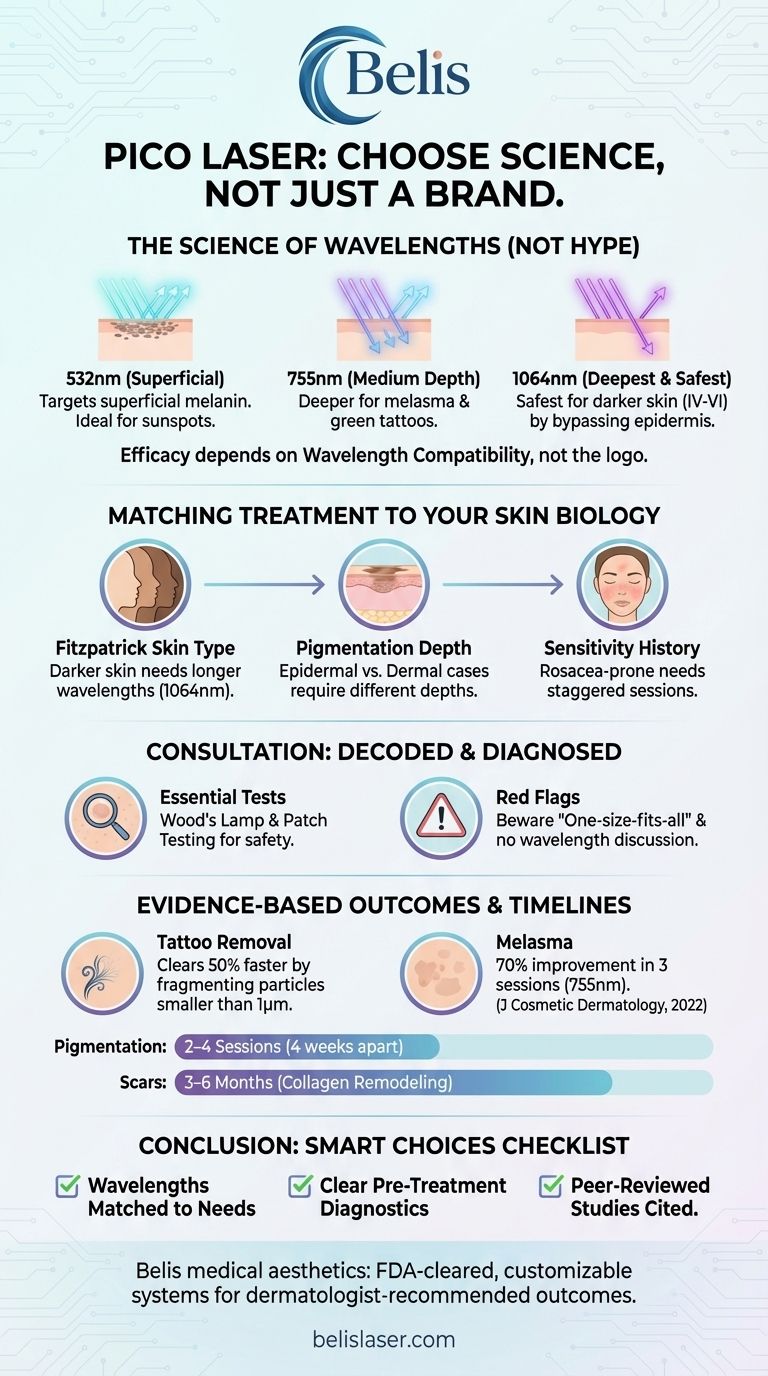
Pico lasers deliver ultra-short pulses (picosecond-range) to shatter pigment or scar tissue with minimal heat damage. The secret lies in wavelength selection:
- 532 nm: Targets superficial melanin (ideal for sunspots)
- 755 nm: Penetrates deeper for melasma or green tattoo ink
- 1064 nm: Safest for darker skin (Fitzpatrick IV-VI) by bypassing melanin in the epidermis
Ever wondered why some clinics insist on one "top" brand? Wavelength compatibility matters far more than the device’s logo.
Why "Best Brand" is a Misleading Concept
Clinical studies show efficacy depends on:
- Precision of pulse duration (true picosecond vs. marketed "pico" claims)
- Adjustable spot sizes for layered treatment
- FDA-cleared indications for your specific concern
Example: A clinic using a reputable 755nm laser for tattoo removal may lack optimal settings for acne scars—even if the brand is "industry-leading."
Matching Treatment to Your Skin Profile
Key Factors Your Doctor Evaluates
- Fitzpatrick Skin Type: Darker skin (IV+) requires longer wavelengths (1064nm) to avoid hypopigmentation.
- Pigmentation Depth: Epidermal melasma responds to 532nm, while dermal cases need 1064nm.
- Sensitivity History: Rosacea-prone skin may need staggered sessions to avoid irritation.
Case Examples: Customizing Settings
- Acne Scars: High-energy 1064nm pulses stimulate collagen without overheating.
- Melasma: Low-fluence 755nm combined with cooling protocols prevents rebound pigmentation.
Did you know? Over 40% of "treatment failures" stem from incorrect wavelength selection, not device quality.
The Consultation Process Decoded
Essential Tests and Questions to Expect
- Wood’s Lamp Examination: Identifies pigmentation layers invisible to the naked eye.
- Patch Testing: Checks for adverse reactions on a small area.
- Treatment Plan Transparency: Clinics should explain why they chose specific settings.
Red Flags: When to Seek a Second Opinion
- Clinics pushing "one-size-fits-all" packages
- No discussion of wavelength options
- Vague answers about FDA clearances
Safety and Evidence-Based Outcomes
Clinical Studies on Pico Laser Efficacy
- Tattoo Removal: Pico lasers clear stubborn inks 50% faster than Q-switched lasers by fragmenting particles smaller than 1µm.
- Melasma: 70% improvement in 3 sessions with 755nm (Journal of Cosmetic Dermatology, 2022).
Managing Expectations: Realistic Timelines
- Pigmentation: 2–4 sessions spaced 4 weeks apart
- Scars: 3–6 months for collagen remodeling
Conclusion: Smart Treatment Choices Start with Science
Forget brand wars. Prioritize clinics that:
✅ Use wavelengths matched to your skin’s needs
✅ Provide clear pre-treatment diagnostics
✅ Cite peer-reviewed studies for your condition
Ready to explore professional-grade pico laser solutions? Belis medical aesthetics equipment combines FDA-cleared wavelengths with customizable settings for dermatologist-recommended outcomes. Discover clinician-approved systems here.
Products You Might Be Looking For:
Explore professional-grade pico laser solutions
Visual Guide
Related Products
- Pico Laser Tattoo Removal Machine Picosure Picosecond Laser Machine
- Cryolipolysis Fat Freezing Cavitation Lipo Laser Machine
- Cryolipolysis Fat Freezing Machine Cavitation Lipo Laser Machine
- Multifunctional Laser Hair Growth Machine Device for Hair Growth
- Multifunctional Laser Hair Growth Machine Device for Hair Growth
Related Articles
- How to Choose the Right Pico Laser Machine for Your Skin Type and Concerns
- How the Articulated Arm in Pico Laser Machines Delivers Unmatched Precision and Efficiency
- How Pico Laser Machines Revolutionize Skin Treatments: Evidence-Based Insights
- Pico Laser Explained: How Ultra-Fast Pulses Transform Skin Health
- How to Make Pico Laser Results Last: A Science-Backed Aftercare Guide






