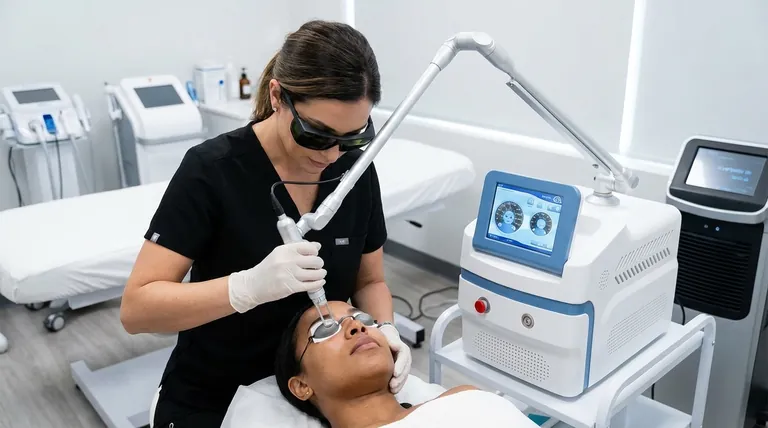
Pico laser treatments promise remarkable skin rejuvenation, yet improper application can lead to hyperpigmentation, burns, or scarring. This guide reveals how to select qualified practitioners and customize protocols for your skin type—critical steps often overlooked in pursuit of quick results.
Understanding Pico Laser Risks
Why Operator Expertise Determines Treatment Success
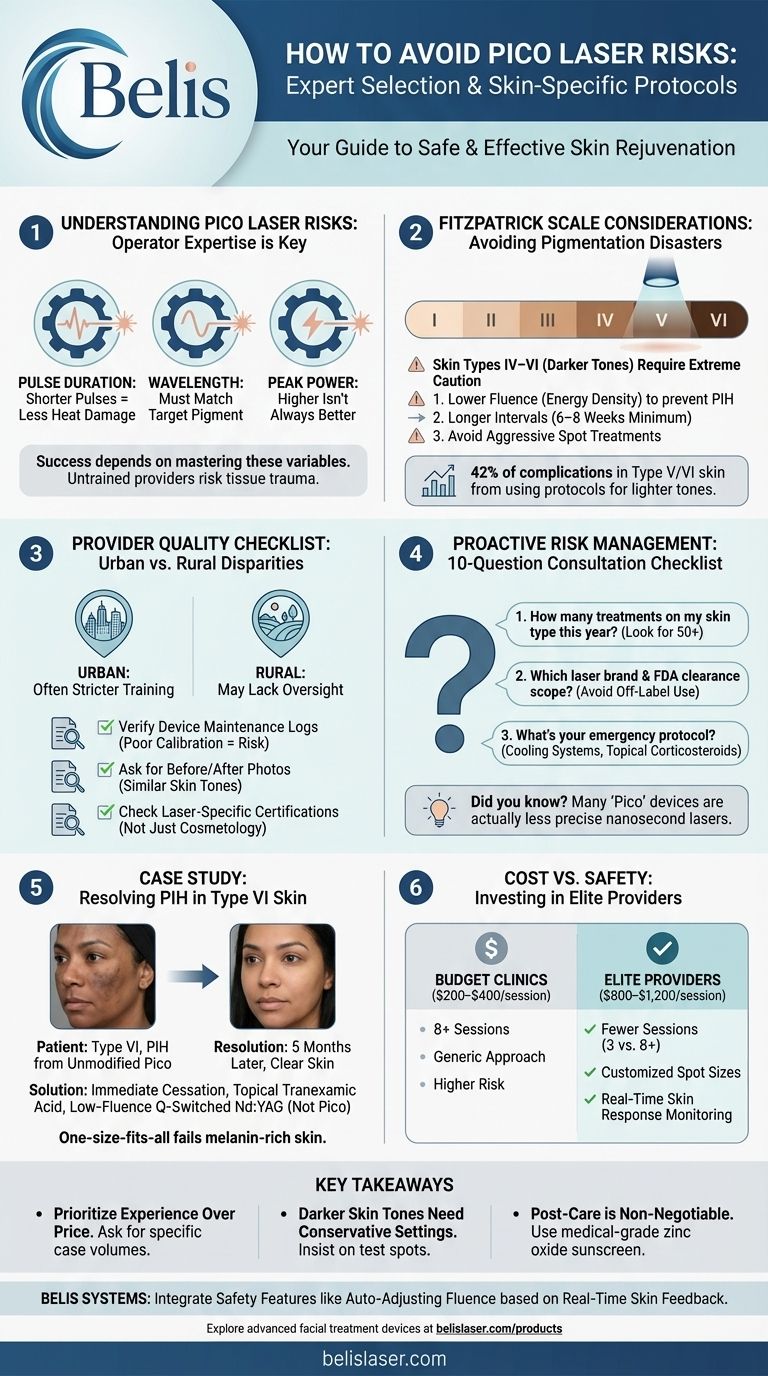
A Pico laser’s safety hinges on the practitioner’s ability to adjust three technical factors:
- Pulse duration (shorter pulses minimize heat damage)
- Wavelength (must match the target pigment)
- Peak power (higher settings aren’t always better)
Ever wondered why two clinics using the same device deliver vastly different results? It’s not the machine—it’s the operator’s mastery of these variables. Untrained providers may default to factory settings, risking tissue trauma.
Fitzpatrick Scale Considerations: Avoiding Pigmentation Disasters
Skin types IV–VI (darker tones) require extreme caution due to melanin reactivity. Key protocol adjustments include:
- Lower fluence (energy density) to prevent post-inflammatory hyperpigmentation
- Longer intervals between sessions (6–8 weeks minimum)
- Avoidance of aggressive spot treatments that create contrast
A 2022 Journal of Cosmetic Dermatology study found 42% of complications occurred when Type V/VI skin received protocols designed for lighter tones.
Regional Disparities in Provider Quality – A Hidden Concern
Urban centers often have stricter training requirements, while rural areas may lack oversight. Before booking:
- Verify the clinic’s device maintenance logs (poorly calibrated lasers increase risks)
- Ask for before/after photos of patients with similar skin tones
- Check if staff hold laser-specific certifications (not just general cosmetology licenses)
Proactive Risk Management
Pre-Treatment Consultation Checklist (10 Critical Questions)
Arm yourself with these must-ask queries:
- "How many Pico treatments have you performed on my skin type this year?" (Look for 50+ cases)
- "Which laser brand do you use, and what’s its FDA clearance scope?" (Avoid off-label use unless justified)
- "What’s your emergency protocol for burns or blistering?" (Clinics should have topical corticosteroids and cooling systems ready)
Did you know? Many "Pico" devices marketed to salons are actually nanosecond lasers with inferior pigment-targeting precision.
Case Study: Resolving Post-Inflammatory Hyperpigmentation in Type VI Skin
A 38-year-old patient developed dark patches after an unmodified Pico treatment for melasma. The solution involved:
- Immediate cessation of further laser sessions
- Topical tranexamic acid to halt melanocyte activation
- Low-fluence Q-switched Nd:YAG laser (not Pico) for gradual pigment dispersal over 5 months
This underscores why one-size-fits-all approaches fail—especially for melanin-rich skin.
Cost vs. Safety: When to Invest in Fewer Sessions with Elite Providers
While budget clinics charge $200–$400 per session, top-tier providers may cost $800–$1,200 but deliver:
✔ Fewer total sessions (3 vs. 8+ at discount clinics)
✔ Customized spot sizes (critical for delicate areas like eyelids)
✔ Real-time skin response monitoring via integrated cooling sensors
Key Takeaways
- Prioritize experience over price—ask for practitioner case volumes specific to your concern (acne scars vs. tattoo removal require different expertise).
- Darker skin tones need conservative settings—insist on test spots before full-face treatments.
- Post-care is non-negotiable—use medical-grade zinc oxide sunscreen to prevent complications.
For clinics seeking reliable, skin-type-optimized Pico technology, Belis systems integrate safety features like auto-adjusting fluence based on real-time skin feedback—a game-changer for risk-sensitive procedures.
Remember: The safest laser is the one operated by someone who respects its power.
Products You Might Be Looking For:
Explore advanced facial treatment devices
Visual Guide
Related Products
- Pico Laser Tattoo Removal Machine Picosure Picosecond Laser Machine
- Cryolipolysis Fat Freezing Cavitation Lipo Laser Machine
- Cryolipolysis Fat Freezing Machine Cavitation Lipo Laser Machine
- Multifunctional Laser Hair Growth Machine Device for Hair Growth
- Multifunctional Laser Hair Growth Machine Device for Hair Growth
Related Articles
- How to Choose the Right Pico Laser Machine for Your Skin Type and Concerns
- How the Articulated Arm in Pico Laser Machines Delivers Unmatched Precision and Efficiency
- How Pico Laser Machines Revolutionize Skin Treatments: Evidence-Based Insights
- How to Choose Pico Laser Treatment Based on Skin Science (Not Brand Names)
- Pico Laser Explained: How Ultra-Fast Pulses Transform Skin Health







