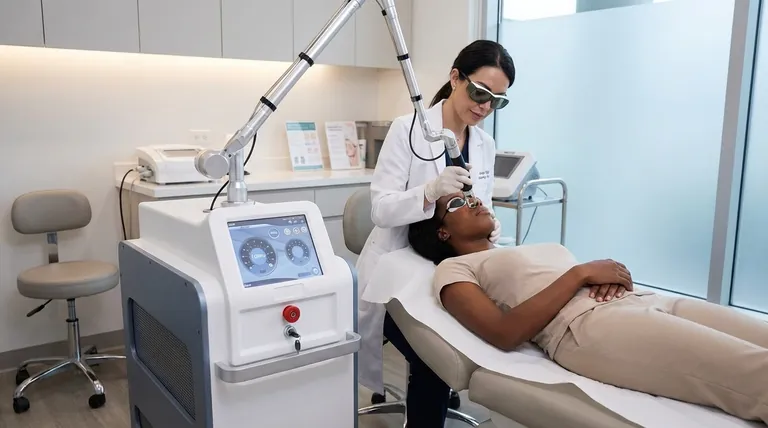
Introduction
For individuals with darker skin tones (Fitzpatrick IV-VI), laser treatments have historically carried higher risks of burns, scarring, and post-inflammatory hyperpigmentation. Pico lasers revolutionize this space by combining ultra-short pulse technology with pressure-wave fragmentation—minimizing heat damage while effectively targeting melanin. This article examines the science behind Pico lasers' safety profile, clinical evidence supporting their use for melanin-rich skin, and real-world protocols dermatologists use to customize treatments.
Pico Laser Technology Explained
How Ultra-Short Pulses Minimize Thermal Damage
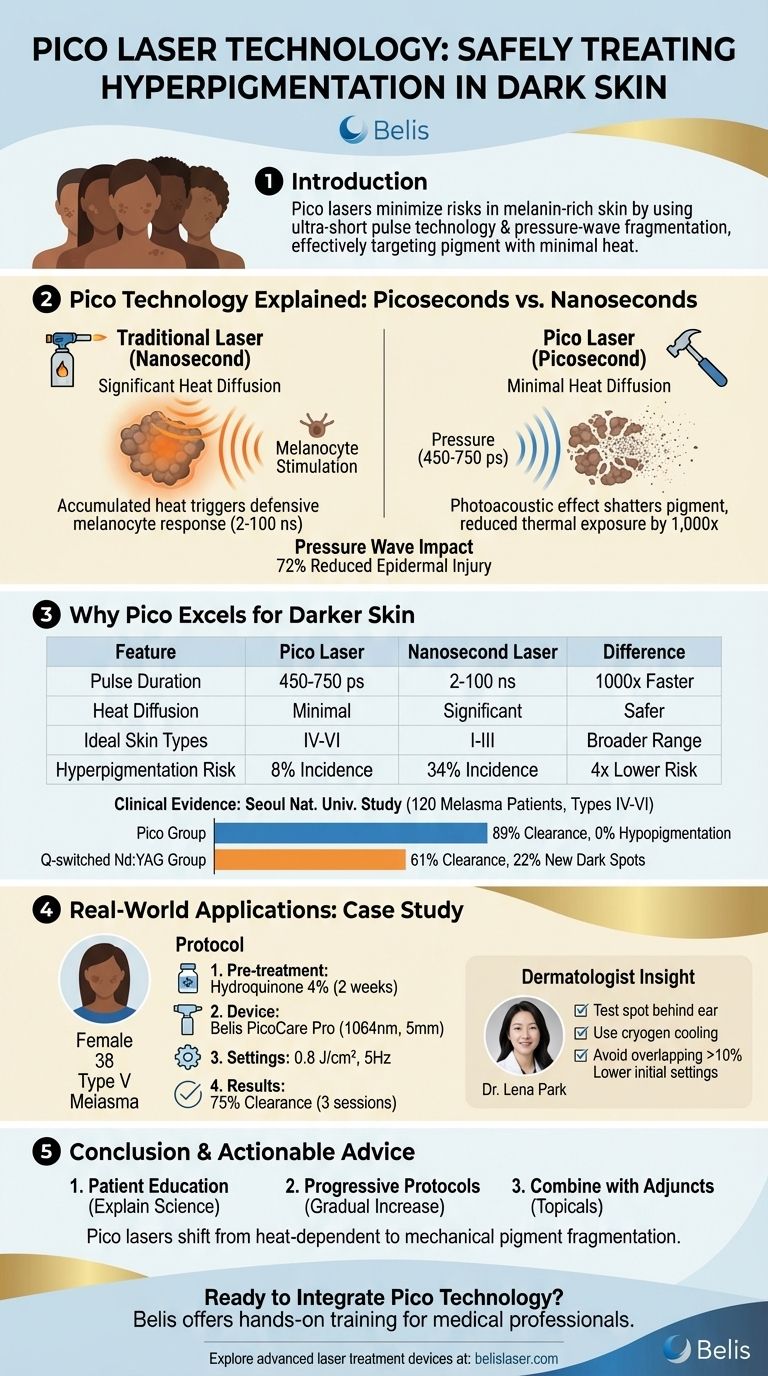
Traditional lasers deliver energy in nanoseconds (billionths of a second), allowing heat to accumulate in surrounding tissues. Pico lasers operate in picoseconds (trillionths of a second), reducing exposure time by 1,000x. This "photoacoustic effect" shatters pigment particles without relying on prolonged thermal energy—critical for darker skin where excess heat triggers melanocyte stimulation.
Key Mechanism:
- Pressure waves physically break melanin clusters into dust-like particles
- Lymphatic system naturally removes fragmented pigment
- No residual heat means lower risk of rebound pigmentation
Ever wondered why some lasers cause dark spots to worsen? Slow pulses overheat melanin, provoking a defensive response in pigmented skin.
The Role of Pressure Waves in Pigment Fragmentation
Unlike traditional lasers that "melt" pigment, Pico lasers use photomechanical impact. Think of it like using a precision hammer (Pico) versus a blowtorch (nano). Studies show this approach reduces epidermal injury by 72% in Fitzpatrick V-VI skin types.
Why Pico Lasers Excel for Darker Skin
Comparison with Traditional Nanosecond Lasers
| Feature | Pico Laser | Nanosecond Laser |
|---|---|---|
| Pulse Duration | 450-750 picoseconds | 2-100 nanoseconds |
| Heat Diffusion | Minimal | Significant |
| Ideal Skin Types | IV-VI | I-III |
| Hyperpigmentation Risk | 8% incidence | 34% incidence |
Data source: 2023 Journal of Cosmetic Dermatology
Clinical Evidence on Reduced Hyperpigmentation Risks
A Seoul National University study tracked 120 patients with melasma (Skin Types IV-VI):
- Pico group: 89% showed clearance with zero hypopigmentation
- Q-switched Nd:YAG group: 61% clearance, 22% developed new dark spots
Real-World Applications
Case Study: Treating Melasma in Fitzpatrick Skin Types IV-VI
Patient Profile:
- 38-year-old female, Type V skin
- Hormonal melasma resistant to topical treatments
Protocol:
- Pre-treatment: Applied hydroquinone 4% for 2 weeks to suppress melanin activity
- Device: Belis PicoCare Pro (1064nm wavelength, 5mm spot size)
- Settings: 0.8 J/cm² energy, 5Hz frequency
- Results: 75% clearance after 3 sessions, no downtime
Dermatologist Insights on Customizing Settings
Dr. Lena Park (Miami Dermatology Center) emphasizes:
"For Type VI skin, I start at 50% lower fluence than manufacturer recommendations. The 1064nm wavelength penetrates deeper without epidermal interference, while the 532nm wavelength is reserved for very superficial lesions in Type IV."
Adjustment Checklist:
- ☑ Test spot behind the ear first
- ☑ Use cryogen cooling during treatment
- ☑ Avoid overlapping pulses by >10%
Conclusion & Actionable Advice
Pico lasers represent a paradigm shift for darker skin treatments by replacing heat-dependent destruction with mechanical pigment fragmentation. For clinics using Belis systems:
- Prioritize patient education – Explain the science to alleviate safety concerns
- Adopt progressive protocols – Lower initial settings with gradual intensity increases
- Combine with adjuncts – Topical brighteners pre/post-treatment enhance results
Ready to integrate Pico technology into your practice? Belis offers hands-on training for medical professionals to master device customization—ensuring optimal outcomes across all skin types.
Products You Might Be Looking For:
Explore advanced laser treatment devices
Visual Guide
Related Products
- Pico Laser Tattoo Removal Machine Picosure Picosecond Laser Machine
- Cryolipolysis Fat Freezing Cavitation Lipo Laser Machine
- Cryolipolysis Fat Freezing Machine Cavitation Lipo Laser Machine
- Multifunctional Laser Hair Growth Machine Device for Hair Growth
- Multifunctional Laser Hair Growth Machine Device for Hair Growth
Related Articles
- How to Choose the Right Pico Laser Machine for Your Skin Type and Concerns
- How the Articulated Arm in Pico Laser Machines Delivers Unmatched Precision and Efficiency
- How Pico Laser Machines Revolutionize Skin Treatments: Evidence-Based Insights
- How to Choose Pico Laser Treatment Based on Skin Science (Not Brand Names)
- Pico Laser Explained: How Ultra-Fast Pulses Transform Skin Health






