Introduction
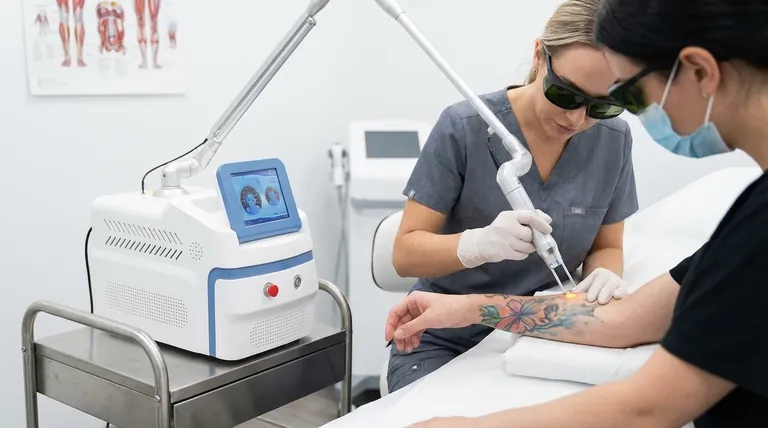
Tattoo removal has evolved dramatically with Pico laser technology, offering faster results with fewer side effects than traditional methods. But how does it truly compare in efficacy, safety, and cost? This guide breaks down the science, clinical outcomes, and financial considerations—helping you choose the right method for your skin type and tattoo colors.
Pico Laser Technology Explained
How Picosecond Pulses Work
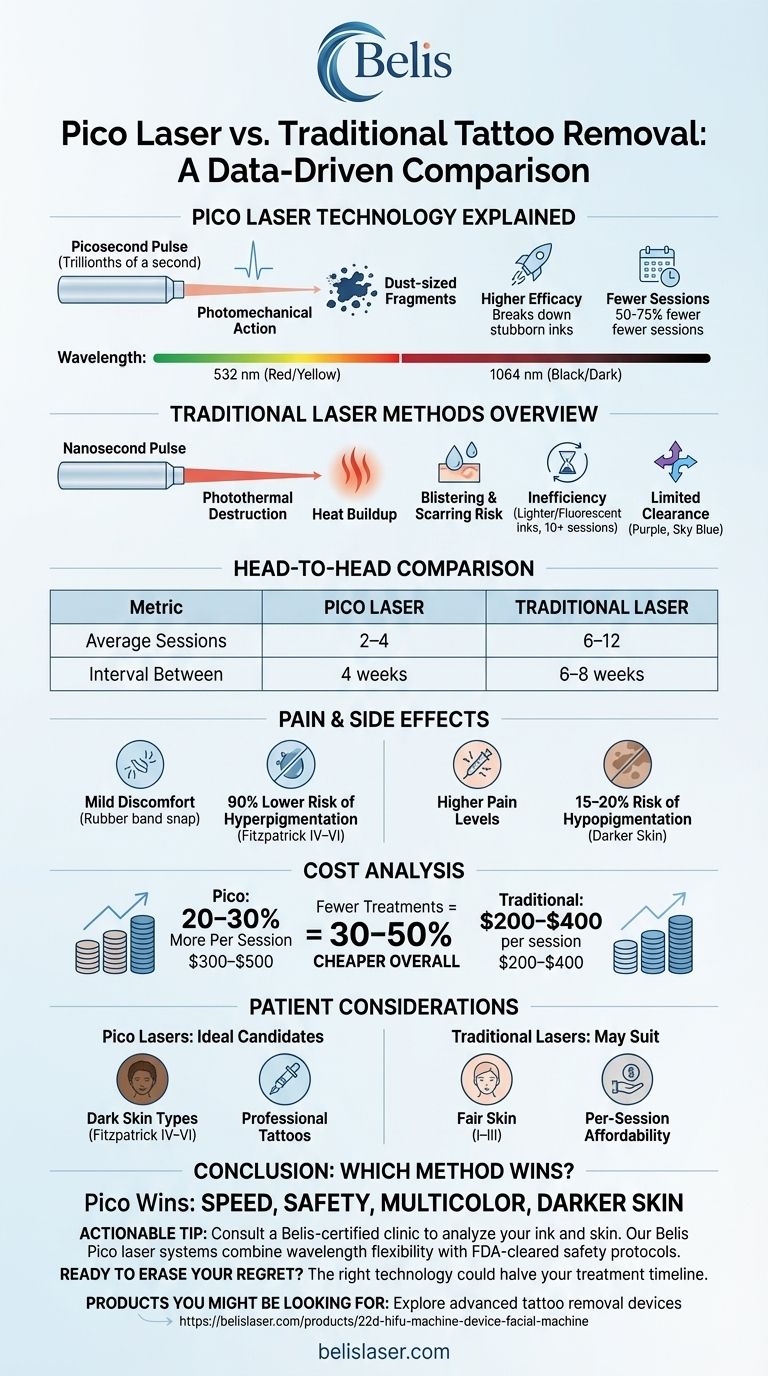
Pico lasers deliver ultra-short pulses (trillionths of a second) that shatter ink particles into dust-sized fragments. Unlike traditional lasers that rely on heat, this photomechanical action minimizes collateral damage to surrounding skin.
Key advantages:
- Higher efficacy: Breaks down stubborn inks (e.g., blues, greens) that nanosecond lasers struggle with.
- Fewer sessions: 50–75% fewer treatments required compared to Q-switched lasers.
Wavelength Versatility for Multicolored Tattoos
Pico lasers combine 532 nm (for red/yellow) and 1064 nm (for black/dark pigments) wavelengths, adapting to diverse ink compositions.
Ever wondered why some tattoo colors fade faster than others? It’s because shorter wavelengths target specific pigment chromophores—like a key fitting a lock.
Traditional Laser Methods Overview
Nanosecond Pulse Limitations
Q-switched lasers (e.g., Nd:YAG, Ruby) use slower nanosecond pulses, relying on photothermal destruction. This can cause:
- Blistering and scarring from excessive heat buildup.
- Inefficiency with lighter inks: Yellow and fluorescent hues often require 10+ sessions.
Challenges with Specific Ink Colors
Clinical studies show traditional lasers remove black ink effectively but achieve only 40–60% clearance for:
- Purple (due to mixed dye composition)
- Sky blue (absorbed poorly at common wavelengths)
Head-to-Head Comparison
Treatment Sessions Required
| Metric | Pico Laser | Traditional Laser |
|---|---|---|
| Average Sessions | 2–4 | 6–12 |
| Interval Between | 4 weeks | 6–8 weeks |
Why the gap? Pico’s rapid ink fragmentation allows quicker immune system clearance.
Pain and Side Effects
- Pico: Mild discomfort (like rubber band snaps); 90% lower risk of hyperpigmentation in Fitzpatrick IV–VI skin.
- Traditional: Higher pain levels; 15–20% risk of hypopigmentation in darker skin tones.
Cost Analysis
While Pico costs 20–30% more per session ($300–$500 vs. $200–$400), its fewer treatments make it 30–50% cheaper overall.
Patient Considerations
Ideal Candidates for Pico Lasers
- Dark skin types (Fitzpatrick IV–VI): Nd:YAG-based Pico lasers bypass melanin, reducing burn risks.
- Professional tattoos: Dense inks respond better to photomechanical breakdown.
Skin Type Compatibility
Traditional lasers may still suit:
- Fair skin (I–III) with black/blue tattoos.
- Patients prioritizing per-session affordability.
Conclusion: Which Method Wins?
For speed, safety, and multicolor tattoos, Pico lasers outperform traditional options—especially for darker skin. However, Q-switched lasers remain viable for simpler tattoos on light skin.
Actionable Tip: Consult a Belis-certified clinic to analyze your tattoo’s ink composition and skin type. Our Belis Pico laser systems combine wavelength flexibility with FDA-cleared safety protocols.
Ready to erase your tattoo regret? The right technology could halve your treatment timeline.
Products You Might Be Looking For:
Explore advanced tattoo removal devices
Visual Guide
Related Products
- Pico Laser Tattoo Removal Machine Picosure Picosecond Laser Machine
- Cryolipolysis Fat Freezing Cavitation Lipo Laser Machine
- Cryolipolysis Fat Freezing Machine Cavitation Lipo Laser Machine
- Multifunctional Laser Hair Growth Machine Device for Hair Growth
- Multifunctional Laser Hair Growth Machine Device for Hair Growth
Related Articles
- How to Choose the Right Pico Laser Machine for Your Skin Type and Concerns
- How the Articulated Arm in Pico Laser Machines Delivers Unmatched Precision and Efficiency
- How Pico Laser Machines Revolutionize Skin Treatments: Evidence-Based Insights
- How to Choose Pico Laser Treatment Based on Skin Science (Not Brand Names)
- Pico Laser Explained: How Ultra-Fast Pulses Transform Skin Health






