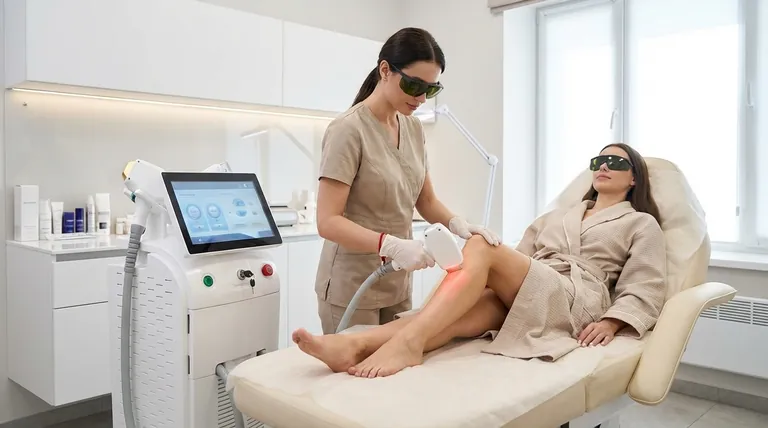
Laser hair removal offers lasting results by targeting hair follicles with precision—but why does it require multiple sessions? This guide breaks down the biological mechanisms and personal factors determining your treatment plan. You'll learn how hair growth cycles influence effectiveness, why skin and hair combinations matter, and practical strategies to maximize results.
The Biology of Hair Growth
Why Your Hair's Natural Rhythm Demands Multiple Sessions
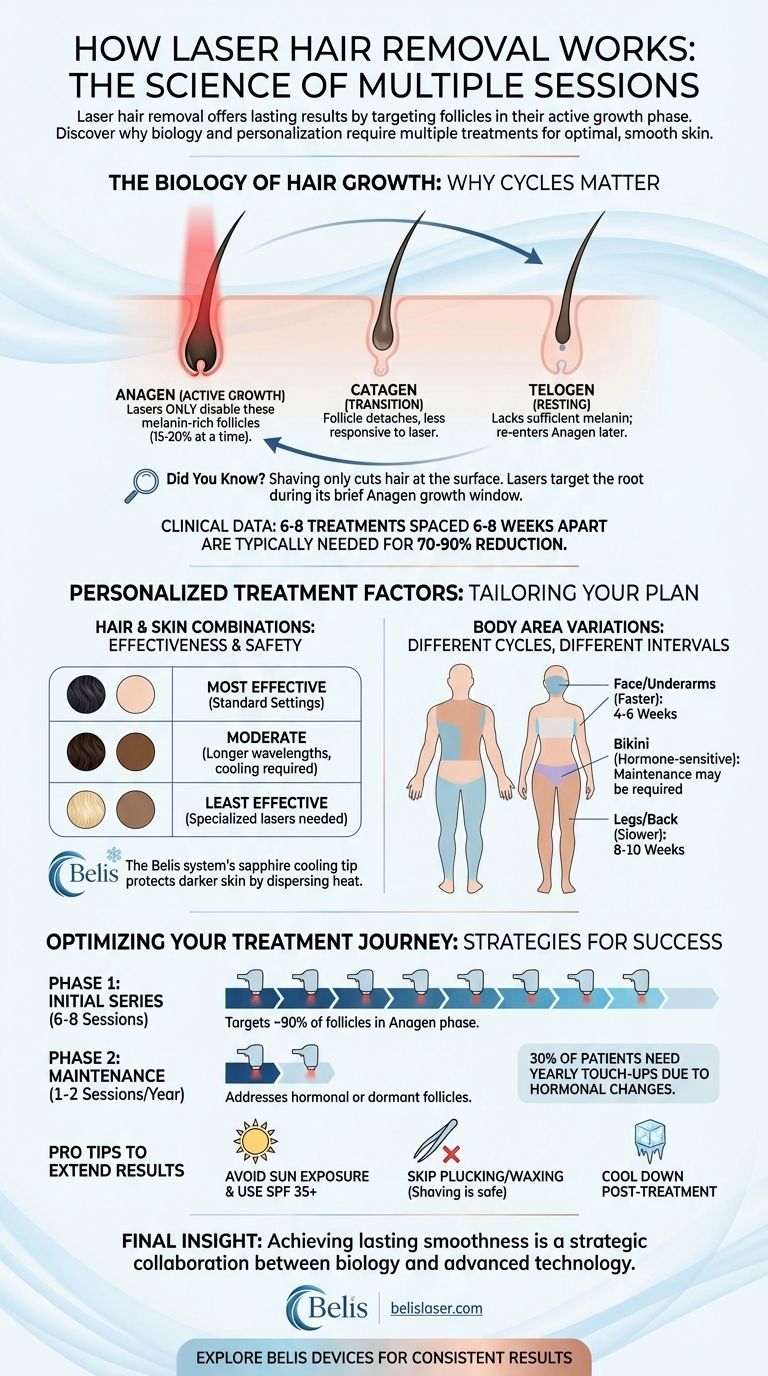
Hair grows in cycles: anagen (active growth), catagen (transition), and telogen (resting). Lasers only disable follicles in the anagen phase, when they contain enough melanin to absorb laser energy. Since only 15-20% of hairs are in this phase at any given time, multiple sessions spaced weeks apart are needed to catch each follicle during its vulnerable stage.
Ever wondered why shaving seems to make hair grow back faster? It’s an illusion—shaving merely cuts hairs at the surface, while lasers target the root during its brief growth window.
How Lasers Interact With Active vs. Dormant Follicles
- Active follicles (anagen): Absorb laser energy, which converts to heat and destroys the follicle’s regenerative cells.
- Dormant follicles (telogen): Lack sufficient melanin to respond; they’ll need targeting in later sessions when they re-enter anagen.
Clinical data shows 6-8 treatments spaced 6-8 weeks apart are typically needed to achieve 70-90% reduction.
Personalized Treatment Factors
Skin Tone and Hair Color Combinations That Alter Effectiveness
Lasers target melanin, so contrast between hair and skin color improves results:
| Hair/Skin Combo | Effectiveness | Safety Adjustments |
|---|---|---|
| Dark hair, light skin | Most effective | Standard settings |
| Dark hair, dark skin | Moderate | Longer wavelengths (1064nm) and cooling tech to prevent burns |
| Light/blonde hair | Least effective | Specialized lasers (e.g., Nd:YAG) may be needed |
Fun fact: The Belis system’s sapphire cooling tip protects darker skin by dispersing surface heat while allowing deeper follicle targeting.
Body Area Variations (Face vs. Bikini vs. Legs)
- Face/Underarms: Faster growth cycles = treatments every 4-6 weeks.
- Legs/Back: Slower cycles = 8-10 week intervals.
- Bikini Area: Hormone-sensitive; may require occasional maintenance.
Optimizing Your Treatment Journey
Typical Phase Breakdown: Initial Series vs. Maintenance
- Initial Series (6-8 sessions): Targets ~90% of follicles.
- Maintenance (1-2 sessions/year): Addresses hormonal or dormant follicles reactivated over time.
Did you know? 30% of patients need yearly touch-ups due to hormonal changes or follicle recovery.
Pro Tips to Extend Results Between Sessions
- Avoid sun exposure: Tanning increases melanin in skin, raising burn risks. Use SPF 35+ daily.
- Skip plucking/waxing: These remove the melanin-rich root lasers need to target. Shaving is safe.
- Cool down: Apply ice post-treatment to reduce redness.
Final Insight: Laser hair removal isn’t a one-and-done process—it’s a strategic collaboration between biology and technology. By understanding your hair’s growth patterns and personalizing treatments, you can achieve lasting smoothness with minimal upkeep.
For professionals: Belis medical-grade equipment combines advanced cooling and wavelength flexibility to safely treat diverse skin and hair types, ensuring consistent client results.
Products You Might Be Looking For:
Explore advanced laser hair removal devices
Visual Guide
Related Products
- Diode Tri Laser Hair Removal Machine for Clinic Use
- Diode Laser SHR Trilaser Hair Removal Machine for Clinic Use
- Clinic Diode Laser Hair Removal Machine with SHR and Trilaser Technology
- Clinic Use IPL SHR ND YAG Laser Hair Removal RF Skin Tightening Machine
- Trilaser Diode Hair Removal Machine for Beauty Clinic Use
Related Articles
- The Specialist's Blade: The Unseen Advantage of Diode Lasers in Hair Removal
- Diode Laser vs. TRILASER-LED Hair Removal: Which Technology Delivers Better Results?
- A Dialogue of Light and Pigment: The Precise Science of Diode Laser Hair Removal
- Diode Laser vs. TRILASER-LED: Which Hair Removal Technology Fits Your Skin Type?
- Diode vs. IPL: How to Choose the Right Technology for Your Clinic’s Skin Diversity and Goals

















